
Peace for the World World ! Your War Our Lives

The Dalai Lama
A Brief Colonial History Of Ceylon(SriLanka)
Sri Lanka: One Island Two Nations
A Brief Colonial History Of Ceylon(SriLanka)
Sri Lanka: One Island Two Nations
(Full Story)
Back to 500BC.
Wednesday, November 30, 2016
Thousands 'miss out on stroke treatment'
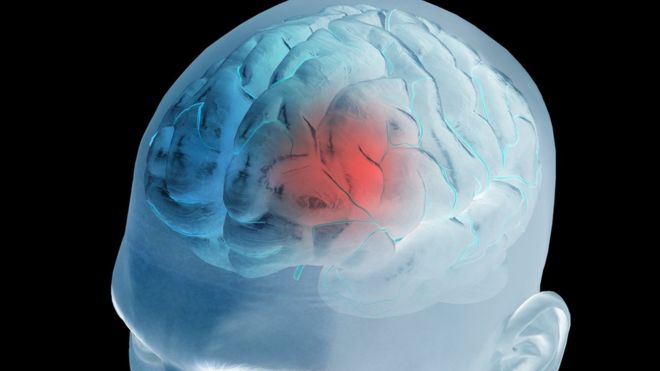
SP-LImage captionIn the UK, nearly 90,000 people each year are admitted to hospital following a stroke
 By Smitha Mundasad-29 November 2016
About 9,000 stroke patients a year are missing out on a treatment that
can prevent disability following a stroke, say UK experts.
Clot retrieval can restore blood flow to the brain, preventing some
lasting damage, but currently only 600 patients a year get this therapy,
they estimate.
A national stroke audit reveals part of the problem is a lack of skilled staff to do the procedure.
NHS England says stroke patients are receiving high quality care.
During a stroke, the blood supplying vital parts of the brain is interrupted.
The most common reason is a clot blocking a major blood vessel in the head, although some strokes are caused by a bleed.
The longer a part of the brain is starved of blood, the more likely
lasting damage - such as paralysis and speech problems - will occur.
Expanding mesh
While many people with a stroke caused by a clot currently get drugs to
help dissolve the blockage, this does not always work completely.
Thrombectomy - or clot retrieval - is another method, which aims to remove the clot mechanically.
It is a highly skilled operation, and stroke services need to be set up to be able to deliver the treatment.
A thin metal wire housing a mesh is inserted into a major artery in the
leg and, under X-ray guidance, it is directed to the site of the problem
in the brain.
The mesh is then expanded, like a miniature fishing net, to trap and remove the clot.
'Once the clot was out, the damage stopped'
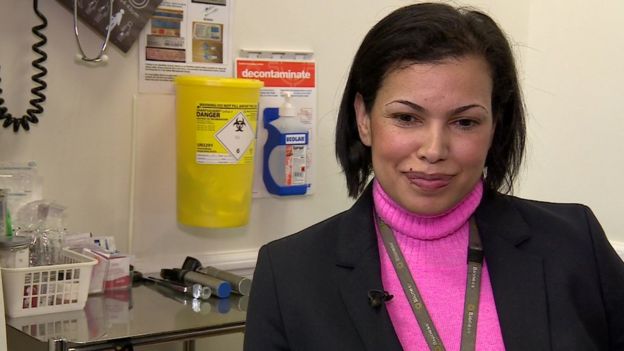
Alice Felix-Donyai used to be a catwalk model. She had a stroke aged 38.
She remembers putting her baby daughter to sleep and chatting to her husband.
He noticed her face was dropping and her speech was slurred. And then she couldn't walk and collapsed.
She says: "He [my husband] placed me on top of the bed and that's the
first time I realised that there must be something really wrong with me,
because he's so stressed out."
Alice had a thrombectomy at Charing Cross Hospital just hours after her stroke. She was part of a trial of the procedure.
She now has trouble moving her left arm and leg, but says it could have been much worse.
"Once the clot was out, the damage stopped," she says.
"There are a lot of limitations. I can't run, I can't clap my hands. If I
want to pick my daughter up, I have to tell her to put her arms around
my neck and then I grab her with my right side.
"It is very sad not to be able to pick up my daughter.
"I do as best as I can."
Researchers from Newcastle University, Northumbria University, Oxford
Academic Health Science Network and the National Institute for Health
Research looked at thrombectomy data and stroke statistics in the UK to
work out how many patients might benefit from the procedure.
In a presentation given to the UK Stroke Forum national conference, they estimated one in 10 people admitted to a hospital with a stroke could be eligible for thrombectomy.
Investigator Dr Martin James, at the Royal Devon and Exeter Hospital,
said: "Delivering the procedure to the 9,000 people who need it will
require major changes to the configuration and skill sets of existing
acute stroke services.
"We must work quickly to establish what needs to be done so that more
people in the UK can benefit from a treatment which can dramatically
reduce disability after a stroke as well as cutting associated costs to
the NHS and social care."
Thrombectomy has already been deemed safe and effective by the health
watchdog the National Institute of Health and Care Excellence.
NICE says the treatment should be carried out only in places that have
trained specialists and the necessary support staff and equipment.
Consultant shortages
The Royal College of Physicians said: "There is a major shortage of
appropriately trained staff to undertake thrombectomy, particularly
outside of London, and it will take time to train up enough doctors to
undertake this skilled procedure."
The Sentinel Stroke National Audit Programme for England, Wales and
Northern Ireland says staffing levels across stroke care in general are a
"concern".
"Current nurse staffing levels are insufficient to provide good care for
everyone who needs it, and as we implement guidelines, more skilled
nurses will be required rather than less," it said in a statement.
There were also problems with recruiting consultants, with 40% of stroke
services having an unfilled stroke consultant post - up from 26% in
2014.
Prof Tony Rudd, national clinical director for stroke at NHS England,
said: "NHS stroke care and stroke survival are now at record levels.
"We recognise the potential effectiveness mechanical thrombectomy could
have for about 5% of stroke patients and are currently drawing up a
policy for its possible use across the NHS."
