Peace for the World World ! Your War Our Lives

The Dalai Lama
A Brief Colonial History Of Ceylon(SriLanka)
Sri Lanka: One Island Two Nations
A Brief Colonial History Of Ceylon(SriLanka)
Sri Lanka: One Island Two Nations
(Full Story)
Back to 500BC.

Monday, February 1, 2016
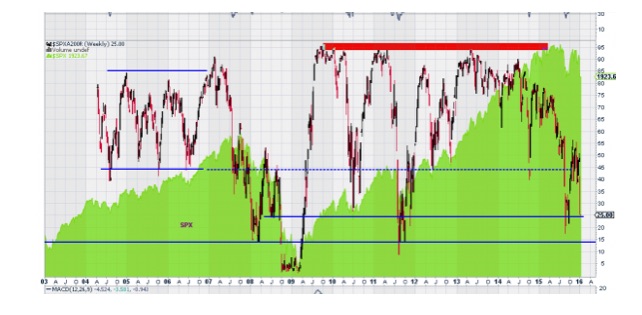
Global Oil Price & Stock-Market Rout
By Kumar David –January 31, 2016
Prof. Kumar David

Do not imagine that the topic discussed here matters little to little
Lanka. If the world economy goes into a tailspin we won’t find
investors, markets for our products will dry up and Middle East
employment will decline. This time with the world much more integrated
it will be worse than the 1929-1944 depression and capitalist crisis
induced WW2. So read on, duly warned
Is last week’s downturn a forerunner of a big crash to come later in
2016? Analysts are divided and at a guess pessimists outnumber fence
sitters and optimists 2:1. Many expected an immediate bloodbath
following the January market rout and the collapse of oil prices to
below $30 a barrel. I doubted this since fundamentals need time to work
themselves through the US and global systems and correctly opted for a
delayed-crash theory. Yes, the price bubble in equities and property is
spurred by ceaseless money printing and near-zero real interest rates in
the US, Euro and Japan, yes spurts in US GDP and job growth may be
dubious and jinks in the Chinese economy were unexpected. Yes oft quoted
“top 1% owns more than lower 90%” jibes are symptoms of systemic
disorder in global capitalism. However, systemic failure like fine wine
needs time to mature.
British Marxist Michael Roberts shows that invest movement lags profit,
up and down, by 12 to 18 months and adds: “Currently global corporate
profits (weighted average of US, UK, Germany, Japan and China) have
turned negative and US corporate profits are falling. That suggests
business investment will start to drop too within a year or so. If that
happens the US will likely head into recession”.
Since the Great Financial Crisis eight years ago I engaged in lively
debates with Professor Harsha Sirisena (HRS), Professor Sivaguru Ganesan
and Asela Dahana. HRS graduated from the Engineering Faculty (there was
only the classic one then) a year after I did so I have known him for
50 years. Though friends, we are ideologically apart. I am a Marxist, he
thinks socialists are balmy; he concedes Marx’s stature as a thinker
but holds that on socialism he got it wrong. I had access to EFac
records till I quit and HRS had the highest scores except for Alagiah
Thuriarajah; so he is an exceptionally bright fellow.

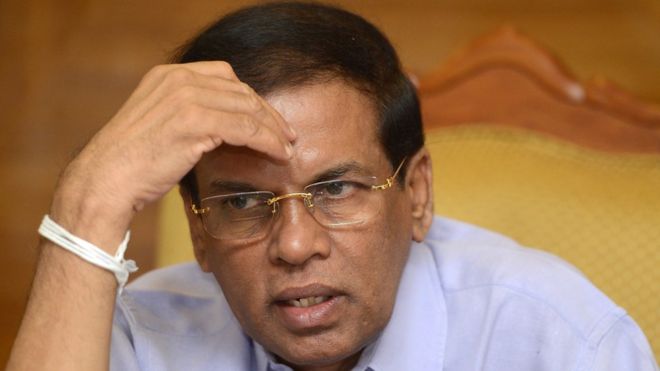
President’s Interview with BBC Sinhala: Murandu-palanaya? – Sanjana Hattotuwa
President Sirisena

31/01/2016
A recent interview with President Sirisena, conducted with the BBC’s
Azzam Ameen, is recommended viewing for those who want to assess
contemporary politics and the trajectory of governance over 2016 and
beyond. Over Twitter, I averred that while some of the President’s
answers were positively disturbing, the opportunity given to grill him,
and the fact that Ameen is still alive, unharmed and living without fear
of a white van abduction, is testimony to how much Sri Lanka has
changed from the dark Rajapaksa years.
In
a segment of the interview, the President is asked for his opinion on
the disturbingly racist ‘Sinha-le’ movement, which has recently gone
from random acts of vandalism and car stickers to boisterous,
inter-city, Sinhala-Buddhist supremacist rallies and Police
confrontations. The President dismisses the movement entirely, saying in
effect that it is fringe lunacy and without any merit. Where he gets it
completely wrong is in trusting the capacity of our society itself to
negotiate violence and extremism. This, lest we forget, is
the same society that countenanced the rise of the BBS, Sihala Ravaya
and all manner of manic monks, were generally ok with the massacre of
thousands at Nandikadal, ignored the plight of those interned in Manik
Farm, gave rise to the bheeshana yugaya in
the late 80’s, which reads and believes mainstream media that regularly
conflates Tamils with Tigers, elects murderers and thugs to Parliament,
support MPs who abduct citizens, countenances a brutal, corrupt Police
force and are fine with rampant militarisation in almost every sphere of
public life. Where the well-springs of hope the President has over
society’s ability to discern and resolutely disavow the ‘Sinha-le’
movement for what it really is a mystery.
In another question, President Sirisena is asked about nepotism, and the
optics around the fact that his younger brother was appointed by him as
the Chairman of Sri Lanka Telecom. The President’s answer is revealing.
He claims there is a difference between what he terms ‘family rule’ (he
uses the example of Cuba) and the fact that Sri Lanka Telecom, by
virtue of being under a line ministry and a government minister, is
essentially outside his sphere of influence. Azzam presses on and asks
the President about taking his son – Daham – to New York, to sit
alongside him at UN sessions and the fact that his daughter has also
been spotted at public functions in an officiating capacity. Though it
isn’t mentioned in the BBC interview, the official Facebook page of the
President, handled no doubt by the Presidential Media Unit,
photo-shopped Daham out of images of the official UN delegation when
faced with, at the time, a vocal media backlash, especially online. The
President’s answer is to first ask whether anyone, with any sense, will
question why taking his son to New York is wrong. He says fathers who
have sons will understand the love for a son, and that it really isn’t a
question over governance. In what can only be described as a tad
delirious, President Sirisena then says that fathers who haven’t been
lucky enough to have children are the only ones interested in critiquing
Daham’s place in Sri Lanka’s official delegation to the UN. He says
this is their misfortune. Becoming increasingly defensive, in tone and
body language, the President then avers that those who question him on
this are devoid of humanity. Claiming the public aren’t really concerned
about these issues, he pegs critical questions on this score to
political enemies.
Aside
from his tragically twisted take on nepotism, the President’s larger
mistake is to use, as he does in this interview, the Rajapaksa’s and
their political culture as a baseline to judge his own actions, and
those of the present government. A rough analogy would be
to compare Sri Lanka’s democratic timbre with that of the Central
African Republic, or the Democratic Republic of Congo. We can pat
ourselves on the back that we are so much better than either country,
but what does this really mean? Likewise, to use the Rajapaksa’s as a
baseline is a bluff that must be called – as President Sirisena knows
only too well, our democratic values were reflected far more in the
plural social mobilisation that put him where he is. It is to those who
saw in him the best of who we are and can be that he has to answer to,
not to autocrats and their sons from the past.
Further
on, the President’s take on critical web and online media is to equate
them, carte blanche, to yellow or tabloid journalism. Much has changed
then from his first televised address to the public in early 2015, where
he explicitly thanked those who supported his candidacy online and on
Facebook, against all odds, to his current position, where when the
spotlight is on him and his actions, critical online voices become
destructive, shallow and irrelevant. When asked about the
full colour, full page ads taken out in print media by various
ministries to celebrate his first year in office, he again gets very
defensive and proceeds to indicate he either doesn’t mean what says, or
says what he doesn’t mean. On the one hand, he says that circulars were
issued to not publish advertisements, which cost tens of millions of
rupees in the aggregate, taken from public coffers. When then asked as
to what action he himself will take against ministries and public bodies
that went against these circulars, he says a complaint has to be lodged
with the Ministry of Finance, after which an investigation will be
held. Yet again, he uses the excessive corruption under the Rajapaksa’s
to suggest that things are comparably much better, and that change
itself takes time.
We have a President who isn’t yet used to being a President. It is
unclear he was coached on the answers around the questions he and his
media team knew would be asked by the likes of the BBC. Maithripala
Sirisena is still operating as if he is competing against Mahinda
Rajapaksa. Clearly opinionated and believing he has risked more than
most, the President may think this entitles him to an arrogance and
stubbornness that in turn are effective firewalls against good advice.
Critical commentary is taken personally, and sadly, ignored. President
Sirisena’s most recent BBC interview will be remembered for a singular
lack of vision and humility, which were hallmarks of Sirisena the
Presidential aspirant.
It is not just his loss. It is ours too.
An angry PM and the betrayal of a revolution

 by Rajan Philips-January 30, 2016, 9:10 pm
Prime Minister Wickremesinghe is an angry man these days. The winter in
Davos has not cooled him down. He lashed out at GL Peiris before going
to Davos. He lambasted the journalists, just last Thursday, after
returning from Davos. Peiris came under fire in Jaffna where the PM had
gone to celebrate Thai Pongal, just as Mahinda Rajapkaksa used to fly to
NuwaraEliya to preside over the CWC’s cow-milking ceremony to mark
Pongal. A milky way to reconciliation, you might say. But GL Peiris
fully deserves the PM’s wrath for the once great professor has as little
credibility left in him to lecture about the constitution as one time
Chief Justice Sarath Silva has to talk about the Supreme Court. The
latter seems to have finally come to terms with keeping his mouth shut,
and the former must smarten up and lock up his gab for good, politically
speaking.
Coming back to the Prime Minister, it is not clear who he despises more –
Peiris or journalists? On Thursday, in parliament, it was verbal
flailing at the media gallery by an angry Prime Minister on his feet.
His anger and his frustrations at the goings on in the country are
understandable, even welcome, given the perception many have of him as
being a man with, for all his cleverness, not enough fire in his belly
for politics. He is obviously sincere about turning the country in a new
direction for the better from the disastrous last five years. But the
turning is not happening. It is even worse than one step forward and
many steps backward. Nothing seems to be unfolding the way the Prime
Minister would have wanted the Sri Lankan universe to unfold after
January 2015. While this is a serious problem for the PM and the
government, or those in the government who stood for genuine change in
January 2015, it is not going to be solved by scolding Peiris and the
journalists in public and in parliament.
Was there a revolution?
Talking about January 2015, was there a
revolution in Sri Lanka one year ago? There is more curiosity than
debate if the term, revolution, is apropos or not. There are those who
say there was, and others who think it’s a joke to think that there was
one. But there is greater agreement about an unfolding betrayal. I am
not suggesting that if there is betrayal there must have been a
revolution. The accusation of ‘betrayal’ comes not only from those who
worked for the victory of President Sirisena in January 2015, but also
and more stridently from those who called him a traitor for leaving his
leader and worked to defeat him (Sirisena) in the election.
Yo You Arrested; An Official Sri Lankan Mourning Day

Dr. Sulakshi Thelikorala
Awwwww… It is sweet how he is handling it. I feel kind of sorry for him. A young boy cuffed and taken to remand.
I think before you read any further, best is to take a quick look at
your FB home page. It is an official Sri Lankan mourning day on FB.
Yositha:
my mind runs back to the very first time I saw this young lad with two
of his friends. He was in a pair of shorts and rubber slippers, one
November evening in 2011 at Spices Restaurant at Hilton Colombo. He
didn’t have to be the President’s son but he was attractive enough to
catch everyone’s attention. He seemed nice, down to earth that day and
shared a smile. He was anyhow my favourite of the three brothers. He was
a charming young lad and I actually feel sorry for this sight.
Today, he has captured everyone’s attention like never before.
Some are
crying on FB for him and some are happy. Facebook is having more or
less of a mourning day today. What follows these posts are those ofDeshapalana Paligeneem posts.
sts.
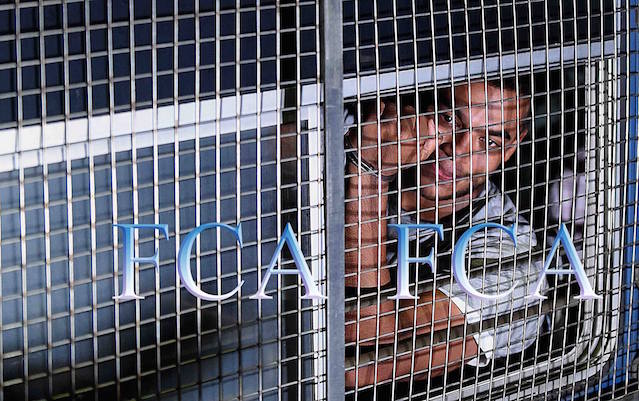
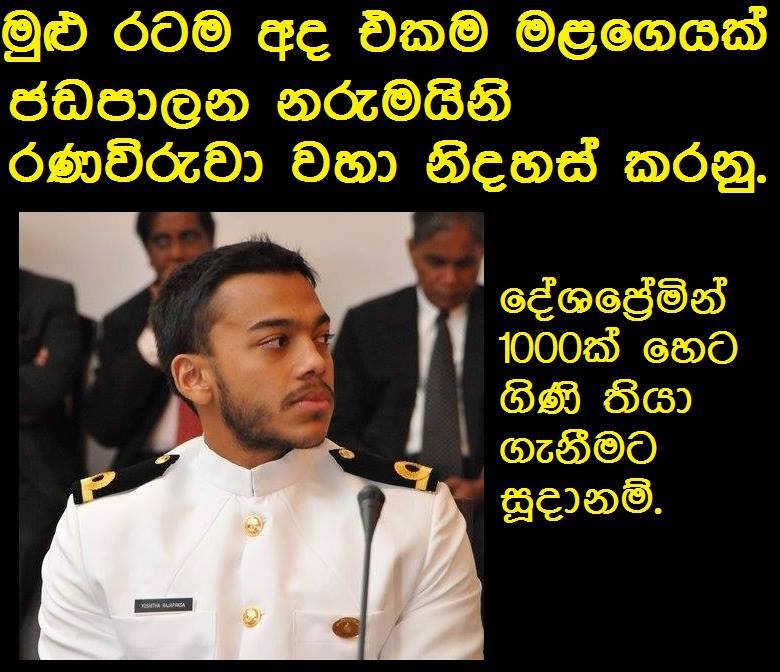
Yoshitha Rajapakse, Nishantha Ranatunge, Rohan Welivita of CSN are the record breaking culprits in SL’s biggest ever fraud investigation ! Why they were put behind bars?
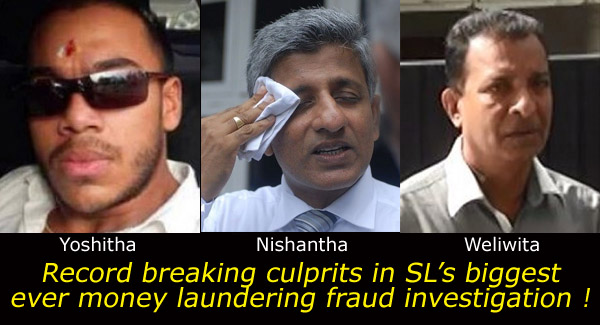
 (Lanka-e-News
-31.Jan.2016, 1.25PM) It is very unfortunate the unscrupulous media
coolies of Sri Lanka in keeping with their sordid traits tried to
paint a picture that the arrest and remanding of the five high ranking
officers of the CSN channel including Yoshitha Rajapakse (son of Mahinda
Rajapakse) ,Nishantha Ranatunge (younger brother of Arjuna Ranatunge )
and Rohan Welivita are the consequence of political vendetta .
(Lanka-e-News
-31.Jan.2016, 1.25PM) It is very unfortunate the unscrupulous media
coolies of Sri Lanka in keeping with their sordid traits tried to
paint a picture that the arrest and remanding of the five high ranking
officers of the CSN channel including Yoshitha Rajapakse (son of Mahinda
Rajapakse) ,Nishantha Ranatunge (younger brother of Arjuna Ranatunge )
and Rohan Welivita are the consequence of political vendetta .
One of those stinking media coolies who was there without bathing
holding the mike for Mahinda Rajapakse did not have the guts to
question ‘Didn’t your son go to jail because of daylight robbery of
public funds?’ and ‘why did you allow your son to rob and you remained
an idle spectator ?’ . The stinking media coolies were also unable to
ask from Arjuna who parades as a paragon of virtue criticising all and
sundry pointing out the frauds of all others across the country while
his brothers were most corrupt ,why Arjuna could not notice the
robberies of his own younger brother committed under his very nose?
and, is it because his eyes were blurred by the exudation from his
eyes due to eye gland infection?
These unscrupulous media coolies who would sell even their souls for a
mess of potage notwithstanding , let us emphatically state , it is the
responsibility of the true media to expose the truth pertaining to the
criminal incriminations of these culprits , Yoshitha Rajapakse ,
Nishantha Ranatunge, Rohan Welivita, J.T.S Fernando and Kaveeshan
Dissanayake of the CSN , and why they had to be put behind bars.
According to reports reaching Lanka e news , this investigation launched
into the frauds at the CSN channel is the biggest ever in Sri Lanka ‘s
history. The magnitude of the fraud is so huge , it is still not fully
unravelled , but based on information surfacing so far , it is in the
region of about Rs. 520 million ! though the actual figures are still
being probed. This fraud is so extraordinary and astounding , because of
the scheming modalities adopted much more than the amount of money
involved.
In any Establishment when there is a fraud , it is only a section of that establishment or some group that is involved, but in the CSN , the entire establishment had been involved with the participation and collusion of all in general. In other words this Institution has been established with the sole primary aim and objective to commit frauds. From the very beginning –that is ,from the time of registration including the auditing and audit reports, the operations have been fraudulent .
In any Establishment when there is a fraud , it is only a section of that establishment or some group that is involved, but in the CSN , the entire establishment had been involved with the participation and collusion of all in general. In other words this Institution has been established with the sole primary aim and objective to commit frauds. From the very beginning –that is ,from the time of registration including the auditing and audit reports, the operations have been fraudulent .
The CSN does not have a permanent chairman. This is because its chief is
Yoshitha Rajapakse and being an officer in the Navy he cannot legally
hold that post in a private establishment .Therefore that aspect was
kept hidden. Though Yoshitha was not the chairman overtly , he had
signed all important documents. Hence , those actions of his alone are
enough to dismiss him from the Navy.When any Institution is launched ,
an initial outlay is necessary. How is it provided and by whom ? must be
clearly made known .
However pertaining to CSN , although a sum Rs. 90 million is its initial
outlay, it is not mentoned who invested that Rs. 90 million or from
which source it came. The worst part ? though the chiefs of the CSN were
interrogated for the last several months in this regard , none could
give an answer.That means this amount of Rs. 90 million is ‘black’ money
out and out .The next question is , to whom does this money belong?
In addition , a further sum of Rs. 169 million had been remitted to this
company from Singapore.Even the remitter of this sum is not recorded
anywhere .The details and documents furnished in Singapore in this
connection are also spurious, and nobody knows who remitted.
Interrogation for two months was unavailing as none of the culprits
were giving answers during the interrogations.
These ‘black’ monies have come to this Co. not from Singapore alone.
From these transactions it is clear CSN was utilized for the money
laundering activities of Rajapakses.
Money laundering is a most grave and heinous offence under the law.
Those incriminated in money laundering cannot be ganted bail by the
Magistrate court , as the latter has no powers to grant bail. Bail can
be sought only through the high court . Therefore after Yoshitha and
group were produced before the Kaduwala Magistrate court yesterday (30)
they were remanded until the 11 th of February .
We have in our aforenoted report only revealed just a part of the
massive fraud at the CSN based on what have been hitherto uncovered . A
detailed report of the colossal misuse of state property and funds will
be brought to you shortly.
By a special Lanka e news reporter
Translated by Jeff
Translated by Jeff
---------------------------
by (2016-01-31 10:27:51)
by (2016-01-31 10:27:51)
MR visits Yoshitha Having obtained special permission


BY BUDDHI PRABODHA KARUNARATNE AND RATHINDRA KURUWITA
2016-02-01
Former President Mahinda Rajapaksa visited his son Yoshitha Rajapaksa,
who was remanded on Saturday, after obtaining a special permission from
the government.
According to law, no one is allowed to visit a person in remand custody on Sundays. Rajapaksa had requested permission from the Minister of Prison Reforms, D.M. Swaminathan to visit his son and the Minister had given permission, after informing Prime Minister Ranil Wickremesinghe, Prisons Spokesperson T. N. Upuldeniya told Ceylon Today.
According to law, no one is allowed to visit a person in remand custody on Sundays. Rajapaksa had requested permission from the Minister of Prison Reforms, D.M. Swaminathan to visit his son and the Minister had given permission, after informing Prime Minister Ranil Wickremesinghe, Prisons Spokesperson T. N. Upuldeniya told Ceylon Today.
After obtaining approval, former President Rajapaksa and his son MP
Namal Rajapaksa arrived yesterday to visit Yoshitha. Meanwhile Minister
Arjuna Ranatunga has also visited the prison to see his brother
Nishantha Ranatunga who was also arrested with Rajapaksa.
Upuldeniya added that prisons officers have taken measures to strengthen the security around the Welikada Prisons Complex, housing Yoshitha Rajapaksa, son of former President Mahinda Rajapaksa.
Speaking further he said more barriers and gates along with more prison guards were deployed to strengthen the security around the Welikade Prisons Complex.
Upuldeniya added that prisons officers have taken measures to strengthen the security around the Welikada Prisons Complex, housing Yoshitha Rajapaksa, son of former President Mahinda Rajapaksa.
Speaking further he said more barriers and gates along with more prison guards were deployed to strengthen the security around the Welikade Prisons Complex.
Yoshitha Rajapaksa, Nishantha Ranatunga and three others were remanded on Saturday (30) by Kaduwela Magistrate's Court over the alleged financial irregularities in Carlton Sports Network (CSN).
Meanwhile, Upuldeniya has also said that more than 800 vacancies in Sri Lanka Prisons Department need to be filled by this year. Therefore examinations were carried out for the applicants for the relevant vacancies of 800 prison guards along with 100 prisons executive grade jailors, and they are soon to be interviewed, he added.
You Can Arrest Us, But You Cannot Wipe Us Out – Mahinda Rajapaksa
January 31, 2016
Former President Mahinda Rajapaksa proclaimed that even if his entire
family was arrested, including himself, no one can wipe out the history
created by the Rajapaksa’s since 1936.
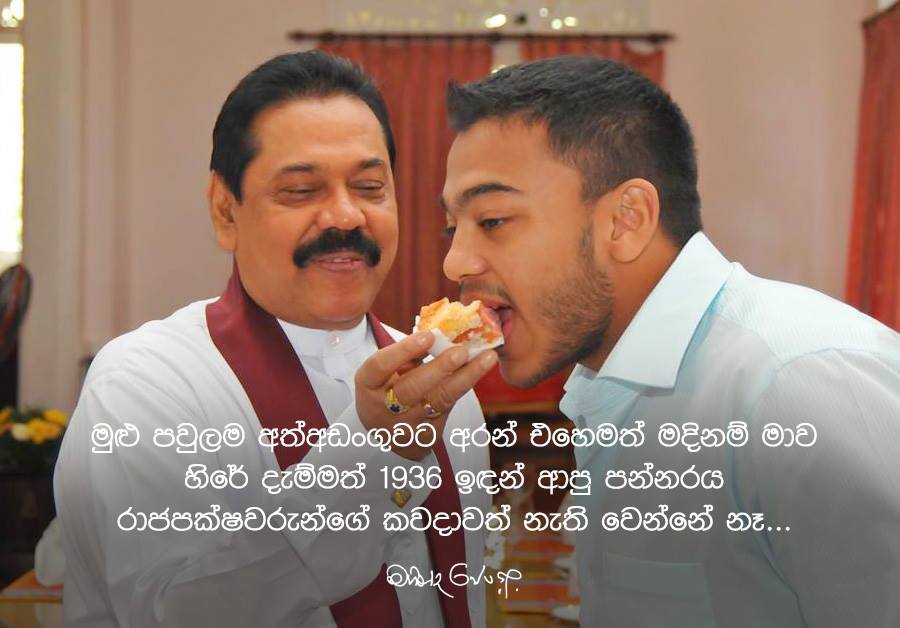 In a picture message uploaded on his official Facebook page just minutes after his son, Yoshitha was remanded for allegedly committing financial irregularities at the Carlton Sports Network,
Rajapaksa said, “Arrest my entire family, and if that is not enough
arrest me, but the temper of steel history left by the Rajapaksa’s since
1936 cannot be wiped out.”
In a picture message uploaded on his official Facebook page just minutes after his son, Yoshitha was remanded for allegedly committing financial irregularities at the Carlton Sports Network,
Rajapaksa said, “Arrest my entire family, and if that is not enough
arrest me, but the temper of steel history left by the Rajapaksa’s since
1936 cannot be wiped out.”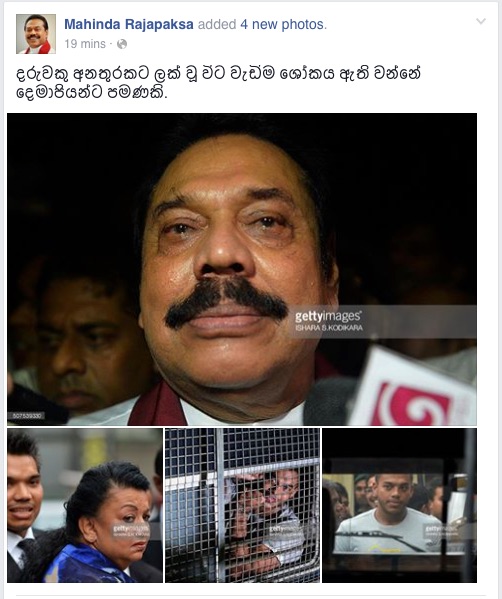
The picture message depicted Rajapaksa feeding his now remanded son, Yoshitha cake during a birthday.
In a separate post, also on his Facebook page, Rajapaksa said that it is
the parents who suffer the most when misfortune befalls a child.
Namal, Rajapaksa’s eldest son in a picture post uploaded on his Facebook
and Twitter pages which showed Mahinda Rajapaksa in tears soon after
the court verdict, said; “The man who wiped off the tears of an entire
country, is today in tears.”

 Sunday, January 31, 2016
 Several wickedly problematic tragi-comedies are playing on Sri Lanka’s political stage right now, none of which are to the benefit of the country.
Why was no deterrent action taken earlier?
The spectacle of mad monks running amok in the Homagama Magistrate’s
Court abusing the magistrate, the lawyers and the wife of disappeared
journalist Prageeth Ekneligoda during an ongoing court hearing this week
was unprecedented, assessed even by the abysmal non-governance that
prevailed during the Rajapaksa decade. No doubt, this was a well
orchestrated drama. But the question remains as to why the
Sirisena-Wickremesinghe coalition did not take steps last year to bring
the monks of the Bodu Bala Sena (BBS) and their unruly leader to heel?
 This
would have been perfectly possible given their notorious history of
incitement to racial hatred, including during the Aluthgama communal
disturbances in 2014. The Government did not need new laws for this
purpose. As pointed out previously in these column spaces, the Penal
Code and the International Covenant on Civil and Political Rights Act
(ICCPR Act, 2007) sufficed. But without actually employing what was
available to send a clear message to saboteurs, wholly unwarranted
amendments were sought to be made to existing laws. The amendments were
then postponed on the floor of the House in considerable disarray after
public protests that the clauses replicated provisions of the dreaded
anti-terrorism laws.
This
would have been perfectly possible given their notorious history of
incitement to racial hatred, including during the Aluthgama communal
disturbances in 2014. The Government did not need new laws for this
purpose. As pointed out previously in these column spaces, the Penal
Code and the International Covenant on Civil and Political Rights Act
(ICCPR Act, 2007) sufficed. But without actually employing what was
available to send a clear message to saboteurs, wholly unwarranted
amendments were sought to be made to existing laws. The amendments were
then postponed on the floor of the House in considerable disarray after
public protests that the clauses replicated provisions of the dreaded
anti-terrorism laws.
In the meantime, a Presidential audience was granted to the BBS monks
who thereafter became emboldened enough to cause a stir in the Homagama
court premises. And therein hangs the tale of what exactly ails the
‘yahapalanaya’ (good governance) administration that was so bravely
voted in by determined Sri Lankans last year. True, the paralysis of
basic administration is no doubt deliberate in some respects, fuelled by
saboteurs of the previous regime. But along with dangerous tolerance
shown to rampaging monks, incoherent leadership prevails across the
board, from limping anti-corruption efforts to a reconciliation
initiative which remains mired in confusion worse confounded.
Glimpsing a worrying obduracy
In recent days moreover, President Maithripala Sirisena’s responses to Sri Lanka’s democratic dilemmas appear to have become obdurate. In interviews given to overseas news channels (BBC and Al Jazeera) the President indulges in rhetoric which is eerily reminiscent of his predecessor in presidential office. Quite apart from the categorical rejection of a ‘hybrid’ war crimes tribunal which is unsurprising, he sidesteps the question of crimes committed during the end stages of the war. And in dismissing allegations by Ekneligoda’s widow that officers of the army high command were obstructing investigations into the disappearance, he asserts therein that even charges leveled by the court in this regard were ‘wrong.’ Certainly if an ordinary citizen had made these claims in public, it would have amounted to an affront to the court.
Meanwhile, brushing aside charges of nepotism, the explanation is that
his brother’s appointment as Chairman of Sri Lanka Telecom did not
amount an exercise of state power, that other relatives had (only) been
appointed to ‘insignificant’ posts and that his son sitting as a member
of the Sri Lanka delegation inside the hall of the United Nations
General Assembly was unimportant in the grand scheme of things.
Given the singular nature of the Rajapaksa Presidency which threw basic
governance to the four winds during its decade in power, it was
inevitable that some lingering traces of the disease would remain. But
President Sirisena’s carefully rehearsed excuses in this regard strike a
discordant note, quite apart from being astoundingly asinine in their
basic logic or lack thereof.
Concrete action needed, not allegations
Neither are there any reassurances forthcoming from President Sirisena’s partner in governance. Prime Minister Ranil Wickremesinghe engaged in his own theatrical dramatics in Parliament on Thursday with scorching criticism directed at Sri Lanka’s mainstream media. True to previous such outbursts, the Prime Minister named and shamed some journalists of having a racist agenda and being ‘collaborators’ with the Rajapaksa regime.
In principle, the Prime Minister’s concerns may be valid. There is
undoubtedly much that is wrong where the integrity of the Sri Lankan
media is concerned. However the same is true of the judiciary, lawyers,
academics and professionals. We must not forget that the media is but a
reflection of society itself. Thus, the degeneration that all sectors of
Sri Lanka have been subjected to during previous decades has been
profound.
That said and while noting a regrettable loss of decorum on the part of
the Prime Minister in naming individuals of little repute who must be
delighted at being so honoured, the use of parliamentary privilege for
these ends is not a good precedent. Even more seriously, he alleged that
an editor had intervened during the previous administration to
‘silence’ a journalistic colleague. The Prime Minister is duty bound to
identify the editor concerned rather than make allegations under the
cloak of privilege.
Distinctive fault lines becoming clearer
In any event, we may justifiably look askance at politicians lecturing the media on integrity. The Prime Minister faulted the media for not having stood up for judicial independence. He may well be right. But what did his 2002-2003 UNF government do in response to the scandalous allegations against the Sarath Silva Court when they came into power? Despite making this one of their campaign promises, they miserably reneged on that promise and played political games until the very last moment when they filed an impeachment motion which was adroitly foiled by then President Chandrika Kumaratunga.
Predictably, former President Mahinda Rajapakse and his supporters have
cried foul that the Prime Minister’s outburst is a threat to free media.
This is rich coming from those who took the state of the media to a new
low during their decade of darkness. We may disregard this with the
contempt that it deserves.
But in sum, it seems as if the ‘we are with the people’ veneer is
wearing somewhat thin on the part of those in power who look
increasingly besieged by their own ambitious promises. The signs are not
propitious as we face daunting challenges ahead. The fault lines of the
Government in dealing with these challenges are becoming distinctively
clearer.
This must remain a matter of intense public concern.
Patriotism Vs Racism
- From Hitler’s Swastika To Sinhale’s Distorted Lion Flag
by Wimalanath Weeraratne- Sunday, January 31, 2016
 Someone
said that patriotism in Sri Lanka is sacrificing one’s neighbour to
salvage your motherland! Sri Lanka has seen the ugly head of racism and
Sinhalese chauvinism trying to make a comeback during the recent past.
One would ask whether Sri Lanka would head back to a tribal past, a
primitive society based on ethno-religious lines, instead of pursuing on
becoming an advanced, developed nation? Undoubtedly, sections of the
country want an archaic, feudal system re-imposed, taking Sri Lanka even
beyond Adolf Hitler’s Nazi Germany.
Someone
said that patriotism in Sri Lanka is sacrificing one’s neighbour to
salvage your motherland! Sri Lanka has seen the ugly head of racism and
Sinhalese chauvinism trying to make a comeback during the recent past.
One would ask whether Sri Lanka would head back to a tribal past, a
primitive society based on ethno-religious lines, instead of pursuing on
becoming an advanced, developed nation? Undoubtedly, sections of the
country want an archaic, feudal system re-imposed, taking Sri Lanka even
beyond Adolf Hitler’s Nazi Germany. I
had the chance to speak to several three wheeler drivers and vehicle
owners who had the Sinha Le sticker. It was not strange that many had
nothing to do with racism, in fact several said they had it because they
thought the sticker looked nice. There is nothing wrong in loving one’s
own race. However, loving one’s race at the cost of another is highly
detrimental.
I
had the chance to speak to several three wheeler drivers and vehicle
owners who had the Sinha Le sticker. It was not strange that many had
nothing to do with racism, in fact several said they had it because they
thought the sticker looked nice. There is nothing wrong in loving one’s
own race. However, loving one’s race at the cost of another is highly
detrimental.
One who loves his or her own race should not show off but should take a
‘noiseless’ approach. Although there are many who have a great love for
his or her own race or religion, a majority does not showcase this to
others. Unfortunately, a majority of those who show off their love for
their race, resort to violent tactics. Such persons are either retards
or hypocrites in my belief. They claim that their country is at siege
from foreign conspirators and their local collaborators.
Sinha Le Read More »
Sunday, January 31, 2016
He may not have realised it yet, perhaps it may take some time for the
light to shine through his burly, black, boorish brawn, but Bodu Bala
Sena Chief Galagodaatte Gnanasara Thera is, no doubt, the darling of the
foreign missionaries who use his mug to portray the ugly face of
Buddhism.
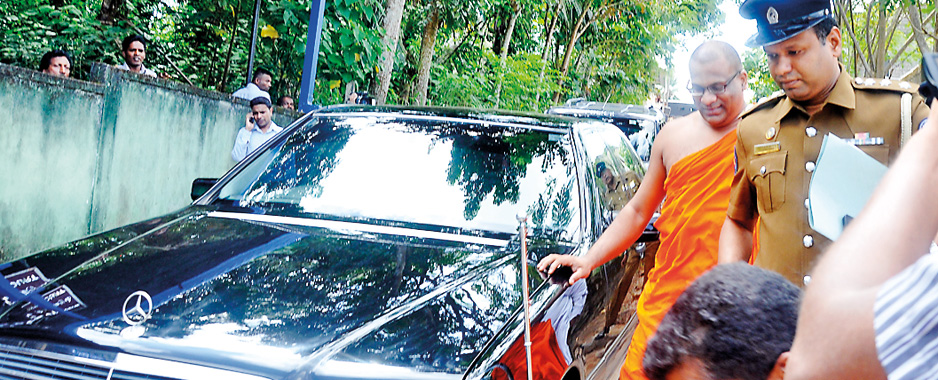
Arrested Body Bala Chief Gnanasara Thera arrives in his Benz to face the music: Will he get his comeuppance this time around?
Neither may he have fathomed it yet, but he is also the pin up boy of
the Tamil Diaspora who use his racist acts as the choreographed steps
and his hate filled words as the heady music to dance their Eelam
Rhapsody upon Lanka’s grave.
The more he attacked the Muslims in the name of singlehandedly
protecting Buddhism in Lanka the more he became a Buddhist Ayatollah.
The more he denigrated other races and other religions and threatened
violence upon them, the more he turned Buddhism’s disciples to a
fundamentalist Buddhist Taliban, ever ready to stain, without qualms,
Buddhism’s saffron robe with blood.
The more he freighted his shabby doctrine to hot spots brimming with
communal tension as he did when he went to Beruwela in June 2014; and
the more he opened his sewers’ sluice gates, like he did at that same
venue, and gave his pent up racist spittle and bigoted foam free flow
and decreed the ‘final solution’ to the Muslims as their ordained
punishment if even one Sinhalese was touched; the more he gave fodder to
Eelamists the world over to nourish and sustain their utopian dream and
justify to the world why it was impossible for the Tamils to live
without fear in Lanka as equal citizens, with a majority race determined
to exercise its racial superiority and allow no place in the sun for
the minorities, be they Tamils or Muslims,
But fifteen years ago it was this same monk Galagodaatte Gnanasara, now
meteorically raised to the heights of national infamy, who, whilst
driving a car in a drunken stupor, knocked down a man who had to be
rushed to hospital with a smashed leg. He was convicted for drink and
driving, in the Colombo Magistrates (Road Motor Vehicle) Court in case
No 6315/2000, including the charge, amongst nine, of not reporting the
accident.
For one who claims that his every act is done in the name of the Buddha
Sasana and that every adverse reaction to it is levelled against the
Buddha Sasana, and that if there is any matter to be settled it must be
settled then and there, Gnanasara Thera is quite averse to discussing
the incident and told a television interviewer two years ago that it
will be a waste of time to talk about it and to skip the subject which
would otherwise take twenty minutes talk time to explain.
 After
remaining as a blessed nonentity for the nation’s good during the
turbulent war years, he graduated to the big league when peace had
dawned to raise the lion’s tail of Sinhala patriotism against a new
racial foe, the Muslims; and launched the Bodu Bala Sena in a lavish
ceremony from the BMICH under the Rajapaksa regime’s patronage with the
declared aim of subjugating the Muslim minority through waves of terror.
After
remaining as a blessed nonentity for the nation’s good during the
turbulent war years, he graduated to the big league when peace had
dawned to raise the lion’s tail of Sinhala patriotism against a new
racial foe, the Muslims; and launched the Bodu Bala Sena in a lavish
ceremony from the BMICH under the Rajapaksa regime’s patronage with the
declared aim of subjugating the Muslim minority through waves of terror.
Subscribe to:
Posts (Atom)