Peace for the World World ! Your War Our Lives

The Dalai Lama
A Brief Colonial History Of Ceylon(SriLanka)
Sri Lanka: One Island Two Nations
A Brief Colonial History Of Ceylon(SriLanka)
Sri Lanka: One Island Two Nations
(Full Story)
Back to 500BC.

Friday, October 1, 2021
Not to the UN or Bologna, the Govt should go to IMF to avoid a full-blown economic collapse


29 September 2021
President Gotabaya Rajapaksa enplaned to New York to address the UN General Assembly. His brother, Prime Minister Mahinda with a 17 member delegation travelled to Italy to speak at an interfaith dialogue of G20 nations held in Bologna. In normal times, those visits would have been customary and, also, tolerable to the local taxpayers. If visits were eventful, it would have been a consolation. However, they weren’t: the host, Italian Prime Minister Mario Draghi did not even afford a meeting with his visiting Sri Lankan counterpart. Equally uneventful was President’s UN visit. Other than a customary brief meeting with the UN Secretary-General, his only significant engagement was with the Prime Minister of Kuwait, Sheikh Sabah Al-Hamad Al-Sabah. The lack of engagement may not have a direct correlation with the country’s foreign profile. Earlier, the United States urged the member states not to send their leaders and instead give a video address, to prevent the annual high-level week from becoming “a super-spreader event”. But they came in droves and Mr Rajapaksa cannot be blamed for following suit.
Instead of these wasteful foreign junkets for sake of ego boost, the government should swallow up false pride and go for an IMF programme. As the two leaders were in their foreign sojourn, the public back home were facing an unprecedented food crisis, a throwback to another period of megalomaniac economic policies in 1970-77.
The government’s spin doctors may deny the existence of such. But milk powder is now rarer and rare earths. Buying a gas canister is an uphill battle. A shortage of rice is worsening as the producers are complaining of an economically unviable control price. To further complicate matters, the shortage could spread to medical supplies at some point. A fuel shortage is a looming possibility, though the lockdown might have spared the country from a full-blown fuel crisis for the time being. Lebanon, another country that is faced with an identical economic crisis earlier limited schools to be opened for only three days to save fuel, and Hizbullah, an Iranian backed militant group that has a stake in the government imported Iranian fuel in breach of the US economic sanctions against Iran.
In Lebanon, political instability and the absence of a functioning government, until the formation of a new one early this month, had exacerbated the economic crisis, fixing which needs deep structural reforms. The political context in Sri Lanka is worlds apart from Lebanon.
Here, an all-powerful president, who had indulged in a wholesale concentration of state power at the expense of other pillars of the government and a ruling party headed by his elder brother who commands a two-third majority in Parliament are scheming to postpone a full-blown crisis through piecemeal politically convenient solutions. That is a crime. Because , they know all too well, these solutions are not solutions at all. They indeed are worsening Sri Lanka’s economic standing in the long term. Without the right economic intervention and painful and politically unpalatable structural reforms and debt restructuring, the crisis-hit economy would explode at some point, leaving 21 million people hapless and their savings worthless.
"If Covid is brought under control and tourist numbers pick up to pre-covid levels, the country might manage to avoid the worst of the economic complications."
Sri Lanka’s foreign reserves have fallen to an estimated US $ 2.30 billion at present from US$ 4.8 billion at the beginning of the year. This is the lowest ebb of the country’s foreign reserves since July 2009. Reserves are depleting rapidly as the cash strapped government is using them to repay foreign loans, including a US$ 1 billion bond repayment in August. Meanwhile, the trade deficit for the first seven months of 2021 has widened to US$ 4.7 billion. The government has already restricted much of what it termed as non essential items, the lion share of the trade deficit is due to the import of intermediate goods for value addition and capital goods.
Tourism revenue had dried up and remittance from migrant labour is taking a hit from the Covid-19 pandemic, both due to factors beyond the control of the government. However, they would further complicate the bridging of the trade deficit.
To make matters worse, a dimwitted ban on chemical fertilizer is expected to result in a substantial loss in the yield of the cash crop. The tea industry is bracing for the eventuality. Other cash crops are similarly affected. The vegetable and rice harvest suffers from the same fate. The fertilizer/pesticide ban would likely result in a 20 per cent drop in production under the most conservative estimates.
In the meanwhile, Sri Lanka has to repay US$ 3.6 billion in foreign loans and interest in 2022. That is more than the country’s foreign reserves at present. The oil import bill is also soaring again. Oil alone accounted for 20 per cent of the import bill, or US$ 3.9 billion in 2019. The decline in the oil prices last year helped the country save an estimated US $ 1.3 billion. However, with the oil price increase in the global market, Sri Lanka’s oil imports increased by 43.7 per cent year on year to US$ 1,.78 billion in the first half of this year, according to Central Bank of Sri Lanka data. The government is reportedly lobbying to buy oil on a credit line from the UAE.
There is no quick fixes, nor piecemeal solutions to the country’s economic crisis. If Covid is brought under control and tourists numbers pick up to pre-Covid levels, the country might manage to avoid the worst of the economic complications. However, the underline rot will remain unattended.
The worst-case scenario is still a possibility. If the economy and the country is crippled by long Covid, or tourists do not come in expected numbers and migrant remittances remains lower than expected, Sri Lanka might head for a disorderly default of its foreign loans.
"The painful but essential path for the long term recovery for Sri Lanka is to opt for an IMF programme, which of course would come with strings, but also expedite the country’s much needed structural reforms on a priority and mandatory basis."
Foreign exchange control of the government has already created a parallel underground market for the dollar, a fate reminiscent of Venezuela or Mugabe’s Zimbabwe. It is the egoistic and self-destructive policies of their leaders that resulted in the collapse of those countries. As for Sri Lanka, the artificial rupee peg can not be sustained without causing a major shortage of imported essential supplies, medicine, electronics and fuel.
The government’s piecemeal economic solutions are intended to save not so much the economy, but the political calculations of the political leadership. It appears as if they are planning to postpone a full-blown economic crisis by 2- 3 years so that it could pass the buck to a future government.
In the meanwhile, it had tried on short term import restrictions and an unsustainable rupee peg. These policies have done more harm, with no long term gains, to the economy than going to IMF for a debt restricting programme.
Another modus operandi of the government, seeking bilateral help from China, India, Bangladesh etc, have thrown a lifeline momentarily, but, fundamental economic problems remain unanswered. To be fair by Sri Lanka’s like-minded friends, none of these countries has an appetite and with the exception of China, the wherewithal to salvage Sri Lanka from its current foreign exchange crisis.
The painful but essential path for the long term recovery for Sri Lanka is to opt for an IMF programme, which of course would come with strings, but also expedite the country’s much needed structural reforms on a priority and mandatory basis.
It is these conditions that this government is loathing. Rajapaksas have dolled out the government jobs and expanded the public sector workforce as if their salaries are paid from an endowment in Medamulana. Gotabaya Rajapaksa kicked off in his new office by recruiting another 100,000 to the lower rungs of the government sector. Such largess at the expense of public tax money is the bane of the country’s economy. Cronyism and backdoor tenders and contracts might also have to be eschewed under the oversight of an IMF led debt restructuring. Ajit Nivard Cabraal, the new Central Bank governor asks what the government would tell the country’s youth if it enters into an IMF programme. He was referring to the fact that the government would not be able to doll out public sector jobs.
A vicious cycle of political calculations that created a culture of dependency, low attainment and low output keeps going on.
Follow @RangaJayasuriya on Twitter

What’s In A Professorial Title? ‘Little Things’ Matter


By Nimal Chandrasena –SEPTEMBER 30, 2021

Dr. Nimal Chandrasena
When the country is caught up in a death spiral (massive-scale corruption, stealing people’s assets and heritage, political chicanery, murder and mayhem, human rights abuses, thuggery, poverty, malnutrition and covid – in that order of importance), one might ask why the author should worry about ‘little things’ about which only the educated elite, arguably, need to be mindful about. But ‘little things’ DO MATTER!
The honorific academic title “Professor” in Sri Lanka is confusing and misleading even reasonably educated professionals. Many of my friends, well-educated professionals in varied fields, refer to some individuals in Sri Lanka, especially those in the Parliament and other endeavours, “He is a Professor”. The implication, pure and simple, is, “they, who are Professors, should know the stuff”!
This assumption people make is conjecture and often completely wrong. Most ‘professors’ may know their chosen fields of study quite well, but they may lack expertise in other areas and the common sense to admit that. Many step out to speak about matters about which they have really no profound grasp. Others are pretenders of knowledge. Only the well-trained have the integrity and honesty to stick to what they know and apply some degree of restraint and discretion when speaking about matters outside their expertise.
I say ‘little things matter’ because of the recent trend of ALL media referring to various individuals as “professors” in Parliament or elsewhere, holding important portfolios. As far as I could recall (I could be corrected here), Stanley Kalpage, the former University Grants Commission (UGC) Chairman (1977-1988 or near), was a Senator in a previous incarnation (since early-1960s). He was often referred to as “Professor Kalpage” within the University circles and outside.
Nowadays, G.L. Peiris, Tissa Vitrana and Channa Jayasumana, parliamentarians, are often in the news, referred to invariably with the title “professor”. W.D Laksman, now discarded Central Bank Governor, has always been referred to with the professorial title. Apart from them, many other individuals also appear to be presenting themselves in the media as ‘professors’. I assume they have earned their colours through the existing UGC system in Sri Lanka or equivalent systems in other countries. I hope they are not pretenders.
The Sri Lanka media appears to keep referring to a few political ‘professorial’ people with another adjective added – calling them ‘senior professor’. The references galore, these days, given the debates on fertilizer and pesticide bans, organic agriculture and other topics that fall within the scientific realms. The references may also fall in different spheres of endeavour (humanities, arts, culture and finance).
The previous Governor of the Central Bank, discarded last month as useless, was also continually projected using his previously-held title ‘professor’. The implication was that he might get the country out of the financial mess we have. Perhaps, he might have – if he had been allowed to do his job for a sustained period! W.D. Lakshman, whom I knew well at the Colombo University, at least would have added an iota of respectability to the highly-tainted Central Bank Governor role. In my view, he should never have accepted the position in the first place at the age of around 78 or 79, to be thrown out at 80 years. He was indeed a very senior genuine ‘professor’ and also a former Vice-Chancellor of Colombo University. What a shame? ‘If you lie with dogs, you will get up having ticks’, and there isn’t much we can do except commiserate with the good gentleman.
The indifferent way the title is used seems to perpetuate the myth that the person referred to as ‘professor’ knows everything and will guide the nation’s future correctly. Hardly the truth, needless to say. But I am more concerned about a system that perpetuates the above myth, and a not too intelligent media, broadly, using the title referring to questionable individuals. Globally, the procedures for becoming elevated by academic merit to a ‘professorship’ are well-established. Sri Lanka is no exception. We also do have a system. However, even a cursory examination will find the bar to jump is quite low within the Sri Lankan UGC schemes.
Dubiously using this time-honoured title referring to parliamentarians produces a rather negative worldview. Although many people do not realize it, the world is watching as Sri Lanka goes through probably one of the most traumatic periods in its history. Make no mistake – The quality of Sri Lanka’s administrative and educational systems, as well as socio-economic and civil society functioning, are presently under severe scrutiny. In many countries, the media would have sorted out the chaff from the wheat by now.
A somewhat confusing title called “Senior Professor” also evolved within the University administration in Sri Lanka in the new millennium. Some Australian academics have asked me who these people are. Correct me if I am wrong – but my answer has been that they are recognized by Sri Lanka’s University Grants Commission as ‘seniors’ service-wise, rather than academic brilliance.
The UGC Circular No. 05/2015 issued on 28 May 2015 appears to be the latest in this regard, and, again, that’s the best information I have. One who has reached the status of a “professor” by merit or by filling a cadre position needs to serve a minimum of 8 years in that position. There is a second requirement – 20 publications in ‘indexed journals. This is really baffling. One has to assume that the ‘professor’ already has those and plenty more! The circular does not stipulate the said 20 publications should be ‘post-professor’. See the confusion? It beggars belief that such anomalies continue to date unchallenged.
A comparable situation is hard to find. The Australian framework for attaining an ‘Associate Professor’ or ‘Professor’ status simply cannot be compared. The Australians, as in other developed countries, ask for evidence of outstanding and unquestionable academic contributions and peers’ recognition.
In other words, brilliant scholarly contributions via book chapters, keynote addresses, participation in expert panels, and the like, coupled with students’ recognition for teaching and guidance. The elevation to a position of ‘professor’ is also anchored by the proof of a significant number of papers published in “peer-reviewed” global journals, not just “indexed journals”.
Often, the numbers of peer-reviewed articles are well more than 150 and, in some cases, in the 300-400 range or more. Anyone can check the profile of an outstanding scholar from outside Sri Lanka to verify this. I must note that some such distinguished scholars are indeed Sri Lankans by birth. Some are world-renowned, brightly shining stars in an otherwise gloomy Sri Lankan sky! I can name quite a few.
Those of us who are Journal editors know that any “predatory journal” can get indexation by paying money. That’s a topic for another day and time, but the Sri Lankan UGC appears to be unaware of this. When Mohan De Silva was UGC Chairman a few years back, I tried to raise the issue to no avail.
The Sri Lankan system should also study the extraordinary improvements that have been made by our neighbour – India and its UGC. In this regard, we should get some help from ‘big brother’ India. Publishing in dubious “indexed” journals is not enough to recognize merit, peer acknowledgement and global standing. India stopped recognizing publications of its academics in predatory publications 2-3 years ago.
My point is a weighty category like ‘senior professor’ is not common in the systems we generally follow in other educational matters, i.e. the American, British Commonwealth countries, European or Australia-New Zealand systems. I don’t think our Sri Lankan UGC will change this terminology. It’s simply not the way the government operates. Still, it does not stop me from wondering why those diligent academics on the island, including previous vice-chancellors and the like, have not brought this matter up for UGC to consider.
More importantly, media and other commentators and the public need to be aware that the title “senior professor” reflects the length of service than academic achievements. In some countries, seniority in service is simply recognized by administrative classes – Grade I, Grade II or, in Australia – Level D (Associate Professor), Level E (Professor) and the like. If Sri Lanka’s education system, once the envy of the developing world, expects recognition globally, it needs to revamp these dubious terms and make them more meaningful. Needless to say, the criteria for recognizing academic achievements should be much higher and on par with at least India.
Read More
A new type of hospitality: How data centres could help revive the Sri Lankan economy
Historically, Sri Lanka has been an attractive destination for traders and travellers alike, and over time, our nation has become synonymous with hospitality. Prior to COVID-19, tourism was among the most dynamic sectors in our economy, generating between $ 3 and $ 4 billion annually.

Wednesday, 29 September 2021
With the movement of people and goods severely restricted globally, tourism and many other crucial sources of foreign exchange will continue to face severe limitations. While all steps must be taken to provide these sectors with the support they need, it is of equal importance to also explore new avenues for growth.
Among the few positive developments to emerge out these disruptions has been the phenomenon of work from home (WFH). Leveraging these capabilities, many enterprises have been able to continue their operations relatively uninterrupted, and in some instances, at an even greater scale than prior to the pandemic.
Fuelling these emerging opportunities are powerful new capabilities in digitalisation that in turn rest on a foundation of critical technology infrastructure. This includes everything from high-speed internet capabilities to data hosting. This is where we believe Sri Lanka has the potential to leverage a new kind of hospitality. Not for people, but for data.

Virtual goldmine
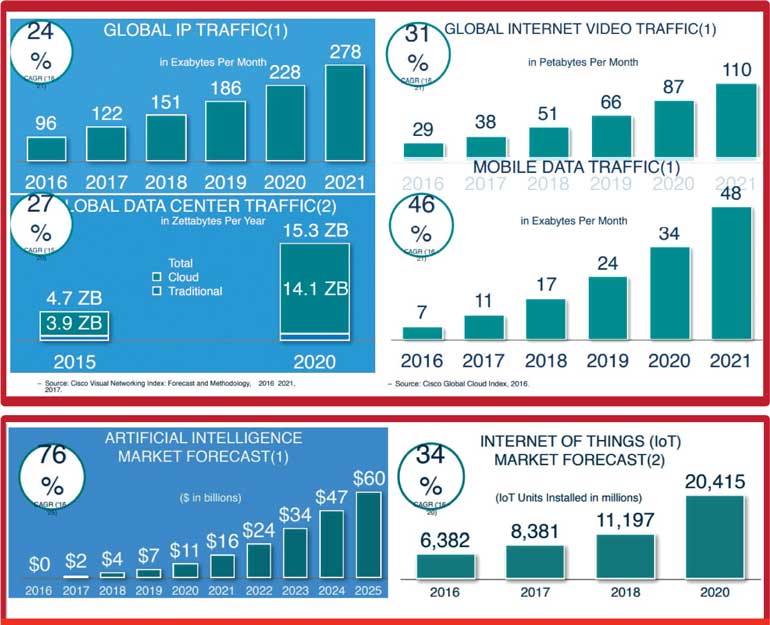
Digitalisation is the new norm, and there is an escalating demand for IT Infrastructure services. Increasingly, instead of building up their individual server capacity, companies are outsourcing data storage requirements to third party data centres in order to centralise and accelerate shared IT operations and equipment. Data centre migration services were projected to grow by 24% by 2024. Post-pandemic, 87% of global IT decision-makers seek to accelerate this journey.
New breed of technologies
A data centre is a facility that centralises an organisation›s shared IT operations and equipment for the purposes of storing, processing, and disseminating business-critical data and applications. Modern data centres provide high-grade facilities and go beyond colocation into cloud and managed services.
While this was already a common trend prior to COVID-19, today the demand for server space and managed services is growing exponentially in Sri Lanka, and more so across the South Asian region. This positions us exceptionally well to service the rapidly rising demand for data hosting emerging out of local corporates, and regional enterprises seeking cost and operational advantages. If managed correctly, Sri Lankan data centres could be turned into a virtual goldmine.

Local growth, global potential
Sri Lanka was ranked among the top 25 destinations of A.T. Kearney’s 2019 Global Services Location Index (GSLI) – a leading benchmark of national competitiveness in tech services. This classification was based on financial attractiveness, skills and availability of qualified personnel, and a welcoming business environment, of which, our people remain one of our best assets.
Additionally, Sri Lanka is ranked the second-best in the world for digital nomads, scoring 238 out of 320 points. Colombo is also recognised as the fourth-best city in the world to work remotely from. In calculating the digital nomad score index, cost of living, safety, average internet speed, and technology adoption, were considered. As much as Sri Lanka is known for its glamorous natural beauty, it has the potential to take centre stage as one of the world’s best tech hubs.
Building on the strong momentum gained so far will require greater utilisation of the globally competitive data hosting capabilities that have been developed, and greater investment to boost capacity even further.
Most of Sri Lanka’s largest and most dynamic enterprises are already taking advantage of this quality infrastructure, resulting in significant competitive advantage. It allows them to meet their aspirations for digitalisation while containing investments and operating costs.
Unique advantages
There are many other factors working in Sri Lanka’s favour, including a highly favourable policy towards attracting IT investment while developing local talent. The Government is also working towards ambitious targets for implementation of e-governance initiatives.
The country is increasingly recognised as an ideal location for new types of opportunities. New job categories – including a uniquely vibrant start-up culture and new approaches to work are also emerging, as evidenced by the rapid expansion of co-working spaces like Hatch. Sri Lanka is also introducing critical new data security regulations. The proposed Data Protection Bill is expected to establish the necessary institutional framework and safeguard the digital ecosystem.
All of these factors point to the start of a new phase of Sri Lanka’s development. Unlike previous eras, however, in the ‘new normal’ our knowledge and IT expertise will be our greatest strength.
Positive progress already underway
Globally, data centres receive their core certifications from the Uptime Institute and The Telecommunications Industry Association (TIA). Uptime Institute certifies the designing and building of data centres based on evaluation of standardised and precise requirements, while TIA is responsible for setting standards on guaranteed availability levels (942 Rate) in the following tiers:
- Tier 1 – 99.671%
- Tier 2 – 99.741%
- Tier 3 – 99.982%
- Tier 4 – 99.995%
Already, Sri Lanka is home to two Tier 3 certified data centres operated by Dialog and SLT in Malabe and Pitipana. Meanwhile, construction of the new data centre at Orion City by OrionStellar has already been completed and the facility is now ready to go live as Sri Lanka’s first carrier-neutral and high-density data centre. This is the first Tier 3 certified data centre within Colombo city limits.
Together with ISO/IEC 27001:2013 (ISO 27001) certifications, Sri Lanka will also be able to offer confidentiality, integrity, availability, and security best practices on par with some of the most advanced in the region.
Geographic advantages
In addition to its globally competitive technical expertise, Sri Lanka serves as a vibrant maritime link between East and West.
Moreover, Sri Lanka’s location in the North-Western region of the Indo Australian plate, well away from the destructive plate boundary, means it’s safe from seismic events. Accordingly, our earthquake hazard is classified as very low with less than a 2% chance of a potentially damaging earthquake in Sri Lanka in the next 50 years. In terms of data storage, this is an unbeatable advantage as even a small seismic event can have serious repercussions on a live data centre.
Sri Lanka is a tropical country with favourable weather patterns and is free from most natural hazards. There is no snowfall, and hurricanes and tornadoes are rare, offering further peace of mind to potential offshoring clients.
Sri Lanka’s location and its historical affinity for communications technology mean that today, the island is connected to no less than eight international submarine cables. This enables Sri Lankan data centres to offer globally competitive connectivity and reliability. By comparison, regional leaders like Singapore have seven international cables, whilst Hong Kong has 11.
Like Hong Kong, Sri Lanka is ideally positioned off the mainland of India, a large and economically vibrant neighbour with strong trade and diplomatic ties. These pre-existing links could easily serve as a catalyst for new opportunities in Sri Lanka.
Our central location on a global scale also means that Sri Lanka is never too far from any time zone, meaning that local IT and engineering teams can easily connect with global enterprises during their operating hours. In many ways, this represents an opportunity to serve as a virtual gateway between East and West.
Electricity supply and connectivity
Relative to its regional peers, Sri Lanka has a reliable and high-quality supply of power with 93% electrification coverage and an uninterrupted power supply. Also, being connected to eight international submarine cables, Sri Lanka ensures ample redundancy and connectivity. Moreover, broadband, leased line and satellite connectivity are widely available with high-speed connectivity and seamless delivery of hosted applications.
Power Usage Effectiveness (PUE)
Power Usage Effectiveness (PUE) and its reciprocal Data Centre Infrastructure Efficiency (DCIE) are widely accepted benchmarking standards in measuring power efficiency. The Uptime Institute also recommends a comprehensive benchmark named Corporate Average Data Centre Efficiency (CADE).
The power utilisation of a data centre is dependent on the cooling of heat-generating server infrastructures. Therefore, the cooling technology used in a data centre defines its level of efficiency. Here, too, Sri Lanka is showing signs of regional leadership, with the upcoming data centre at Orion City designed to use in-raw cooling technology to achieve an optimum PUE of 1.4 - well within the efficiency required limits.
While economic development has been drastically impacted by the pandemic, the island has many significant projects, including most notably, the Colombo Port City Project, which is expected to give rise to a surge in local and international services sector investment, including IT. This, too, will create lucrative opportunities in data centre solutions.
Sri Lanka has also historically been quick to explore and adopt new technology. It was the first in South Asia to set up 4G infrastructure, and 5G services are already partially up and running. The country has a thriving ecosystem of start-ups and new tech ventures, as well as globally recognised leaders like 99x, Millennium IT, and Virtusa.

Cashing in on a golden opportunity
At present, it is estimated that Sri Lankan enterprises outsource just 15% of their IT requirements. In Asia-Pacific that rate is closer to 25% and in Australia, it stands among the highest, with 75% of enterprise IT being outsourced.
Given the above factors, Sri Lanka can offer fully-fledged data centres at costs approximately 25% lower than its counterparts in Singapore and Hong Kong.
Drawing on the success that both these island nations have enjoyed in providing data offshoring to the mainland, the parallels for Sri Lanka become more enticing. Given all the natural advantages Sri Lanka enjoys, and backed by careful policy and investment, the island could become the perfect destination for offshore data centres.
These capabilities can be used to attract leading regional enterprises to Sri Lanka –to set up operations in upcoming mega-developments like Colombo Port City, or to utilise our globally offshoring and disaster recovery applications. If expedited, it could quickly become a much-needed source of strength for Sri Lanka’s weakening foreign currency reserves.
(The author is a specialist in enterprise communication solutions and data centre businesses with over 30 years of collective experience, including the launch of Sri Lanka’s first-ever Tier 3 certified data centre. Currently, he serves as Chief Operations Officer at OrionStellar. He holds a B.Sc. in Engineering, an MBA from the University of Colombo, and a Diploma in Management Accounting from CIMA UK.)
FOOTNOTES
1 The role of cloud for companies in a post-pandemic world: http://www.bbc.com/storyworks/future/a-better-tomorrow/the-role-of-cloud-for-companies-in-a-post-covid-19-world
Youth Dialogue on the Use of Information Act for Justice and Fairness


(Lanka-e-News -29.Sep.2021, 11.00PM) Marking the completion of five years of the first Right to Information Commission of Sri Lanka and in line with international information day (28th September 2021) an awareness program was held in the Central province last day (27) with the participation of over 200 members, organized by the Commission together with the AFRIEL Youth Network, through Zoom.
The program that was led by RTI commissioners Senior Attorney at Law Kishali Pinto-Jayawardena and former President of the Court of Appeal, Justice Rohini Walgama, together with several journalists, community leader and was moderated by Attorney at Law Jagath Liyana Arachchi.
The Commissioners explained the challenges and successes of the past five years in implementing the RTI regime in Sri Lanka, particularly pointing out that the high use of the Act by citizens has been a matter of pride for the country. The awareness program was held under the theme 'Use of Information Act for Justice and Fairness’.
Speaking at the event, Senior Attorney-at-Law Kishali Pinto Jayawardena said that the RTI Act should be further strengthened and that the definition of public authorities should include political parties and further that offices of the Commission should be set up at regional level to strengthen the RTI Act and streamline the appeals hearing.
Requestors need not give reasons when asking for information..
Many participants spoke of their experiences in using the RTI Act. Including instances where they had been called upon by Public Authorities to give reasons for filing information requests. The Commissioners explained that the RTI Act states very clearly that information requestors need not give reasons when asking for information. The Commissioners also highlighted several orders issued by the Commission in this regard.
Ravindra De Silva, Chairman of the AFRIEL Youth Network, explained the achievements of the people of the North in connection with the Information Act and explained with examples where the RTI Act provides access to information irrespective of race or religion.
During the discussion, the commissioners stated that 85 percent of the orders from 2017 to 2020 issued by the Commission were in favour of full or partial disclosure of the information asked by citizens.
A question was posed as to whether NGOs can refuse to release information on the basis that they are not covered under the Act, replying to which the commission members stated that the in fact Act covers NGOs supported by government or overseas funding and engaging in a public service. Question was also raised about the availability of information from private sector service providers engaging in a public function or service, to which the commissioners clarified that those entities are covered by the Act provided that they have a written contract, license or an agreement with a government or provincial entity.
Several exchanges on the manner in which RTI has been enthusiastically used to improve communities and help citizens to monitor government from north to the south took place during this two and half hour discussion.
---------------------------
by (2021-09-29 17:47:10)
Right to Life –Right to toxin-free food


By Dr. Ranil Senanayake- 2021/09/29
It is in this context that we should examine the right to life. Access to clean drinking water, clean breathable air and clean, non-toxic food, must be non-negotiable and fundamental.
Once these fundamental rights are acknowledged, food security and food sovereignty become significant factors of sustainable development. The production of food has been the domain of the farming and fishing communities, from prehistory. However, the strong links that farmers had to their land are being severed by the introduction of industrial farming and the subsequent ‘Green Revolution’ technological package. The traditional knowledge and genes that had sustained humanity for over three thousand years are discounted and replaced with high energy-dependent, biodiversity poor, toxic methods of farming, supported and financed by the international banking system.
The tragedy is clearly outlined in the statement from the National Farmer Federation of Sri Lanka which made the following declaration to the Consultative Group in International Agricultural Research (CGIAR) in 1998. They said:
“We believe that we speak for all of our brothers and sisters, the world over, when we identify ourselves as a community who are integrally tied to the success of ensuring global food security. In fact, it is our community who have contributed to the possibility of food security in every country, since mankind evolved from a hunter-gather existence. We have watched for many years, as the progression of experts, scientists and development agents passed through our communities with some or another facet of the modern scientific world. We confess that at the start we were unsophisticated in matters of the outside world and welcomed this input. We followed advice and we planted as we were instructed. The result was a loss of the varieties of seeds that we carried with us through history, often spanning three or more millennia. The result was the complete dependence of high input crops that robbed us of crop independence. In addition, we farmers, producers of food, respected for our ability to feed populations, were turned into the poisoners of land and living things, including fellow human beings.”
Today we are faced with the spectre of ever-widening circles of agricultural poisoning that has seen an exponential increase in non-communicable diseases of farmers and rural folk. Everyone agrees that it is a toxic cause, but as there is no demonstrable causal link, the application of the suspect materials continues unabated. The critical question is; when did this syndrome start to manifest?’ The link to the time of abandonment of traditional agriculture, in favour of the ‘Green Revolution’, and the acceptance of exposure to toxic chemicals, as an agricultural norm, is very clear.
The precautionary principle was never invoked. There was no discussion of synergistic effects, bioconcentration and other processes that can render the agroecosystem toxic to the farming populations. Can the erosion of a benign traditional agricultural system that had co-evolved with the biodiversity of this country for over three thousand years to an exotic, toxic, fossil energy-dependent, agricultural system, be seen as more ‘developed’?
Agriculture is the production of food, medicines and fibre by biological systems. Thus, agricultural sustainability must consider biological sustainability. In a biological sense, sustainability is the potential to recover from perturbation and stress (Conway, 1985). A sustainable system oscillates between inflexible boundary conditions. If the boundary conditions are exceeded, a change in state occurs so that the system loses its original identity and potential. Thus, the sustainability of this system is determined by its boundary conditions as well as its internal dynamics. A biological entity is a product of its temporal and genetic history in varying environments. There are environmental thresholds that cannot be transcended without extinction. In other words, every living thing has limits; be it temperature, water, salt or food, take too much you die, take too little, you die. While acclimatisation often allows an individual, or species, to change its measured thresholds, there exist lethal thresholds beyond which an organism cannot transcend. So, sustainability, when applied in the biological context, will be seen to be defined by inflexible boundaries. If the degree of perturbation or stress makes it transcend the boundaries it loses its identity as an organism or an ecosystem.
Agrarian societies, with long histories, possess the credibility of having sustained themselves successfully under the rigour of survival in a natural world. The looming problem for the future is that the model chosen for sustaining the future global agrarian society is an energy and resource-demanding production system, while no investment is being made to research, building on traditional systems.
The burgeoning populations of the future may have no other option than high energy input agriculture to sustain them, simply because we have not invested in examining any other option. Some of the reasoning may lie in thinking that feeding a rapidly growing world population, a socioeconomic problem, can be resolved through reductionist, technological approaches. However, it is becoming evident that the present resource-expensive system of agrarian production will become increasingly more expensive to maintain. This phenomenon is a result of increasing input costs and decreasing productivity of the land. The predicted global climate effects will also make large areas of monocultures risky. There may be value in examining other options.
The value in maintaining diversity is the constant availability of a large number of options. This applies equally well, whether in the case of marketing products or responding to disease or episodic climatic events. The question to be examined by designers of global society is ‘how much diversity can be conserved within the emerging global society? And ‘how much external energy is spent on the production of food? If the lessons learnt at the level of local societies are anything to go by, the goals of sustainability will be achieved best by conserving the diversity of global society and reducing the need for fossil energy to produce food.
The simplistic drive of modern agriculture, that accepts food production as merely an output of chemical applied to the soil, has lost touch with reality. Today we witness a radical change in the practice of agriculture. Both the ‘Green Revolution’ and ‘Industrial Agriculture’, with their emphasis on energy subsidies to overcome constraints in increasing production, have brought about an enormous change in the biodiversity and sustainability status of agriculture. The impact of this high energy input, low biodiversity agriculture has not only been felt by the sustainability of ecosystems. It has also impacted the sustainability of cultural systems. The ethics of such changes have largely gone unaddressed.
Ethics is loose currency in a world justified only by ‘objective’ science, to justify profits. Yet, it is this very blind faith in ‘objectivity’ that has contributed to the collapse of social relations as seen in the ever-increasing crime rates and social dislocation in ‘developed’ societies. This dilemma is brought into focus by the question posed by Upali Senanayake at the first conference on Agricultural Sustainability, answering a question as to ‘what is so important in maintaining ethics as a value in an objective scientific community’. He answered with the question; “If you are completely ‘objective’ and place no value in ethics, then how can I trust you? By this question, he highlighted the value of ethics in maintaining social contracts.
In a country where farmers produce food for themselves, without toxins, while growing food with heavy doses of toxins separately, for the market, it demonstrates a mindset totally devoid of ethics. To meet the right to consume poison-free food, not only do we have to look for policies that safeguard this right, we also need farmers with a sense of ethics and responsibility towards those who consume the food they produce.
The wrongful release of 15 illegally captured elephants


30 September 2021
 I am deeply saddened and disappointed by the recent release of 15 elephants that were in the care and custody of the state; back to persons who are alleged to have unlawfully captured them or purchased the said elephants from those who have unlawfully captured them.
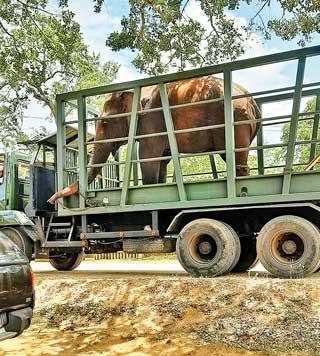 These young elephants were taken into custody between 2010 and 2015 as evidence of illegal elephant trafficking. It is deeply upsetting to know that these wild animals will once again face life in chains, tormented by man. Even though the conditions the state provided for these majestic wild animals are not as ideal as their life in the wild, they were well cared for and free from stress, tension and lived in the company of their own kind.
The 15 elephants include female Sujeewa who gave birth to a calf in Udawalawe. They currently remain in Udawalawe and their fate is yet to be decided. I sincerely hope that the relevant authorities, officers, and those who are in charge will take the morally, spiritually and legally correct action and return these elephants back to Udawalawe, Pinnawala and Ridiyagama, where they have lived for the 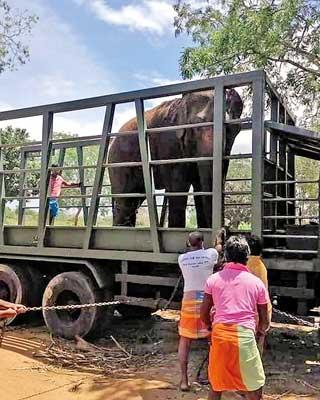
past few years.
Elephants are sentient beings that deserve the right to live a life of freedom amongst others of their kind. I hope justice will prevail. I request the right-thinking, empathic and compassionate citizens of our nation who I truly believe are the majority, to join me and others in the stand that has been taken for justice and to speak out and take action on behalf of these voiceless animals who have had their freedom stolen for the benefit of a few individuals.
CEB Engineers Reject LNG Deal As A Scam


By Kumar David –SEPTEMBER 30, 2021

Prof. Kumar David
Suppose a Petrol Company (PC) offers you a fleet of taxis free, but on condition you buy your petrol from PC for 5 years. Suppose that the value of the taxi fleet is Rs 25 million but the cost of the petrol you will consume in the five year period is Rs 500 million. Whether you like it or not you must buy an agreed quantum of petrol from PC. This is a simple way to explain the conflict between Basil’s Finance Ministry and CEB Engineers. A Sinhala video by CEBEU President Saumya Kumaravadu provides an excellent summary:
An English statement can be read here
A US company called New Fortress Energy (NFE) will be the supplier of equipment, which consists of a floating regasification unit 5 miles out at sea and pipelines to bring gas ashore for the currently coal-fired 310MW West Coast power station (WCPS) Yuadhani which will be converted to gas and the diesel/gas fired proposed Sobadhanavi 350MW station; a total capacity of 660MW. Liquefied Natural Gas (LNG) has to be stored at extremely low (sub-zero) temperatures, transported in special tankers, stored at the floating terminal, re-‘gasified’ as needed and sent ashore. The BAIT is that NFE will buy 40% of WCPS for $250 million (investment), the TRAP is the compulsory purchase of LNG for both power stations and others taking gas from this facility. Sri Lanka has been trapped; it is infeasible to build a second FRSU and pipelines in a relatively small country.
The CEBEU says the CEB will incur fuel supply expenditure of $6 billion per annum. If NFE makes, say 10% to 15% profit on the sale of LNG, it will make a gross profit of $900 billion over the period. The deal stipulates that Sri Lanka must buy its LNG from NFE. You might say “What’s the problem we will have to buy it from somewhere?” And that’s the catch. Basil has entered into a Take-or-Pay contract for a certain amount of LNG. If CEB in any year (lots of rainfall say) does not need that much, too bad; it will have to Take-or-Pay even if it does not use it, like paying alimony to an estranged wife. The amount contracted is more than what the two power stations need. If the plants run at a likely 70% plant-factor their combined LNG-energy requirement averages about 34.5 MMBtu per annum according to my back of the envelope calculations. But the New Fortress website says it “will initially provide the equivalent of an estimated 1.2 million gallons of LNG (35,000 MMBtu) per day to GOSL, with the expectation of significant growth as new power plants become operational.” This is absurd as I will explain in next Sunday’s column. There will also be a fixed charge spread over the period by means of which NFE will recover its full investment costs.
Pricing could also be a problem. The price is Henry Hub, a famous LNG shipping point in Texas plus a nominal extra. Henry Hub price is ok, but often buyers shop around on the LNG spot-market and make good spot-deals ex-Singapore, the Middle East and from Japanese dealers. No more doing this in future except when we need more than contracted amount. Buying from Henry Hub is no problem, anyone can buy there anytime
Read More
Subscribe to:
Posts (Atom)