Peace for the World World ! Your War Our Lives

The Dalai Lama
A Brief Colonial History Of Ceylon(SriLanka)
Sri Lanka: One Island Two Nations
A Brief Colonial History Of Ceylon(SriLanka)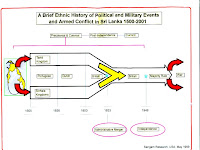
Sri Lanka: One Island Two Nations
(Full Story)
Back to 500BC.
Tuesday, March 1, 2022
The Future of the Agriculture and the Agriculture of the Future


Monday, 28 February 2022
New scholarly work on agriculture
The Emeritus Professor Ranjith Senaratne, formerly Vice Chancellor of the University of Ruhuna and presently Chairperson, National Science Foundation, has just released the third of his edited work under an apt title ‘The Future of the Agriculture and the Agriculture of the Future’. Its subtitle, ‘From Beaten Track to Untrodden Paths’, implies that agriculture, like any other economic activity, should disrupt itself and move into new areas if it is to serve the world’s population at large.
Previously he published a similar edited work on Ceylon Cinnamon (a review could be accessed at: https://www.ft.lk/columns/Can-Sri-Lanka-regain-glory-of-cinnamon-Yes-according-to-Senaratne-and-Pathirana/4-714349) and on what policy strategies Sri Lanka should adopt to get out of the multitude of ailments caused by COVID-19 pandemic (a review could be accessed at: https://www.ft.lk/columns/COVID-19-pandemic-A-brief-to-Sri-Lanka-s-authorities-by-the-scientific-community/4-728945).
While these two works have been team-editions, the latest edition has been completed as a solo work. To accomplish this task, he has got 35 scholars to produce 20 papers on numerous topics in agriculture.
Disrupted agriculture in Sri Lanka
The release of this scholarly work is timely because Sri Lanka’s agriculture has been disrupted by delivering a negative shock to it by the Gotabaya Rajapaksa administration in its attempt at converting it to organic farming overnight. When this was announced in April 2021 in the guise of supplying toxin-free food products to Sri Lankans, 30 agricultural scientists presented a joint memo to the President highlighting its disruptive features and urging the president to defer it or implement it over a period. Prof. Senaratne as a scientist had been the first signatory to this memo (see a review of this memo at https://www.ft.lk/columns/Fertiliser-fiasco-Shouldn-t-the-Government-listen-to-expert-advice/4-719438 ).
Sri Lanka’s agriculture based on decades-long improved varieties that had been introduced local scientists had been fully dependent on chemical fertilisers and pesticides for delivering a high output, a must in a competitive world. When it is denied of essential nutrients by a sudden political decision that had not consulted the scientific community before introducing it, the inevitable result would have been a drop in the output. These scientists had predicted a drop of about 30-50% in the output depending on the type of the crop. This wise counsel was not heeded to, and scientific opinions were not sought. Instead, those who had nothing to do with agriculture or science were the top policy advisors on the new disruptive move. Now Ranjith Senaratne has collected scientists’ views on the development of agriculture, and it should be an essential reading by those who make policies on agriculture in the Gotabaya Rajapaksa administration.
 It should be a new Agri-Culture
In the Preface to the volume, Senaratne has highlighted that modern agriculture not only feeds the increasing mouths of the globe but also provides numerous inputs to a dozen of other activities such as production of medicines, biofuels, cosmetics, feeds for animals, to mention but a few. But the arable land available for this purpose is limited. When attempts are made to increase the output intensively in the limited arable land space, environmental issues should naturally arise. Hence, the challenge before the modern agriculture, according to Senaratne is to make agriculture ‘more productive, more resource-efficient, more resilient, more environment-friendly, less wasteful and more profitable’.
These are competing goals and to attain them simultaneously agricultural policymakers will have to balance them appropriately. It, says Senaratne, is a new system that can be called Agri-Culture combining the two concepts separately into a new subject matter. The purpose of the present treatise has been to bring out a blueprint of this New Agri-Culture. That is why the book is titled ‘The Future of the Agriculture and the Agriculture of the Future’ implying that they are two separate subjects that should be studied together.
 From conventional to knowledge-based farming
In the introduction to the volume, Ranjith Senaratne and Duwini Padukkage have taken the readers through Sri Lanka’s agriculture from a historical perspective and concluded that the future of agriculture depends on the ability of the country to break away from conventional farming to knowledge-based scientific farming. For that, the country needs to make a substantial investment in research and development facilitated by the private sector. The emphasis on the private sector in this conclusion differs from the general belief harboured by many that it is the responsibility of the Government to initiate such research programs.
Contrary to this view, the private sector’s participation in research and development is needed because it will facilitate the commercial production of such research outcomes, a process known in economics as innovation. Thus, in today’s context, research and development should be supplemented by innovation because inventions which researchers would make should be put into practice in the field by entrepreneurs. This has been further analysed by Rizvi Zaheed in his paper on the private sector’s role in technology transfer in agriculture. His conclusion has been that the private sector should be used for this purpose since it has both the capacity and the will to develop technology, adopt it, and facilitate its transfer which is known as diffusion.
Sri Lanka cannot grow everything
Many in Sri Lanka believe that the country should adopt a zero-import policy of foods and Agri-products because they can be produced in the country. This is an extreme version of import substitution. However, the limitations in resource endowments do not permit Sri Lanka to go for this policy target since products like wheat, dhal, certain fruits and vegetables, fish, vegetable oils, and wine cannot be produced in the country. This issue has been analysed by Jeevika Weerahewa, Sumali Dissanayake, and Erandathie Pathiraja in their paper on import of foodstuffs and agricultural raw materials to Sri Lanka.
They have found that despite the massive increase in the trade deficit over the years, the share of foods and beverages in total imports have steadily declined from 70% in 1999 to 30% in 2017. Even then, most of such imports are industry raw materials like wheat. Hence, the claim that Sri Lanka is wasting its forex earnings for importing foodstuffs is an overblown perception.
No direct evidence between pesticides and kidney diseases
The agricultural policy of the present Government is driven by perceived concerns about the adverse health effects of the use of chemical fertilisers and pesticides. As mentioned earlier, the Government has banned the importation of both these inputs, on one side, and promoted the organic farming, on the other, to provide a toxin-free food basket to citizens. A paper by Sudheera Jayasinghe has analysed the health effects of the use of pesticides, while that by Piyasena Abeygunawardena has investigated the potential and the scope of organic farming in Sri Lanka. Sudheera Jayasinghe’s paper has concluded that it is not the use of pesticides per se that will have adverse impact on health but its overuse and misuse.
As a result, these pesticides have reached destinations which have not been intended and generated harmful effects on health and environment. Hence, it is not a reason to go for a total ban of pesticides. The proper education of farmers on the correct use of these essential inputs would have solved the problem. However, there is a wide claim by some that the chronic kidney disease of unknown etiology or CKDu prevalent in the North Central Province in Sri Lanka has been caused by the use of pesticides by farmers.
But Jayasinghe concludes that the present research knowledge does not establish such a direct relationship. There are many other factors that may have contributed to CKDu. Abeygunawardena has concluded that though organic farming has become popular in recent times, it has failed to compete out the traditional farming methods and therefore should be promoted as the only way forward for the agriculture of the future. But this is a very strong conclusion and, given its limitations in output, markets, and scope, it will take a very long time for the global community to reach that target.
Go for crop diversification
Sri Lanka has been successful in becoming self-sufficient in rice requirement by 2010 by using high-yielding varieties, chemical fertilisers, and pesticides. However, one problem faced by agriculturists throughout the globe has been the degradation of the ecosystem due to unplanned use of inputs. Agriculture cannot sustain unless a solution is found to this problem. Ranjith Pathirana and Athula Liyanage have investigated this issue by using case studies from Sri Lanka involving the erosion of crop genetic diversity due to the introduction of high input hybrid planting materials. Their suggestion is that Sri Lanka should use crop and variety diversification as an alternative regenerative food system.
Soil erosion and agriculture
Agriculture which uses natural resources like soil and water abundantly faces a critical problem when it comes to ensuring sustainability because the quality of soil can be degraded, or water resources could dry out with accelerated use of these resources without replenishment. In this context, the issue of soil degradation and how it could be overcome have been investigated by Ranjith B. Mapa, D.B. Wickramasinghe, and H.B. Nayakekorale in a paper titled ‘Threat to Food Production by Soil Degradation and Impoverishment. In common parlance, this is known as soil erosion, but it is caused by both natural reasons and human interventions.
According to the authors, one problem faced by Sri Lanka is the multiplicity of governmental authorities – there are 11 such authorities – charged with the task but functioning without coordination with each other, and hence, become a failure. Consequently, the authors opine, it is time to combine all these authorities and set up a single soil conservation authority to identify the sources of erosion and address them according to the need.
Water problem in agriculture
The water problem in agriculture is as critical as the problem of soil erosion. This is because the main crop in Sri Lanka, rice farming, is not only a water guzzler but also a crop for which water is overused. I have discussed this issue elsewhere (available at: https://www.ft.lk/columns/Australia-s-rice-miracle-Should-Sri-Lanka-learn-a-lesson-or-two-from-it/4-718904). Arumugam Kandiah and P.B. Dharmasena have investigated the high water use in agriculture amongst competing demands and the ways for coping with the problem.
According to the authors, while rice uses 3,442 litres of water to produce a kilogram of rice, tea uses 7,334 litres, and rubber 18,124 litres. The need for producing more foods to keep the world population fed requires the use of more water in greater volumes. But water is needed by households, industry, and for hydropower generation. When these competing demands are met, there is no sufficient water available for agriculture. Hence, it is necessary to devise methods of efficient use of water in agriculture.
The authors suggest that while improving water productivity, action should be taken to reduce food wastage so that water use in agriculture could be kept at a low level. Writing on the same theme, Asha S. Karunaratne has argued that the use of water and land should be optimised for improving crop productivity and quality.
Produce more with less
The future of agriculture depends on the improvement of productivity and efficiency of resource use to produce more with less. Sri Lanka has already reached this critical level in both subsistence farming involving the production of food crops and commercial agriculture involving the production of exportable crops. There is no unlimited resource availability for any economic activity. A nation which ignores this crucial requirement is to suffer in the long run with declining outputs and incomes of people who are engaged in it. This must be avoided at any cost.
Agriculture of the future: Use digital revolution
The agriculture of the future is therefore dependent on modernising the same on modern lines. This is the second green revolution akin to the fourth industrial revolution in manufacturing. I have analysed this issue in a previous article in this series (available at: https://www.ft.lk/columns/COVID-19-fallout-Support-agriculture-but-not-on-old-lines/4-700650). In this connection, Athula Ginige, Pathirage Samya Dimithrie, Sreenivasulu Midhhe, and Parimal Kumar have presented a blueprint of using digital technology for eco-friendly, resource efficient, knowledge driven agriculture in the future. This is the second green revolution that should be introduced to agriculture.
The possibilities which the authors have suggested are the use of sensors, software, digital connectivity, location tracking, robotics, data analytics, and digital devices in agriculture. One plus point in using digital technology is the decline in the cost of data use when the costs of all other inputs are rising. These high digital technologies can deliver the inputs needed, namely, water, fertilisers, and pesticides more efficiently to plants when they most need such inputs. What this means is that the agriculture of the future is not small-farmer based traditional farming, but smart-farmer based modern farming. This is a must and agricultural policy authorities should prepare the farmers as well as the systems in agriculture to embrace this.
Ranjith Senaratne by editing this volume has opened the eyes of Sri Lanka’s policymakers to new trends in agriculture. In my view, it is a must reading for them.
(The writer, a former Deputy Governor of the Central Bank of Sri Lanka, can be reached at waw1949@gmail.com.)

Veddahs, jungle creatures, medicinal plants and the cry of the ‘devil’ bird

(Continued from last week)

By Jayantha Jayewardene- 2022/02/27
Jackal
I have heard it said that the jackal has a unique way of getting rid of the ticks and fleas that get onto its skin and hide in its thick hair. It gets a piece of coconut husk in its mouth and wades into a stream with the husk held high. It goes deeper and deeper into the water till the drowning fleas all move up and get onto the husk, which is still above the water. Then the jackal releases the coconut husk into the water, thus drowning the fleas and then comes back to shore. I have not seen a jackal with a coconut husk or anything else in its mouth though I have seen many of them in the water.
Elephant legends
There is a legend that elephants, when they know they are going to die, proceed to the ‘elephant cemetery’. Most people, if any, have not seen these cemeteries but some believe that they do exist. When a sick or aging elephant is in discomfort, it looks for water and continues to stay close to this source because it is in constant need of water when in this condition. The elephant ultimately dies there and adds to the bones of other elephants that have ‘ gone before’.
Brohier (1971) mentions that he came across a place called Mahapelessa near Embilipitiya, where he found bones of dead elephants including one which had died about two weeks previously. He found ‘in one of the many pockets of this vast stretch of glade’ a spring from which gushed out plenty of water. This water was so hot that a hand could not be kept in it. He deduced that the animals had come for the therapeutic value of these thermal waters. Tests have shown that the water from these springs contains an excess of sodium and chloride. Elephants are known to be attracted to ‘salt licks’ wherever these are found in their jungle habitats.
I have been to Mahapelessa many times when I was working on the Mahaweli Development Project, Uda Walawe being one of my working areas. I have not seen any evidence of elephants dying there though they visited the place regularly.

When on a camping trip with Emil van der Poorten in Kantalai in the late 1950s, an interesting legend was related to me. An elephant is supposed to have trampled the young of the small quail, whose nest happened to be on its track. The elephant did not even realize that it had crushed the quail. However, the mother bird went and told the crow, the fly and the frog what had happened. They decided to teach the elephant a lesson. The crow pecked at the eyes of the elephant and the fly deposited its eggs in the wounded eyes. As a result, the elephant was blinded, and over a period of time it became very thirsty. The frog started croaking, and the elephant thus thinking that it was close to water, went towards the direction of the croaking. The frog then led the elephant to the edge of a precipice, over which it fell and was killed.
Coastal Veddhas
Since my association with the coastal Veddhas of Panichankerni was nearly 40 years ago, I had to consult my friend Emil van der Poorten for some details. Emil owned a house at Panichankerni, which we used regularly as a base for our forays into wild places. Though the coastal Veddhas that lived in Panichankerni were not considered true Veddahs at the time, Emil and I observed that they appeared to be quite different in their lifestyle when compared to the established Tamil and Muslim populations of the eastern coast and of course the better known Veddhas of Bintenne.
The houses of the coastal veddhas were far less substantial than those of the Tamils and the Muslims and they gave the impression that they were in transition from the thatched, mobile houses of the Veddahs and the gypsies, to the more permanent dwellings of the non-aboriginal settlers. They kept the gardens around their homes clean. The compounds were littered with the light sea sand found in Panichankerni and some of the other villages around.
The Veddhas subsisted on crops grown in their chenas, as well as collections of crabs, prawns and fish they caught by throwing their nets into lagoons and estuaries around them. I think they were responsible for setting up crab and prawn traps, known in Sinhala as kotuwa in the lagoon. We never saw them doing any canoe fishing in the ocean, and neither did they go out to sea as other communities did.
They relished the flesh of the land monitor (thalagoya) but did not seem to harvest honey, though they picked palu and weera fruit in season, as anyone who lived close to those forests would do. They appeared to place a very low priority on formal education, and the majority lacked functional literacy in Tamil, which was their spoken language. They did not seem to have any deep knowledge of the jungles in the area. I do not recall the presence of any trackers of note among them.
They did not have any contact with the Veddahs of Bintenne and its adjoining country. They have lived in coastal areas for a considerable period of time. I am not sure whether they owned the land they lived in or whether they were squatters on the land after they were prevented from leading a wandering existence by laws involving land tenure brought in by the British.
They did not seem to intermarry with the mainstream Tamils of the area. It may be that the latter with their caste system looked down upon the Veddahs. Apart from caste, this dissociation could also have been forced by an economic factor, namely poverty. It did not seem likely that Veddhas, who did not possess cattle, could have provided a dowry of any significance for their daughters. They appeared to be a relatively non-violent people who subsisted on the fruits of the jungle and produce from the lagoons and perhaps the sea.

A special feature of the many occasions we spent at Panichankerni was to go onto the reef at low tide during certain times of the year, and catch crawfish or rock lobsters. These were slightly smaller than the ordinary lobsters. The crawfish is a marine species, while the crayfish is a freshwater crustacean. One rare night we literally caught a sackful of rock lobsters. Since I was nursing a cartilage injury on my knee, Emil had to carry this load all the way back to our abode on the beach.
Kalu nika
The twig of the legendary plant kalu nika is supposed to help one to achieve eternal youth. However, a kalu nika plant is supposed to be something that is extremely difficult to find. It is believed that the crow pheasant, uses a twig or two of the plant (some say it is a root), to build its nest. If one finds this nest, it should be taken to a place where two rivers or streams meet and thrown into the water. The kalu nika twigs float upstream whilst the other twigs float downstream. However, the crow pheasant, being from the cuckoo family, does not build a nest but lays its eggs in that of another bird. All cuckoos are parasitic in their breeding habits.
Another variation that I heard with regard to obtaining kalu nika, is that one must find the nest of the crow pheasant with a chick in it. One leg of the chick should be fastened by a small chain to the bottom of the nest. The parent bird will then fly off to try and get a twig of kalu nika, which has the power of breaking the chain and setting the young bird free. The kalu nika is left behind in the nest and can then be collected. In this story the crow pheasant does not use kalu nika as material to build its nest
Devil bird
The controversy and mystery of the devil bird, known as ulama in Sinhala and pe-kuruvi in Tamil, have been unresolved for a very long time. Those who have been out in the jungles at night and heard this eerie cry credited to the devil bird will never forget it. It is a piercing cry that frightens and chills one to the bone. It has been likened, by many who have heard it, to a woman being strangled. I have heard this cry when we were camping at Padaviya, in North Central Province, but not having heard the cries of a woman being strangled, I cannot make the comparison. I have also heard this same cry in Panama on the south-east coast. The cry is nevertheless very frightening.
On both occasions the sound I heard was similar. The villagers who were with us said that the cry bore ill will and that something tragic would occur soon. Even if it did occur after we left, I did not hear about it.
However there are many others who have heard the devil bird but describe what they have heard as ‘a long drawn out hoo note, persistently repeated and then ending in a loud agonized and strangled sobbing. The sound struck sheer, stark inexplicable terror, and died away somewhat abruptly’.
At night in the jungle when we discuss the events of the day, old tales, legends and superstitions are recounted. The ulama and its cry come into the conversation from time to time. The villagers, especially the old stagers, have very firm opinions as to what the ulama is. However, who or what the ulama is varies from place to place.
One of the legends has it that there was a family in which the husband was a drunkard. One day when the wife was away, he killed their small daughter and cooked the flesh. On her return, he gave it to his wife to eat. She was serving herself with a wooden ladle when she came across a little finger. She immediately asked for her daughter and on seeing her grinning husband, realized what had happened.
She was distraught and sticking the ladle into her hair in despair, she ran out of the house into the jungle shouting ‘mage lamaya ko?’ (where is my child?). In another version it is said that the husband had brought home a hunk of flesh to be cooked. While the wife was cooking it the husband started to drink. Unfortunately the wife burnt the flesh and told her husband what had happened, expecting a severe reprimand from him.
However, he did not say anything but went back towards the jungle. In the garden he spotted their daughter playing. He killed her and brought a piece of her flesh to his wife to cook. When she was cooking this flesh unsuspectingly, she came across the daughter’s finger in the ladle. She then stuck the ladle into her hair which was tied in a knot at the back of her head and ran out shouting as in the earlier version.
The source of its eerie and frightening cry has been attributed to two or three birds. The two birds that most naturalists consider as culprits are the forest eagle owl and the crested hawk eagle, now known as changeable hawk eagle. This bird’s crest, according to legend, happens to be the handle of the ladle.

Korawakka or waterfowl
The waterfowl (korawakka) once went across the river to get some arecanut. (puwak). Since there were a number of bags of arecanut to be brought across the river, the waterfowl hired the boat belonging to the woodpecker. In the middle of the river, the boat capsized and together with the bags of arecanut sank to the bottom of the river. The wailing of the waterfowl and the woodpecker brought a flock of geese to their assistance. The geese dived in and tried to get the bags of arecanut up. However, due to the weight of the bags, the geese failed to lift them up, but in trying to do so, they stretched their necks. As a result, even to this day they carry long necks. Even now the waterfowl goes about calling puwak, puwak, puwak in search of its arecanuts and the woodpecker goes pecking from tree to tree in search of suitable wood to build himself a new boat.
Rumassala and Ritigala
When I was working in the Mahaweli Development Project at Kalawewa we used to regularly climb Ritigala, which was close by. Ritigala is now a Strict Nature Reserve. The higher you go the more changes you see in the vegetation and climate. The place abounds with bird life and unique plants.
Ramayana, the ancient Indian epic, states that Ravana the king of Lanka went to India and abducted beautiful Sita, the wife of Rama, and brought her to Lanka. Rama then came to Lanka to wage war against Ravana and take Sita back.
He brought with him a band of Vanaras, a tribe of ape-like creatures led by Hanuman. Rama was injured in the battle and Hanuman was sent to the Himalayas to bring back the herbs required for Rama’s recovery. On getting there he forgot what plants he was to bring and so he wrenched a whole chunk of the Himalayan soil including its vegetation, and started his return journey. On the way a part of this load of forest fell at Ritigala in North Central Province. The other piece was dropped off in Galle at what is now known as Rumassala.
Rumassala is next to Unawatuna, which is derived from onna watuna (there it fell). Galle is a name said to originate from gala or cattle pen, where Ravana kept his cattle. This particular place is now known as Pattiyamulla, where pattiya means herd of cattle.
Most of the flora in both these places are endemic. Ritigala is a lone mountain about 2,500 feet above sea level and rises from the plains of North Central Province. Rumassala abuts the sea and is on a hillock. Recent surveys have revealed 179 species of medicinal plants in Ritigala and 152 species in Rumassala.
Conclusion
The wild areas of Sri Lanka are rich in lore and legend. This makes one’s visits more interesting. These stories add spice to the camp gatherings at sundown when we recapitulate the day’s events, plan for the morrow and generally relax with friends in a congenial atmosphere. Sri Lanka is fast losing most of its exotic wilderness. We who have enjoyed going to these places for a long time should make every effort to ensure that they continue to exist for the future generations too.
References
Knox, Robert (1681) An historical relation of Ceylon, reprint 1958, Saman Press, Maharagama.
Brohier, R L (1971) Seeing Ceylon in vistas of scenery, history, legend and folklore, 2nd ed., Lake House Investments Ltd, Colombo.
(Concluded)
As world slaps sanctions on Russia, Sri Lanka looks to deepen trade with Moscow


28 February 2022
As states around the world announced a host of wide-ranging sanctions on Russia, in Sri Lanka a different set of discussions was taking place in Colombo, with deepening trade links on the agenda a ministerial meeting.
Russia’s Alexey Gruzdev, Deputy Minister of Industry and Trade, reportedly arrived in Sri Lanka and met with the regime’s State Minister for Regional Co-Operation Tharaka Balasuriya in Colombo earlier.
It comes just weeks after Gruzdev visited the Sri Lanka Pavilion at Expo 2020 Dubai.
The discussions between the two officials also came just days after Sri Lanka’s president Gotabaya Rajapaksa and Russian president Vladimir Putin exchanged letters to celebrate their “abiding friendship and vibrant relations”.

Days later, Russia launched military operations in Ukraine.
Earlier this week, Sri Lanka’s foreign secretary has declared his government would not “take sides” on Russia’s military action in Ukraine and instead claimed that “each can have their own reasons”.
Ties between the two countries have been growing in recent years. Last year, senior Russian security officials visited Sri Lanka, whilst another accused Sri Lankan war criminal, army chief Shavendra Silva, was greeted by a military guard of honour on a visit to Moscow.
In 2020, Russian Foreign Minister Sergey Lavrov visited the island and pledged to supply Sri Lanka with “all the weapons they need”.
Bread Basket Attacked! ‘Three Monkeys’ and Lessons for SL?


28 February 2022
“See no evil-- hear no evil-- Speak no evil”: UN, the US, and the West [UK/EU] the champions of human rights, who make a huge noise at ‘the drop of a hat’ in a small country, are Blind, Deaf and Dumb! Russia seems recklessly determined to attack a sovereign state, and achieve its goal, install a puppet regime even if this cause difficulties for the entire world.
The monkey imagery originated in primeval Hindu tradition for Mahayanist monks to spread this symbolism in Asia. The first signifies ‘Don’t listen to the truth. The second, ‘Don’t look at the truth and, and the third, ‘Don’t speak the truth…, you will be condemned, crucified…, by the unconscious people.
Ukraine is a large producer of corn and barley, and world’s fourth largest producer of potatoes. They have an ability to meet food requirements for 600 million humans.
Remember the Holodomor Genocide of 1932-33?Eastern Ukraine is the region most affected by the ‘murder’ of its people through hunger and malnourished, “Holodomor” a term derived from the Ukrainian words holod [hunger] and mor [extermination]. Russians settled in that area; and that’s why Vladimir Putin declared it as Russian territory because most of the people there were with Russian passports. 
Holodomor, man-made famine that shook Ukraine as part of the Soviet famine in 1931–34 also caused malnurition in the grain-growing area of Kazakhstan and Russia. The famine was made deadlier by a series of political decisions that targeted Ukraine. Based on Josef Stalin’s, concept of collectivize agriculture in 1929, teams of Communist agitators forced farmers to surrender their land, property, and housing to collective farms, and deported wealthier peasants and any peasants who opposed collectivization. This concept led to a severe drop in production, disorganization of the economy, and food shortages, leading to a series of farmer uprisings, including armed struggles in some regions of Ukraine.
"In Sri Lanka, ignoring Buddha’s preaching, fanatical extremist groups such as Bodu Bala Sena have spread the idea that Muslim community is a danger to national integrity as a ‘Sinhala-Buddhist’ nation. A few hard-line monks took an anti-Tamil stance during the 30-year civil war which ended in 2009"
The rebellions worried Stalin because they were unfolding in provinces which had, a decade earlier, fought against the Red Army during the Russian Civil War. Stalin’s campaign was a catastrophe, it was somewhat similar to our government’s effort at forced and abrupt implementation of ‘ORGANIC FERTILIZER ONLY’. More than four and a half million people died of hunger across Soviet Russia between 1931 and 1934, which included 3.8 million Ukrainians. Lawlessness, theft, killings and even instances of cannibalism had been recorded.
Russians are interested in expansion and control, particularly having a buffer zone around itself for various reasons and they insist on Ukraine not joining NATO or the EU, which the people of Ukraine very much desire. Russia lost these buffer zones in 1991 when all the nations that made up the Union of Soviet Socialist Republic chose freedom. Most of those nations are now under the control of Moscow. Back in 2014 when Ukranians protested, the President of the time, a puppet of Putin fled to Russia. Putin then ordered the occupation of the Crimean peninsula as already planned. Peace cannot be forced with aggression or armaments. History is one of struggling to preserve sovereignty, whilst persistently being attacked.
“My sympathies are with Putin. Why should he allow NATO which is “the tail of the USA” to park itself overlooking Russia? When Kruschev was installing a missile base in Cuba why did Kennedy react very strongly against it and threatened a Nuclear war? That which is “sauce for the Gander is sauce for the Goose”- Queries, Bren Sosa, Air vice Marshal [Retd] in a e-mail circular copied to writer. What will happen next? Putin’s ultimate objectives? Why NATO alliance ignored Ukraine’s pleas; and what can Ukraine expect from West of which Russia is citing as a threat to them? Will sanctions affect Asia’s financial system, supply chain and energy flow? Boris Johnson, British Prime Minister has warned of a worst European war since World War II.
Buddha and War
Gautama Buddha, stopped a frightening war among rival clan, the Koliyas over water supplies. Emperor Ashoka in the third century BC, being converted to Buddhism believed to have repented for causing bloodshed, in his earlier life ruled with compassion over south Asia. Sadly, in the recent Asian history Buddhist monks have been in the forefront of bloody inter-racial conflicts, either as propagandists or as participants.
In Sri Lanka, ignoring Buddha’s preaching, fanatical extremist groups such as Bodu Bala Sena have spread the idea that Muslim community is a danger to national integrity as a ‘Sinhala-Buddhist’ nation. A few hard-line monks took an anti-Tamil stance during the 30-year civil war which ended in 2009. Buddhist monks in Thailand have been playing a leading role in conflicts in southern provinces where the majority are Muslims.
In Myanmar, violence by Buddhist had been witnessed of late. Ashin Wirathu, a monk has called for a cruel response to an apparent Muslim threat. His organization still presses the establishment to take strong action against the 630,000 Rohingya Muslims expelled to Bangladesh. Tibet’s exiled spiritual leader, The Dalai Lama has reprimanded them for harassing the Rohingya, warning that they should remember Gautama’s word.
Ukraine is a rich source of uranium, titanium, manganese: it owns the largest iron ore reserves in the world; mercury ores, and seventh place in the world in coal reserves. Third place in Europe in terms of arable land area. World’s number one in exports of sunflower oil. First place in world’s Barley production. In terms of installed capacity of nuclear power, it is the third largest in Europe and eighth largest in the world.
Sino-Indian conflict and Bertrand Russell’s role
“Many people seem to have been shocked that I should intervene in such matters without having any official standing to do so, but I think events show that, even in our vastly organized world, there are things that a private person can do which are much more tricky for a Minister or an organization. In particular, it is much easier to be in agreement with a powerless individual devoid of loss of face than it is to agree with those whose point of view are backed by H-bombs of almost countless destructive power.” -‘Unarmed Victory’- Bertrand Russell (Penguin-1963)
Bertrand Russell (1872-1970), the leading British philosopher, mathematician, logician, prominent rationalist and political activist speaking on the Sino-Indian and the Cuban conflicts, in both of which he tried to persuade the leaders on both sides. Intervention by a neutral party, a non national leader, could certainly do a lot in settling current global geo-political disputes between sovereign nations.
Despite the aggravations and threats by NATO and the US, Russia’s invasion of Ukraine must be opposed by every democratic nation. The tragedy that was set in motion by the termination of the Soviet Union in 1990s cannot be prevented on the basis of Russian nationalism, an ideology that serves the interests of the ruling class represented by Putin. They should be prevented from acquiring territories under the pretext of obviating possible security threats. A bad precedent; our big neighbor, ‘the Jewel in the Crown’ could try the same with the ‘Pearl of Indian Ocean?
Writer can be contacted at kksperera1@gmail.com
Why Vladimir Putin has already lost this war
The Russians may yet conquer Ukraine. But Ukrainians have shown in the past few days that they will not let them hold it


Yuval Noah Harari-Mon 28 Feb 2022
Less than a week into the war, it seems increasingly likely that Vladimir Putin is heading towards a historic defeat. He may win all the battles but still lose the war. Putin’s dream of rebuilding the Russian empire has always rested on the lie that Ukraine isn’t a real nation, that Ukrainians aren’t a real people, and that the inhabitants of Kyiv, Kharkiv and Lviv yearn for Moscow’s rule. That’s a complete lie – Ukraine is a nation with more than a thousand years of history, and Kyiv was already a major metropolis when Moscow was not even a village. But the Russian despot has told his lie so many times that he apparently believes it himself.
When planning his invasion of Ukraine, Putin could count on many known facts. He knew that militarily Russia dwarfs Ukraine. He knew that Nato would not send troops to help Ukraine. He knew that European dependence on Russian oil and gas would make countries like Germany hesitate about imposing stiff sanctions. Based on these known facts, his plan was to hit Ukraine hard and fast, decapitate its government, establish a puppet regime in Kyiv, and ride out the western sanctions.
But there was one big unknown about this plan. As the Americans learned in Iraq and the Soviets learned in Afghanistan, it is much easier to conquer a country than to hold it. Putin knew he had the power to conquer Ukraine. But would the Ukrainian people just accept Moscow’s puppet regime? Putin gambled that they would. After all, as he repeatedly explained to anyone willing to listen, Ukraine isn’t a real nation, and the Ukrainians aren’t a real people. In 2014, people in Crimea hardly resisted the Russian invaders. Why should 2022 be any different?
With each passing day, it is becoming clearer that Putin’s gamble is failing. The Ukrainian people are resisting with all their heart, winning the admiration of the entire world – and winning the war. Many dark days lie ahead. The Russians may still conquer the whole of Ukraine. But to win the war, the Russians would have to hold Ukraine, and they can do that only if the Ukrainian people let them. This seems increasingly unlikely to happen.
Each Russian tank destroyed and each Russian soldier killed increases the Ukrainians’ courage to resist. And each Ukrainian killed deepens the Ukrainians’ hatred of the invaders. Hatred is the ugliest of emotions. But for oppressed nations, hatred is a hidden treasure. Buried deep in the heart, it can sustain resistance for generations. To reestablish the Russian empire, Putin needs a relatively bloodless victory that will lead to a relatively hateless occupation. By spilling more and more Ukrainian blood, Putin is making sure his dream will never be realised. It won’t be Mikhail Gorbachev’s name written on the death certificate of the Russian empire: it will be Putin’s. Gorbachev left Russians and Ukrainians feeling like siblings; Putin has turned them into enemies, and has ensured that the Ukrainian nation will henceforth define itself in opposition to Russia.
Nations are ultimately built on stories. Each passing day adds more stories that Ukrainians will tell not only in the dark days ahead, but in the decades and generations to come. The president who refused to flee the capital, telling the US that he needs ammunition, not a ride; the soldiers from Snake Island who told a Russian warship to “go fuck yourself”; the civilians who tried to stop Russian tanks by sitting in their path. This is the stuff nations are built from. In the long run, these stories count for more than tanks.
The Russian despot should know this as well as anyone. As a child, he grew up on a diet of stories about German atrocities and Russian bravery in the siege of Leningrad. He is now producing similar stories, but casting himself in the role of Hitler.
The stories of Ukrainian bravery give resolve not only to the Ukrainians, but to the whole world. They give courage to the governments of European nations, to the US administration, and even to the oppressed citizens of Russia. If Ukrainians dare to stop a tank with their bare hands, the German government can dare to supply them with some anti-tank missiles, the US government can dare to cut Russia off Swift, and Russian citizens can dare to demonstrate their opposition to this senseless war.
We can all be inspired to dare to do something, whether it is make a donation, welcome refugees, or help with the struggle online. The war in Ukraine will shape the future of the entire world. If tyranny and aggression are allowed to win, we will all suffer the consequences. There is no point to remain just observers. It’s time to stand up and be counted.
Unfortunately, this war is likely to be long-lasting. Taking different forms, it may well continue for years. But the most important issue has already been decided. The last few days have proved to the entire world that Ukraine is a very real nation, that Ukrainians are a very real people, and that they definitely don’t want to live under a new Russian empire. The main question left open is how long it will take for this message to penetrate the Kremlin’s thick walls.
Yuval Noah Harari is a historian and author of Sapiens: A Brief History of Humankind
Subscribe to:
Posts (Atom)