Peace for the World World ! Your War Our Lives

The Dalai Lama
A Brief Colonial History Of Ceylon(SriLanka)
Sri Lanka: One Island Two Nations
A Brief Colonial History Of Ceylon(SriLanka)
Sri Lanka: One Island Two Nations
(Full Story)
Back to 500BC.

Friday, April 1, 2022
Calls Grow for Medicare for All; Uninsured & Communities of Color Hurt Most by End of COVID-19 Funds

MARCH 31, 2022
With COVID-19 coverage ending for the uninsured, we look at how uninsured people and communities of color will bear the impact of the end to free COVID-19 testing, treatment and vaccines, and how the pandemic has led to a renewed push for Medicare for All. We are joined by Dr. Oni Blackstock, primary care and HIV physician and founder and executive director of Health Justice, and Dr. Adam Gaffney, critical care physician, professor at Harvard Medical School and immediate past president of Physicians for a National Health Program.
AMY GOODMAN: This is Democracy Now!, The War and Peace Report. I’m Amy Goodman, with Nermeen Shaikh.
As cities across the United States lift mask mandates and researchers track an uptick, the Omicron subvariant BA.2, we spend the rest of the hour looking at who will bear the impact of cuts to funding for COVID-19 relief, as the pandemic leads to a renewed push for Medicare for All. Earlier this month, Congress passed a massive spending bill that stripped out nearly $16 billion in COVID-19 funding to cover free COVID-19 testing, treatment and vaccines for the uninsured. As of last week, major testing companies started asking the uninsured to pay up to $195 for PCR tests. The CDC estimates some 31 million Americans had no insurance in the first half of 2021.
This comes as a new report on “The State of Black America and COVID-19” by the Black Coalition Against COVID, the Yale School of Medicine and the Morehouse School of Medicine warned Black Americans face higher rates of COVID and are more likely to face serious illness or death as a result of disinvestment in healthcare in Black communities. The report also found racial disparities in the diagnosis and treatment of long COVID.
On Tuesday, the House Oversight Committee held its first hearing on Medicare for All since the start of the pandemic, led in part by progressive Democratic Congressmember Cori Bush, who is a nurse, who said, quote, “Americans deserve a healthcare system that guarantees health and medical services to all.” Speakers included the lawyer and healthcare activist Ady Barkan, who was diagnosed with terminal ALS. He testified from his home using a computerized system that tracks his eye movements and turns them into spoken words.
ADY BARKAN: It’s shameful that in the richest country in the world, we choose to inflict so much suffering. Since that first hearing about Medicare for All, our country has been through the worst public health crisis in a century. The pandemic has revealed and exacerbated the existing inequalities in our profit-driven healthcare system. It has hit hardest on disabled people, poor people, Black, Latino and Indigenous people, and especially people who live at the intersections of these categories. And one out of three COVID-19 deaths in the U.S. are related to gaps in health insurance. Nearly a million Americans have already died from the coronavirus. How much more is necessary to shock our legislators into action?
When we lost 3,000 lives on September 11th, we responded by reorganizing our national security system, launching a global war on terror and conducting two massive invasions and occupations. Three hundred times more people have died in this pandemic, but we have not marshaled our national energy to build a better healthcare system. It is a scandal, and it is a shame.
AMY GOODMAN: For more, we’re joined by two guests. In Boston, Dr. Adam Gaffney is with us, critical care physician, professor at Harvard Medical School, immediate past president of Physicians for a National Health Program. He co-authored a study published last month in the Journal of General Internal Medicine that showed uninsured people in the United States are more likely to be infected with COVID-19. And in New York, Dr. Oni Blackstock, primary care and HIV physician, founder and executive director of Health Justice.
We welcome you both back to Democracy Now! Dr. Adam Gaffney, let me begin with you. You just wrote a piece, “Covid-19 Coverage for the Uninsured Is Ending.” So, we are talking about if you want to get tested and you’re uninsured and you can’t afford it, you can’t get a test. At the same time, people are unmasking. Lay out the scenario here. And is this, do you feel, going to lead to a further surge? Is there already a surge in certain communities?
DR. ADAM GAFFNEY: Well, I think the impact of withdrawing support for treatment, testing and vaccination for uninsured individuals is going to be a disaster. Look, when this pandemic started, there was an awareness that our healthcare system was not going to perform well with 30 million uninsured, with far more underinsured. To control a pandemic, you need people to be tested so they know to isolate. And now we have good therapies, as well, that need to be started early. So, by taking away access to testing and treatment to uninsured individuals, who could now face soaring medical bills, were they to present to a hospital needing medical care, you are certainly going to deter the use of that care. And I am very worried about the impact on that population, which is already disadvantaged and already at higher risk of COVID.
NERMEEN SHAIKH: And, Dr. Gaffney, this is happening in a moment when, despite the fact that vaccines have been available, easily accessible and free for over a year in the U.S., the percentage of Americans who are fully vaccinated is just 65%, and the percentage who are boosted is substantially lower, at 44%. So, could you talk about this cut in funding when, really, vaccination rates are relatively low?
DR. ADAM GAFFNEY: Well, that’s precisely the issue. We should be doing more in our pandemic response, particularly as the BA.2 subvariant of Omicron may be causing a new wave in coming weeks. So that’s exactly right: We should be improving access to vaccines, we should be doing more outreach of boosters, we should be doing more to ensure people have access to therapeutics, that must be started within several days of symptom onset to be effective, rather than moving in the other direction. Effectively, what we’re seeing happen now is we are making — we are treating COVID as just another illness, which means high costs and people going without it because they can’t afford it. And that’s unacceptable, and it’s a public health — it makes zero sense from a public health perspective.
AMY GOODMAN: Let me bring in Dr. Oni Blackstock, primary care and HIV physician, just finished this major report on the state of the health of Black America. If you can talk about the impact of this COVID-19 funding being cut at this point — again, I want to reiterate, at a point when everyone is taking off their masks — what it means when you have an unprecedented support of the largest military budget in U.S. history, and yet cutting back on COVID, and particularly what it means for Black America?
DR. ONI BLACKSTOCK: Yes, this is going to have a disproportionate impact on Black people and other people of color. We know that among people who are uninsured, Black and Latino people, in particular, are disproportionately represented. And so, we saw that with the availability of free tests, vaccines and treatments — we actually saw, over the course of the pandemic, inequities in death rates actually narrow. So, while Black and Latino people and Indigenous people are still at increased risk in terms of exposure and more likely to become infected, availability of vaccines have helped to actually narrow the gap when it comes to COVID-19 deaths.
However, if we now have the end of this federal program that provided free tests and vaccines and treatment for the uninsured, we’re now going to see more challenges, for instance. Let’s say the second booster, for instance, is now being recommended. Those individuals who may not have the flexibility to take off from work to go get a booster or to find a location are going to have challenges. And so we’re going to see likely widening disparities, inequities in these COVID-19 outcomes with this funding for the uninsured program having run out. And then, eventually, it will actually impact the general population.
NERMEEN SHAIKH: Dr. Blackstock, could you talk about the key findings of this report, “The State of Black America and COVID-19: A Two-Year Assessment”?
DR. ONI BLACKSTOCK: Sure. So, the report really laid out the last two years of the pandemic and the pandemic’s disproportionate impact on Black Americans in terms of Black Americans being at increased risks for exposure because of the occupational segregation that has really left us in many frontline jobs as essential workers, so we’re more at risk for exposure, and very little has been done in terms of workplace protections, and also speaking to the disproportionate impact in terms of hospitalizations and deaths, because we are more likely to have, for instance, underlying conditions, which again is the result of lack of access to quality care, the impact of sort of the everyday toll of racism, the wear and tear on our bodies, otherwise known as weathering, which also increases risk of underlying conditions and leads to more serious outcomes with COVID.
We also see that Black people, because of our increased risk to exposure to COVID, you know, the impact of long COVID is likely to be greater on our community. However, there is a lack of data being collected and a lack of analysis really looking at how are we being impacted by long COVID. We know that earlier in the pandemic it was very challenging to get COVID testing, for instance. We do have reports and studies showing that Black and Latino people, in particular, were turned away from testing. And often people need a test as proof that they’ve had COVID in order to get treatment for long COVID, although that has been discouraged and that just saying that you have COVID should be sufficient. But we are still trying to collect the data that we need to see the extent of these inequities, and there definitely needs to be much more focus on ensuring Black communities have the support that is needed to protect themselves from COVID.
AMY GOODMAN: Dr. Adam —
NERMEEN SHAIKH: Dr. Blackstock —
AMY GOODMAN: Go ahead, Nermeen.
NERMEEN SHAIKH: Go ahead, Amy. Dr. Blackstock, people have been comparing HIV and COVID. You, of course, are an HIV physician, and you’ve said a more accurate comparison would be between long COVID and HIV. Could you explain?
DR. ONI BLACKSTOCK: Right. So, you know, COVID, obviously, acutely people will have an infection, an active infection, and then that typically passes. But we know 10% to 30% of people who do have COVID end up having long COVID, which is a chronic condition. HIV, as well, is a chronic medical condition and requires ongoing access to care, to treatment. And so, you know, we spoke to these issues around the uninsured. We know that Black people, in particular, are overrepresented among the uninsured. And so, some of the same challenges we see in terms of access to treatment and prevention when it comes to HIV, we are also seeing when it comes to COVID, as well.
AMY GOODMAN: I wanted to go back to Dr. Adam Gaffney. Last night I was actually speaking to Congressmember Nikema Williams about Black maternal mortality and the issue of Medicare for All. And you had this major hearing where we just heard the activist Ady Barkan, who has ALS. He said one out of three COVID-19 deaths in the U.S. are related to gaps in health insurance. I wanted you to respond to that, and Public Citizen saying you’ve got the defense budget, $813 billion. “By comparison, the White House has asked for just $5 billion to fight global COVID,” and more than $22 billion to fight COVID in total. “That’s roughly three percent” of military spending “to help end a pandemic that has taken more American lives than any war, and nearly twenty million lives worldwide so far.” If you could comment on this and how it all pushes for, as you see it, Medicare for All?
DR. ADAM GAFFNEY: Well, absolutely. Look, the fact is, we do need federal coverage for the uninsured for COVID. And that should be done urgently. But that is a Band-Aid, a needed Band-Aid, but really the problem is far broader. We need universal healthcare so that people have all medical conditions covered, so that people, regardless of whether it’s COVID or another infection or another chronic illness, do not need to worry about going bankrupt because they need to see a doctor or go to the hospital.
I think the other point here is that this is a virus that is not going away, OK? And so, simply another stopgap, while important, is not a substitute for real universal reform so that this can be taken care of indefinitely.
Finally, the point you made about underfunding our pandemic response is exactly correct. Look, we went into this pandemic underfunding public health agencies. We need to be expanding our public health infrastructure to tackle not only the pandemic of the present but the pandemics of the future, to say nothing of the other health threats that face us in the years to come, like the impact of climate change and much more. So, we should be expanding our public health infrastructure. We should be moving to a universal Medicare for All system to take care everyone regardless of illness. And we should be doing those things right now, even as we’re creating those stopgaps to deal with the deficiencies in our current system.
NERMEEN SHAIKH: Dr. Gaffney, could you also say, quickly, what do you think can be done to increase vaccination rates in the U.S.?
DR. ADAM GAFFNEY: Well, I think an important point of comparison is the United Kingdom, that has much higher rates of boosters, right? And that tells you something, because most people who have already been fully vaccinated presumably aren’t totally vaccine hesitant, and the fact that they haven’t been boosted suggests that part of the problem is the medical care system, that we are not doing sufficient outreach directly to people at high risk of severe outcomes if they have COVID. So, I think that there’s a lot we can do creatively in terms of pushing out vaccinations. People have talked about door-to-door campaigns, workplace clinics, school clinics and much more. But I think part of the problem does fall back on a fragmented and privatized healthcare system that has not performed at the level of, for instance, the United Kingdom’s National Health Service in actually getting vaccines into arms and getting boosters into arms, among a population that we know is at least willing to have some vaccinations. So I think there’s a few things that can be done. But I think the important thing is that more can be done, more has to be done, and we shouldn’t tacitly accept unnecessary deaths from COVID and assume that there’s nothing that can be done.
AMY GOODMAN: Let me end asking Dr. Oni Blackstock about what you think is the most important issue right now when it comes to COVID-19 and the Black community.
DR. ONI BLACKSTOCK: Yes, I think there are a number, I think, of issues; however, there needs to be really, I think, you know, as the discussion is saying, a sort of increased focus on ensuring that people have access to the care that they need — that’s one — but also protections. We know that support for mask mandates and other types of safety measures are higher in the Black community compared to the white community. We actually saw this study released yesterday showing that the more that white Americans hear about racial inequities, the less likely they are actually to support COVID-19 safety measures. So, actually, we’re seeing these sort of opposing forces, even though the reality is that we are all interconnected and that if the Black community has access to care, to safety measures, that actually is something that can protect all of us. So we need to actually just increase our support for access to prevention and treatment for COVID.
AMY GOODMAN: Thank you so much for being with us, Dr. Oni Blackstock with Health Justice and Dr. Adam Gaffney at Harvard Medical School. I’m Amy Goodman, with Nermeen Shaikh.

Funds for COVID Testing, Treatment, Vaccines Are Evaporating. Congress Must Act.

Protesters hold signs with the number of COVID-19 deaths in different countries during a die-in in Manhattan, New York, on March 11, 2022.

BY William Rivers Pitt-March 30, 2022

Three weeks ago, congressional Democrats dumped $15.6 billion in funding for COVID pandemic aid from the $1.5 trillion federal spending bill. When it happened, my knees wobbled. It is one thing to speak sunshine and roses about the current state of the crisis in an election year; it is quite another to close out funding to maintain the level of success we have achieved. If this were a ground war, it would be tantamount to sending the army home just as the enemy’s gates were coming into view.
Upon consideration, I could grudgingly see the logic of it… the Washington, D.C. logic, anyway. Congressional Republicans were prepared to fight to the death over “new spending,” and a tussle like that regarding COVID money, in what had already been an agonizingly protracted budget fight, could have doomed the entire bill. That would have ended humanitarian funding for Ukraine, a number of climate protections, funding for child care and public education, as well as money to keep the federal government open and funded through September.
Fine, I thought at the time, cut the funding, whatever. As soon as the ink is dry on this budget bill, however, you congressfolk better get yourselves back to the drawing board and get this COVID funding nailed down. We are not nearly out of the woods yet, new variants are on the march, and our defenses will wither away before yet another onslaught. This, I thought three weeks ago, was common sense, enlightened self-interest. I watched, and I waited.
Three weeks later, and nothing on that front has happened. This fight for our very lives has been marred from the beginning by deliberate delusion and rampaging ignorance on the part of both government and the public sector. This latest fiasco, after everything we have learned and endured, absolutely takes the cake.
Vivek Murthy is the U.S. surgeon general. David Kessler is the chief science officer for the U.S. COVID-19 Response Team. The pair teamed up to pen a plea in the pages of The New York Times:
The federal government is running out of funds to provide Americans, especially those who are uninsured, with Covid-19 vaccines, tests and treatments. Our efforts to sustain other critical elements of the public health response, from Covid-19 surveillance to the global vaccination campaign, are also now at risk. If the funding does not materialize, we will find ourselves in a far weaker position, struggling to keep up with a constantly evolving virus that will continue to threaten our health, our economy and our peace of mind.
Now, for the first time, we cannot order enough vaccines to provide boosters for all Americans if a fourth dose is deemed necessary in the fall. If we need variant-specific vaccines, we will not have the funds to secure them, deliver them or administer them. Last week, we were forced to cut our shipments of lifesaving monoclonal antibodies to states by 35 percent — and we anticipate running out of monoclonal antibodies later this spring. We will not be able to continue making home tests available, and the critical surveillance efforts that help us anticipate new waves and variants will be compromised.
A number of states, including Colorado and Minnesota, have begun scaling back or closing down COVID testing and vaccination sites. Test and vaccine manufacturers are cutting back on production. This is taking place just as the numbers of people getting vaccinated has all but fallen off the table. The FDA has announced authorization for at-risk people 50 and over to get a second booster shot, but is doing next to nothing to promote the booster’s availability or effectiveness.
“Some U.S. health care providers are informing uninsured people they can no longer be tested for the virus free of charge and will have to pay for the service,” reports the Times. “[A] fund established to reimburse doctors for care for uninsured Covid patients was no longer accepting claims for testing and treatment ‘due to lack of sufficient funds.’” As one front-line medical professional noted on Twitter, “The rationing of COVID-care by ability to pay begins.”
And hovering over all that, this: The B.A.2 subvariant is out there, growing stronger by the day as it spreads its influence throughout the population. After B.A.2 will almost certainly come another variant, and another, because this thing is not nearly over. In point of fact, it may never be completely over. Cutting that COVID funding from the budget with no intention of replacing it is tantamount to playing Russian Roulette with a fully loaded gun.
Back to work, Congress. You giddily authorized $768 billion for spending on war; $15 billion to hold the line on COVID barely registers on the budgetary Richter Scale. Get this done, now.
Stop funding killer transit police


By March 30, 2022
All policing is violence, and all forces kill. This includes private police and security guards, as I have documented previously. It also includes transit police, even if these forces and their violence receive even less attention than do the municipal, provincial, and federal forces (which themselves get off too easily).
Sadly, there have been growing calls across Canada for more transit police and more public money and resources for transit forces. This is part of a growing moral panic around crime, centered on unhoused people and people who use drugs—driven by businesses, property owners, and politicians pushing back against calls to defund and abolish police. Despite crime rates dropping there are increasing demands now being raised in several cities, including Calgary and Edmonton, for increased police presence on transit and for more resources for transit cops and security. There are also calls for transit police coming from unions. It is unfortunate that some working-class organizations have chosen to take sides with capital and the state against precariously-housed and criminalized members of the working class.
Lost in this conversation is the fact that transit police, like all police forces, are agents of state violence. Not only do they make life miserable for many poor working-class people—they deploy lethal force and kill people.
Death by transit cop
Multiple deaths have occurred in Surrey, British Columbia, one of the areas policed by the only dedicated and armed transit police force in Canada, the Metro Vancouver Transit Police. Despite this, Surrey politicians have been among the most vocal proponents of armed transit cops and of layered policing networks with groups like the Crime Prevention Society.
On July 31, 2014, Transit Police arrested Ernest Shawn Moosomin (41) near the Surrey Central bus loop, under the Mental Health Act for “irrational behavior” on a Coast Mountain bus. Transit Police spokesperson Anne Drennan said at the time: “He was rambling incoherently and hiding under a seat in the bus,”. The transit officers drove Moosomin to Surrey Memorial Hospital in a patrol car, where he was then found to be in “medical distress” in the back seat and died. A BC Coroners Service inquest jury later ruled Moosomin’s death to be “accidental”.
This is not the only case of Metro Vancouver Transit Police targeting someone in mental distress for arrest and confinement. Nor is it the only case of someone in distress dying during such an encounter. Only a year after Moosomin’s death, transit cops shot and killed Naverone Woods, also near the Surrey Central bus loop.
Woods, a 23-year-old Gitxsan man, was shot and killed by a Metro Vancouver Transit Police officer in Surrey, British Columbia in December 2014. This case has generated much concern and organized protest but few answers for grieving family members. The so-called Independent Investigations Office (IIO), where former police investigate police harm to civilians in the province, earlier reported that Woods was shirtless and suffering from self-inflicted knife wounds when police, including the Transit Police officer, encountered him inside a Safeway grocery store in the Whalley neighborhood in Surrey. The transit officer, Constable Pamela McKinnon, then fired her gun and killed Woods. The killer cop was cleared by the IIO in May 2016.
Funding force, defunding service
The Metro Vancouver Transit Police are the only armed force dedicated primarily to policing transit in Canada. They became operational as a full-on police force with 70 officers in December 2005. They have since grown to more than 180 officers and 72 other staff. Transit Police officers are designated as provincial constables and have full policing powers throughout the province of British Columbia, the same as any municipal police officer. It is not a model that should be followed anywhere else, and should be disbanded in Metro Vancouver.
The Transit Police budget for 2019 was $39,907,472. Pay scales for transit officers are as high as other police officers. For example, a Recruit Constable takes $73,980/year; a Designated Constable 1st Class takes $102,756; Designated Constable Level I (10 years) takes $107,892; Designated Constable Level II (15 years) takes $113,016, and; Designated Constable Level III (20 years) takes $118,164.
The enormous cost of paying for a transit police force means that, as is the case with all policing, resources are taken from actual necessary and beneficial services to improve transit for the community. As one comparison, it has been estimated that it would have taken $59 million a year to deliver a proposed 25 percent boost in overall bus service, or $28 million per year to add 11 new B-Line (express) bus routes that were proposed around the same time that Moosomin and Woods were killed.
In 2015 there was some support among Metro Vancouver mayors for cutting the transit cops completely and replacing them with unarmed attendants who could assist riders. Notably, this plan was most vocally opposed by Surrey’s mayor at the time, Linda Hepner, who pushed for more Transit Police even as transit cops were killing people in Surrey.
As with funding of other police forces, funding transit cops also means increasing costs to users. On March 24 of this year, the board of governors for TransLink (Metro Vancouver’s transit authority) approved a fare hike set to take effect at the beginning of July. The average increase is set at 2.3 percent for both regular and discounted fares. This will see cash fares go up between five and 15 cents, while stored value (pass) fares will increase by 10 cents. Some monthly pass users will be hit with an extra $4.15 per pass. This comes at a time when many people are additionally struggling to make ends meet due to employment losses and cost increases under COVID.
Multiple harms
Diverting public funds away from transit in order to put more resources into policing, is harmful in multiple ways. In addition to pushing more costs onto riders and limiting transit services working class people rely on, it imposes more violence on poor, racialized, and Indigenous people. In addition to the killings, reports in 2008 documented the misuse of tasers by Metro Vancouver Transit Police officers. At that time, it was reported that officers were using tasers on people simply for not paying, or underpaying, transit fares. People were being tased because they could not afford to pay $2.75 for a supposedly public service. But a 2010 inquiry exonerated the transit cops, finding their taser use to be “legally justifiable”, and in 2016 the force was given an additional 40 tasers.
Beyond transit cops, increased carceral targeting of people on transit has lethal consequences. On August 6, 2017, Edmonton police responded to the Belvedere LRT Station and “dealt with” three people who were allegedly intoxicated. A 55-year-old woman was arrested and taken into custody, being placed in a holding cell with other people at city police headquarters. Around 10 AM the next morning the woman was found unresponsive and in medical distress on the floor of the cell. She was transported to hospital in critical condition and died there later that evening.
As is true of much policing in Canada, too little data is available when it comes to transit police enforcement, particularly along demographic lines. However, 2021 report by University of Toronto researchers Akwasi Owusu-Bempah and Scot Wortley found that Black and Indigenous people have been “grossly overrepresented” in Toronto transit enforcement over most of the previous decade. Examining 121,819 enforcement incidents between 2008 to 2018 they determined that Black people accounted for 19.2 percent of total enforcement incidents, despite making up 8.8 per cent of the total population of Toronto, while Indigenous people make up less than one percent of the population but accounted for three per cent of the total enforcement incidents.
Policing transit safety does not improve transit or safety. Instead it diverts resources from expanding transit to expanding police, makes transit less accessible and less safe, and leads to disproportionate violence against racialized and Indigenous communities. To reverse these harms the transit police, like other police, need to be defunded and abolished, and the available resources put towards free transit and real community safety.
Revealed: migrant workers in Qatar forced to pay billions in recruitment fees
Guardian investigation finds labourers – including those on World Cup-related projects – were left with huge debts

Pete Pattisson and Pramod Acharya in Kathmandu and Muhammad Owasim Uddin Bhuyan in DhakaThu- 31 Mar 2022 12.28 BST

Low-wage migrant workers have been forced to pay billions of dollars in recruitment fees to secure their jobs in World Cup host nation Qatar over the past decade, a Guardian investigation has found.
Bangladeshi men migrating to Qatar are likely to have paid about $1.5bn (£1.14bn) in fees, and possibly as high as $2bn, between 2011 and 2020. Nepali men are estimated to have paid around $320m, and possibly more than $400m, in the four years between mid-2015 to mid-2019.
The total cost incurred by Qatar’s low-wage migrant workforce is likely to be far higher because workers from other labour-sending countries in south Asia and Africa also pay high fees.
Migrants from Bangladesh and Nepal, who make up around a third of Qatar’s 2-million strong foreign workforce, typically pay fees of $3,000 to $4,000 and $1,000 to $1,500 respectively. This means that many low-wage workers from Bangladesh – who can earn as little as $275 a month – have to work for at least a year just to pay off their recruitment fees.
With just months to go until the World Cup kicks off, the findings reveal the scale of exploitation endured by some of the world’s poorest workers, including many who have been employed on World Cup-related construction and hospitality projects.
The figures, which have been calculated by the Guardian and corroborated by a number of labour rights groups, are an estimate based on the prevalence and cost of recruitment fees and related expenses reported by numerous human rights groups and labour experts between 2014 and 2022.
The charging of recruitment fees is illegal in Qatar and – beyond a maximum limit – in Nepal and Bangladesh, but the practice is widespread and deeply entrenched. It is commonplace in all the Gulf countries. The figures calculated by the Guardian include all fees, including those within the maximum limit.
It takes different forms, but often sees companies or brokers in Qatar and recruitment agents in labour-sending countries colluding to force workers into paying for their own recruitment. The fees are paid to agents in workers’ home countries before departure.
Workers often have to take out high-interest loans or sell land to afford the fees, leaving them vulnerable to debt bondage – a form of modern slavery – as they are unable to leave their jobs until the debt has been repaid.
Despite the costs, hundreds of thousands of Bangladeshi and Nepali workers continue to seek work in the Gulf and beyond each year, largely due to a lack of jobs and low wages at home. Many pay the fees knowing the risks but calculating that it will pay off in the long term.
Their dilemma was plain to see in the departure hall at Kathmandu’s international airport, where workers made hurried video calls to their families, thick red “tikka” smeared on their foreheads; a symbol of good wishes from friends.
“I’m feeling really worried,” said one worker, going abroad for the first time. “But I have to go. I have money problems.”
Another, taking up a construction job in Qatar, waved goodbye to his baby son on his phone. “I’m so sad to be leaving my children,” he said. “I paid 150,000 [Nepalese] rupees [NPR] [$1,230]. The agent told me, ‘If you want to go, you have to pay’.”
The Qatari authorities say they have taken steps to address the problem by opening recruitment centres in eight countries, starting in 2018, where workers must go to complete various administrative tasks and sign their contracts before departure.
While the centres may have reduced the incidence of “contract substitution” – where workers find different terms and conditions in Qatar to what they were promised at home – experts said they have done little to curb recruitment fees, because these are paid much earlier in the recruitment process.
A 2021 report on recruitment between Nepal and Qatar led by migrant rights group FairSquare said Qatar has “largely seen recruitment and fee payment as an origin state concern, and recruiters have generally been subject to relatively limited regulation”.
However, the local organising committee of the World Cup introduced a scheme in 2018 to ensure companies with stadium contracts repay the recruitment fees of their workers, as well as some workers on other projects. Workers are not required to show proof that they have paid fees, which is almost impossible to do given that the practice is illegal. Companies have pledged to repay roughly $28.5m to about 49,000 workers. So far around $22m has been reimbursed.
The number of workers who will benefit, however, is only a tiny fraction of the total in Qatar. In many cases, the repayments only cover part of the recruitment fees, and do not provide any additional compensation or account for the cost of the workers’ loans.
The Guardian understands the scheme has also not been extended to thousands of workers in the hospitality sector who are playing a direct role in the World Cup. Last year, the Guardian interviewed workers in Fifa-endorsed hotels who said they had paid recruitment fees of up to $2,750.
The supreme committee organising the World Cup said in a statement, “We remain committed to delivering the legacy we promised. A legacy that improves lives and lays the foundation for fair, sustainable, and lasting labour reforms.”
Narad Nath Bharadwaj, a former Nepal ambassador to Qatar, called the practice a “gruesome story”, saying more than 90% of workers pay fees.
“Payment is illegal and mostly takes place under the table, so the workers have no proof they have paid. But they are unable to get a job if they do not pay 150,000 or 200,000 NPR. For better jobs the rate is higher,” he said.
While some workers are recruited for free or minimal cost, the vast majority are forced to pay; often victims of deals between employers and agents in Qatar and a chain of recruiters and brokers in Nepal and Bangladesh.
In some cases, employers or agents in Qatar secure visas to recruit workers and then demand kickbacks of about $300 to $500 for each worker from agents in labour-sending countries in exchange for the visas, the cost of which is passed on to workers.
A report for the Qatar Foundation said: “The costs borne by workers … are essentially ‘bribes’ demanded (extorted) by recruitment agents to secure the jobs in Qatar for which they enter into debt with high-interest rates.”
Bangladeshi workers, like Aman Ullah, pay by far the highest fees. In 2016, Ullah was charged 360,000 taka ($4,190) for a job in Qatar. He was promised work as a welder on a monthly wage of 2,500 Qatari rial ($686), but on arrival, he was taken out to the desert to work on a farm for 800 rial.
“There was no limit to the work,” he said. “We had no electricity or air-conditioning and were not allowed to leave the compound.” His employer would not let him return home until he begged for permission to visit his sick mother. Back in Bangladesh, with nothing to show for his time in Qatar, his debt had ballooned to 800,000 taka forcing him to take out further loans to pay off the original debt.
Even in death, workers are not released from their recruitment debt. Hoping to earn money for his daughter’s dowry, Mahamad Nadaf Mansur Dhuniya, from Nepal, paid an agent 150,000 NPR for a construction job in Qatar in 2018. He could only afford the fee by taking out a loan with an annual interest rate of 48%. Last year, he was found hanging in his workplace.

His wife, Mairul Khatun, is unsure why he killed himself. “I think it may have been the pressure of the loan, his daughter’s marriage, the need to look after his family,” she said, from her home in southern Nepal.
Her hands and feet are smeared in mud from labouring in the nearby fields, for which she earns 300 NPR a day and a few potatoes, which lie on the ground beside her.
She may have lost her husband, but his debt remains. “I have a lot of tension now. Before, we sometimes ate meat and milk but we’ve stopped now. How can we afford these things?” Khatun said. “I can’t sleep at night.”
The Qatar government said companies involved in illegal recruitment practices have been severely punished. Twenty four recruitment agencies were recently shut down and had their licences revoked for breaking Qatar’s laws.
A spokesperson said: “There are complex challenges that need to be overcome to protect economic migrants globally, including in Europe. For its part, Qatar is committed to eradicating illegal recruitment practices in its labour market and supporting efforts to tackle abuse and exploitation throughout the global economy.”
Dr Ahmed Munirus Saleheen of Bangladesh’s ministry of expatriates’ welfare and overseas employment said: “The government of Bangladesh is strongly committed to ensuring safe, orderly, regular and responsible work migration.”
He blamed “visa trading” by middlemen in both the country of origin and destination for the high cost of recruitment and said legal action was immediately taken against recruitment agencies when complaints of unfair recruitment practices were received.
The Nepal government did not respond to repeated requests for comment.
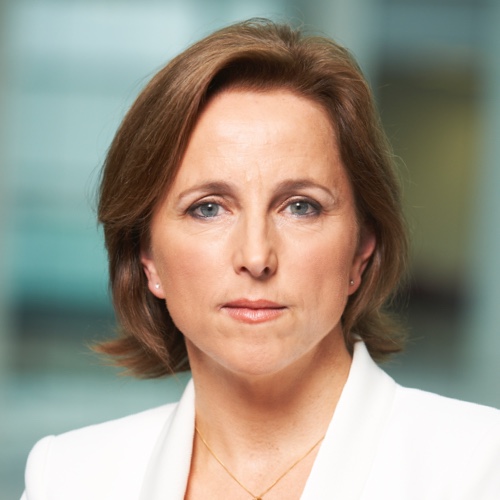

He made the comments against the backdrop of increasing pressure on the poorest households because of soaring food and energy bills.
Harrogate in North Yorkshire rightly has a reputation as a fashionable Victorian spa town – but beyond the many leafy streets there is real deprivation where families are struggling to put food on the table.
National Indigenous Languages Day: Keeping languages thriving for generations to come


March 30, 2022
Indigenous languages are currently in crisis and Elders and language keepers are working tirelessly to document, teach and develop resources for generations to come.
But this is difficult as there are fewer and fewer fluent language speakers in Indigenous communities. Despite being tasked with keeping languages alive, many Elders, language keepers and community members are continuing to heal from the impact of residential schools and intergenerational trauma caused by genocide, colonialism, linguistic imperialism, new diseases, forced relocation, upset of Indigenous economic, social and political systems.
Numerous studies document the negative and lasting impacts of residential schools, including loss of language and culture that led to devastating effects on mental health, substance abuse and suicide among community members.
In an effort to reverse that loss of language and culture and keep Indigenous languages alive and thriving, there’s a push to ensure they’re spoken in homes, schools, communities and workplaces. The impact of being surrounded by Indigenous languages can be life changing.
Immersion to teacher training
There are many approaches being used in Indigenous communities, at universities and within federal and provincial governments to ensure language reclamation. Examples include immersion to curriculum and resource development, teacher training, evaluation and research.
On March 31, Canada marks National Indigenous Languages Day, which serves as an opportunity for both non-Indigenous and Indigenous Peoples to create space and recognize the importance of language revitalization.
National Indigenous Languages Day allows us to celebrate the ongoing efforts of those who continue to protect, educate and preserve Indigenous languages and uplift the Indigenous Languages Act.
The United Nations recently launched a Decade of Indigenous Languages 2022-32, which details the complex nature of language revitalization and the notion that this work will take time and require collective effort, respectful relationships and authentic partnerships.
Supporting community
My grandparents on my mother’s side attended Spanish Indian Residential School in Ontario, so I am well aware of language loss — in my family, unfortunately, no one speaks our language. This reality is heartbreaking and I hope that my late grandmother, Mary Neyland, her siblings and her friends would be proud of this work being done today.
It is my responsibility as a mother and my motivation as a Anishinaabe woman to make change. My role is to listen to our Elders and language keepers and find strategies to support communities, with them as the lead, and in a respectful way.
At the University of Alberta, the Supporting Indigenous Language Revitalization initiative is focused on supporting community-led projects and building capacity in language. Our aim is to establish respectful relationships, share information and direct resources to Indigenous communities and organizations engaging in language revitalization activities.
A central aspect of the initiative is following the guidance of the Indigenous Advisory Council, which includes language keepers and Elders who are recognized in their communities. We recognize equity in languages and include Cree (Y Dialect and Bushland Cree), Michif, Blackfoot, Dene (Denesųłiné and Dene Tha), Inuk (Inuktitut) and Stoney languages among the council.
We recently hosted an event where Rae Anne Claxton, a PhD student from Tsawout First Nation on Vancouver Island, shared her journey to learn Hul’q’umi’num’ from her Elders.
She spoke about centring and weaving Indigenous ways of being, learning and teaching with linguistic ideology and technology. And how stories from Elders are significant in healing from the impact of intergenerational trauma and reclaiming our Indigenous identities.
Claxton highlighted the interconnectedness of language and culture, as many have highlighted before her. American linguist Joshua Fishman described it as such:
“If you take language away from a culture, you take away its greetings, its curses, its praises, its laws, its literature, its songs, its riddles, its proverbs, its cures, its wisdom, its prayers … you are losing all those things that essentially are the way of life, the way of thought, the way of valuing, and the human reality that you are talking about.”
Indigenous language revitalization
Across Canada, progress is being made with regards to Indigenous language revitalization and maintenance efforts, in response to the Truth and Reconciliation Commission’s Calls to Action.
Many Indigenous communities are implementing important language reclamation and revitalization initiatives. The First Peoples Cultural Council is a great example of an organization that provides not only funding, but continued support to communities in British Columbia for community-led language revitalization initiatives. Or there’s the Canadian Indigenous Language and Literacy Institute, which hosts annual summer programming that teaches about the diversity and geography of languages.
CBC also hosts Original Voices, a hub for Indigenous language content, and currently features over 30 Indigenous languages from across Canada.
This National Indigenous Languages Day, let’s celebrate the community-led initiatives that focus on building capacity and sustainability for future generations. Here are just some of the resources currently available:
- Tsuut’ina Gunaha (Tsuut'ina)
- Piikani Paitapiiyssin (Blackfoot)
- Siksika (Blackfoot)
- Ninastako Cultural Centre (Blackfoot)
- Athabasca Tribal Council (Cree)
- Athabasca Tribal Council (Dene)
- Cold Lake First Nations (Denesųłiné)
- Samson Cree Nation (Maskwacis Cree)
- Michif
- Stoney Language Dictionary
- Stoney Nakoda
- KTCEA Elders Speak
- Speak Mohawk
- L'nui'suti
- Makittagait (Inuktitut)
Subscribe to:
Posts (Atom)