Peace for the World World ! Your War Our Lives

The Dalai Lama
A Brief Colonial History Of Ceylon(SriLanka)
Sri Lanka: One Island Two Nations
A Brief Colonial History Of Ceylon(SriLanka)
Sri Lanka: One Island Two Nations
(Full Story)
Back to 500BC.

Saturday, April 30, 2016
Oil rig helicopter crashes off Norway coast, 13 presumed dead
BY STINE JACOBSEN AND OLE PETTER SKONNORD-Sat Apr 30, 2016

A helicopter ferrying passengers from a Norwegian oil platform crashed in the North Sea on Friday, apparently killing all 13 people on board, rescue officials said.
The 11 passengers and two crew on the flight from the Gullfaks B oil platform, operated by Norway's Statoil (STL.OL),
were all Norwegian except for one British and one Italian national,
according to the Rescue Coordination Centre for Southern Norway.
"The helicopter is completely destroyed," it said. After several hours
searching for survivors, 11 bodies were found and the remaining two
people were presumed dead.
Norway and Britain suspended commercial flights of the type of
helicopter involved in the crash, an Airbus Helicopters H225 Super Puma,
a workhorse of the offshore oil industry.
Airbus later said the grounding had been extended to the whole
commercial fleet, 70 percent of which is used to support the global oil
industry from the Gulf of Mexico to Asia and Africa.
Plumes of smoke rose from the scene in a stretch of sea with many small islands and debris could be seen on the rocks.
Several witnesses told Norwegian media they saw the rotor blades separating from the helicopter while still in the air.
"While I looked up, the rotor (blades) loosened and disappeared towards
the north," John Atle Sekkingstad told the website of local paper
Bergens Tidende.
"After that, the helicopter turned north and I saw fire at the top of
the helicopter, where the rotor had been attached. It caught fire before
it crashed."
The main body of the aircraft was lying under water, while its rotor was
found on a rocky outcrop about 200 to 300 metres (220-330 yards) away,
state broadcaster NRK said, quoting the rescue centre.
Oil worker Chris Andersen told NRK: "I saw the rotor separate ... It was
horrible. There was a huge explosion that you could physically feel.
You felt the vibrations."
The area, just west of Bergen, Norway's second-largest city, has
frequent helicopter traffic to and from offshore oil installations.
Weather conditions on the day were normal.
Norway's king and the prime minister expressed their condolences to the families of the victims.
"You are not alone in your sorrow," Prime Minister Erna Solberg, dressed in black, said in an address to the nation.
PRODUCTION, FLIGHTS HALTED
Statoil halted production at the Gullfaks B platform, a visibly upset company executive told a news conference.
"This is one of the worst accidents in Norwegian oil history," said Arne
Sigve Nylund, Statoil's head of production in Norway, adding that the
helicopter passengers worked for different companies, but were all on
assignments for Statoil.
"This is a heavy day ... Some of our colleagues will never come home," he said in a trembling voice.
It was the second-worst Super Puma accident after a 2009 crash off
Scotland in which the rotors also detached, killing 16 people.
Investigators cited a catastrophic gearbox failure.
Tracking service Flightradar24 said the helicopter in Friday's crash dropped 2,100 feet (640 metres) in the last 10 seconds.
Formerly known as the Eurocopter EC225LP Super Puma, the aircraft is a
long-range helicopter widely used in the oil and gas industry, as well
as for VIP flights and search and rescue. Eurocopter changed its name to
Airbus Helicopters in early 2014.
Imposing a temporary ban on commercial flights using the same type of
helicopter, the Norwegian Civil Aviation Authority said it was too early
to determine the cause of the crash.
Airbus Helicopters, a subsidiary of Airbus Group (AIR.PA),
pledged full support for the investigation, which will be carried out
by Norway with assistance from investigators based in France and
Britain.
Norway said late on Friday it had found the two "black box" flight
recorders, one capturing data and the other recording cockpit
conversations, and would send them to Britain, which has experience of
handling several recent helicopter incidents.
The crash deals a blow to an offshore industry already suffering weak
demand due to low oil prices and puts the Super Puma back in the
spotlight after a series of problems in the UK.
In 2012, Super Puma fleets were grounded after a pair of controlled
ditchings that were later linked to gearbox cracks, prompting Airbus
Helicopters to carry out modifications.
In 2013, four people died when an earlier version of Super Puma ditched
off the Shetland Islands, off northern Scotland, in an accident blamed
on crew.
The last helicopter crash in the Norwegian oil industry, in 1997, involved a Super Puma in which 12 people died.
Airbus Helicopters said it had no information so far to link the latest crash to earlier accidents.
The helicopter that crashed on Friday had been granted extended flying
hours, or delayed maintenance, twice in 2015, an aviation authority
official told Norwegian daily VG.
The flight was operated by Canada-based CHC Helicopter, owned by U.S. private equity firm First Reserve.
CHC confirmed that the life of a previous gearbox fitted to the
helicopter had been extended, but said the gearbox fitted at the time of
the crash was new. It said the aircraft was fully compliant with
Norwegian rules at the time of the accident.
"The main gearbox in the aircraft in question, which has at all times
been fully airworthy and compliant, was subsequently replaced in January
2016," said CHC's head of safety and quality, Duncan Trapp, in an
emailed statement.
(Additional reporting by Terje Solsvik, Nerijus Adomaitis, Cyril
Altmeyer, Tim Hepher; Writing by Gwladys Fouche; Editing by Alistair
Scrutton, Robin Pomeroy, G Crosse)

PEN’s double standards over Israel boycott
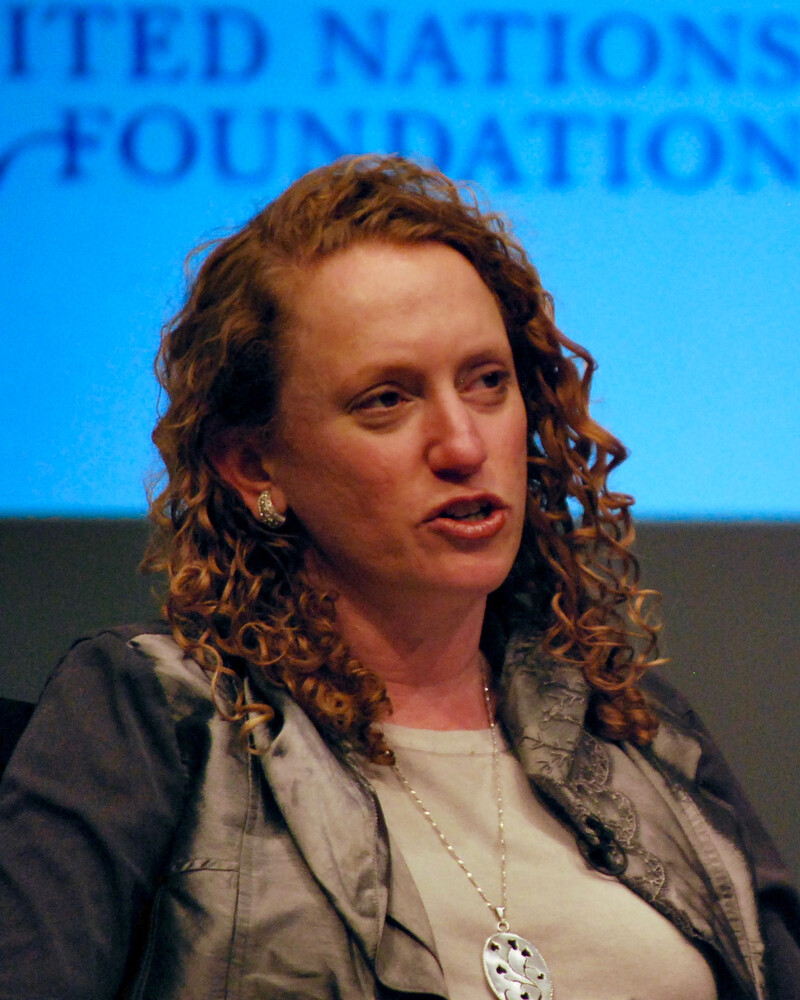
Amidst a campaign aimed at convincing PEN American Center to
reject Israeli government funding for its annual World Voices Festival
that began this week, the literary group and its directorSuzanne Nossel have displayed glaring double standards in their approach to cultural boycotts.
When challenged about why the group has accepted funding from Israel, Nossel reportedly toldPalestine
solidarity campaigners earlier this month that there was a strong
reaction to the word “boycott” among her PEN colleagues.
But PEN American Center has publicly advocated that the tactic be used in certain situations.
Just last week the organization tweeted out a letter, signed by PEN American Center, urging singer Enrique Iglesias to cancel his upcoming concert in Azerbaijan.
The Spanish star was urged to protest against human rights abuses in Azerbaijan, including thejailing of journalists.


Human rights groups call on @enriqueiglesias to cancel his performance in #Azerbaijan bit.ly/1T3YJR1 @SportForRights
Similarly, PEN American Center signed a letter to
several country leaders in 2015 asking them to make their participation
in the inaugural event of the European Games that were scheduled to
take place in Azerbaijan contingent on the release of eight journalists
and five human rights activists.
While the letter stated it was not seeking a “public boycott” of the event, it did actually recommend a boycott.
It asked the UK and Ukrainian governments to refrain from sending a
“high-level delegation” to the games if the prisoners in question were
not released.
Adviser to Hillary Clinton
Nossel has not been averse to calling for boycotts in a personal capacity, either.
In 2006, for example, she warned that Iran was “about as frightening a rogue state as can be imagined.” To support that assertion, she noted that Iran was “hostile to the United States.”
Writing on Democracy Arsenal, a website that she founded,
Nossel suggested a “sports boycott that would exclude soccer-crazed
Iran from the World Cup, akin to what was done for apartheid South
Africa and [Slobodan] Milosevic’s Serbia.”
Along with running PEN America, Nossel is what certain media describe as a “volunteer adviser” on human rights to Hillary Clinton’s presidential election campaign.
Nossel was also a senior figure in the State Department when Clinton was secretary of state.
After leaving the State Department, she headed Amnesty International’s US branch.
Under Nossel’s leadership, Amnesty ran an ad campaign portraying the US-led invasion of Afghanistan as beneficial to that country’s women.
Journalists detained
More than 200 prominent literary figures and 16,500 other individuals have signed a letter criticizing PEN American Center for accepting Israeli sponsorship.
The Asian/Pacific/America Institute at New York University recently canceled its event at the World Voices Festival, scheduled for Friday.
The panel, titled “The Language of War,” was to have featured the poets Solmaz Sharif, Jennifer Tamayo, and Jennifer Hayashida.
All declared their support for boycotting the festival because it had accepted funding from the Israeli government.
The pressure on PEN American Center appears to have been effective.
Jennifer Clement, president of its parent organization PEN
International, recently promised to address criticisms raised by
Adalah-NY, a New York-based group advocating a boycott of Israel.
“PEN International shares your concern,” Clement stated. “At present we
are formalizing our recommended guidelines for the world’s PEN centers
regarding funding from countries with a poor record on freedom of
expression.”
PEN American Center has also broken its silence over recent human rights abuses by Israel.
On Thursday, PEN American Center issued a statement asking the Israeli government to explain why it has jailed the Palestinian journalist Omar Nazzal.
He has been placed in administrative detention –
detention without charge or trial – after Israel arrested him in the
past week at the Israeli-controlled crossing between Jordan and the
occupied West Bank.
Nazzal was traveling to a meeting of the European Federation of Journalists in Bosnia.
The PEN statement also expressed concern about the detention and prosecution of Palestinian writer Dareen Tatour,
who was arrested and charged with “incitement to violence” for a poem
that she wrote calling for resistance to Israeli brutality.
Ru Freeman, a novelist who has been campaigning for PEN to cease
accepting Israeli sponsorship, told The Electronic Intifada that this
week’s statement was made “under enormous pressure” from Palestine
solidarity campaigners and the wider public.
“But two questions remain,” Freeman added. “First, will PEN now speak
also for the many other journalists and writers – and we can provide
them with a list – whom Israel has detained? And second, how can a
statement about a government’s denial of the freedom of speech for
writers and journalists be reconciled with taking money from that
same government for a festival that is supposed to celebrate free
speech?”
At least 19 Palestinian journalists are currently being held in Israeli custody and more than 40 Palestinian journalists have been detained since October 2015.
Israel has, for instance, held 25-year-old Palestinian journalist Samah Dweik since 10 April, charging her with “media incitement” based on what she has posted on Facebook.
Democracy?
This week, the US-funded think tank Freedom House changed its ranking of Israel from “free” to “partly free.”
The reason given for the demotion was the increasing influence of Sheldon Adelson’s newspaper, Israel Hayom,which features a growing portion of government-paid content not clearly identified as such to readers.
Freedom House notably excludes from its criteria for its rankings
Israel’s treatment of Palestinians in the occupied West Bank and Gaza
Strip – despite the fact that Israel exercises the authority to arrest,
imprison andkill Palestinian journalists.
In contrast, Reporters Without Borders does consider Israel’s treatment of those journalists, and consistently ranks Israel in the bottom tier of its world press freedom index.
Korean
American Kim Dong-chul, a former Virginia resident, was sentenced to 10
years of hard labor by North Korea on charges including espionage. Kim
was arrested in October 2015 and "confessed" in March 2016. (Reuters)
 By Anna Fifield-April 29
TOKYO — North Korea has sentenced a former Virginia man to 10 years in prison with hard labor for subversion, its official news agency said Friday, in the latest case involving an American being detained by Kim Jong Un’s regime.
Kim Dong-chul, 62, who was born in South Korea but became a U.S. citizen in 1987, was accused of “perpetrating the state subversive plots and espionage against the DPRK,” the Korean Central News Agency reported, using the official abbreviation for
 North Korea.
“The accused confessed to all crimes he had committed to overthrow the social system of the DPRK while viciously slandering the dignity of its supreme leadership and its political system and gathered and offered information on its party, state and military affairs to the south Korean puppet regime, which are tantamount to state subversive plots and espionages,” said the state-run agency.
Kim’s sentence was, however, more lenient than the 15 years with hard labor handed down to Otto Warmbier, 21, a University of Virginia student convicted of subversion in March after a court found that he had committed a crime “pursuant to the U.S. government’s hostile policy” toward North Korea.
In Kim’s case, KCNA reported that the prosecutor demanded 15 years of hard labor but that the “defense counsel” asked the court “to commute the demanded penalty, arguing that the crimes by the accused are very serious but he is old and may repent of his faults, witnessing for himself the true picture of the prospering DPRK.”
North Korea has no Western-style judicial process, but the KCNA report was written to suggest that a trial had taken place, complete with an independent defense counsel.
North Korea has in recent years developed a habit of detaining U.S. citizens and using them as bargaining chips in negotiations with the United States, its avowed enemy. All detainees were eventually released after high-profile Americans, including former presidents Bill Clinton and Jimmy Carter, traveled to Pyongyang — visits portrayed in the state media as signs of North Korea’s strength.
In addition to the two Americans, three South Koreans and a Korean
Canadian pastor are known to be held in North Korea. The Canadian, Lim
Hyeon-soo, is serving a life sentence for subversion.
Little is known about the case of Kim, who was arrested on espionage charges in October.
In a highly scripted display, Kim was brought before reporters in Pyongyang in March and said that he had spied for South Korea’s intelligence agencies, sought to obtain details of North Korea’s military programs and tried to spread “religious” ideas — a serious crime in the North. He described his alleged acts as “unpardonable” but appealed for leniency.
A University of Virginia student confessed to a "severe crime" during an orchestrated news conference in North Korea on Feb. 29. Here's how other U.S. citizens detained in North Korea have apologized to the country in recent years. (Victoria Walker/The Washington Post)
Such “confessions” have become part of North Korea’s playbook for detainees. After their release, several detainees have described being told what to say by their North Korean captors.
In a carefully controlled interview with CNN in January, Kim said he is a naturalized U.S. citizen and had lived in Fairfax County, Va., before moving in 2001 to the Chinese city of Yanji, a main gateway for trade with nearby North Korea.
In the interview, overseen by North Korean officials, Kim said he worked in the Rajin-Sonbong special economic zone, just over the border in North Korea, as head of a trade and hotel services company.
Warmbier was accused of trying to steal a propaganda banner during an organized tour over the New Year’s holiday. He was convicted and sentenced after a one-hour trial in North Korea’s Supreme Court.
Some analysts had speculated that North Korea would try to get a U.S.
official to travel to Pyongyang to secure the release of Warmbier and
Kim in the lead-up to a much-anticipated Workers’ Party congress
starting May 6. Such a visit would doubtless be portrayed in North
Korea’s state media as a sign of the United States paying homage to Kim
Jong Un’s regime.
However, two diplomats and a former government official with knowledge of the discussions, speaking on the condition of anonymity to discuss the sensitive matter, said that no plans are underway for a high-profile official to travel to Pyongyang.
Separately, North Korea accused U.S. soldiers at Panmunjom, the “truce village” inside the demilitarized zone that separates the two Koreas, of “dangerous provocations” over the past month, including pointing their fingers, “making weird remarks” and mocking the North Korean side “through disgusting expression and behavior.”
A simple concrete ledge marks the border between buildings in Panmunjom, meaning North Korean and South Korean soldiers might stand only a few feet apart.
The U.S. and South Korean militaries are wrapping up two months of joint exercises aimed at preparing for the sudden collapse of, or an invasion by, North Korea. Every year, Pyongyang strongly objects to the exercises.
“The U.S. imperialists and their stooges should not forget even a moment what miserable end provocateurs met while going reckless in the area at the risk of death,” KCNA warned in a separate report.
By Anna Fifield-April 29TOKYO — North Korea has sentenced a former Virginia man to 10 years in prison with hard labor for subversion, its official news agency said Friday, in the latest case involving an American being detained by Kim Jong Un’s regime.
Kim Dong-chul, 62, who was born in South Korea but became a U.S. citizen in 1987, was accused of “perpetrating the state subversive plots and espionage against the DPRK,” the Korean Central News Agency reported, using the official abbreviation for
“The accused confessed to all crimes he had committed to overthrow the social system of the DPRK while viciously slandering the dignity of its supreme leadership and its political system and gathered and offered information on its party, state and military affairs to the south Korean puppet regime, which are tantamount to state subversive plots and espionages,” said the state-run agency.
In Kim’s case, KCNA reported that the prosecutor demanded 15 years of hard labor but that the “defense counsel” asked the court “to commute the demanded penalty, arguing that the crimes by the accused are very serious but he is old and may repent of his faults, witnessing for himself the true picture of the prospering DPRK.”
North Korea has no Western-style judicial process, but the KCNA report was written to suggest that a trial had taken place, complete with an independent defense counsel.
North Korea has in recent years developed a habit of detaining U.S. citizens and using them as bargaining chips in negotiations with the United States, its avowed enemy. All detainees were eventually released after high-profile Americans, including former presidents Bill Clinton and Jimmy Carter, traveled to Pyongyang — visits portrayed in the state media as signs of North Korea’s strength.
Little is known about the case of Kim, who was arrested on espionage charges in October.
In a highly scripted display, Kim was brought before reporters in Pyongyang in March and said that he had spied for South Korea’s intelligence agencies, sought to obtain details of North Korea’s military programs and tried to spread “religious” ideas — a serious crime in the North. He described his alleged acts as “unpardonable” but appealed for leniency.
A University of Virginia student confessed to a "severe crime" during an orchestrated news conference in North Korea on Feb. 29. Here's how other U.S. citizens detained in North Korea have apologized to the country in recent years. (Victoria Walker/The Washington Post)
Such “confessions” have become part of North Korea’s playbook for detainees. After their release, several detainees have described being told what to say by their North Korean captors.
In a carefully controlled interview with CNN in January, Kim said he is a naturalized U.S. citizen and had lived in Fairfax County, Va., before moving in 2001 to the Chinese city of Yanji, a main gateway for trade with nearby North Korea.
In the interview, overseen by North Korean officials, Kim said he worked in the Rajin-Sonbong special economic zone, just over the border in North Korea, as head of a trade and hotel services company.
Warmbier was accused of trying to steal a propaganda banner during an organized tour over the New Year’s holiday. He was convicted and sentenced after a one-hour trial in North Korea’s Supreme Court.
However, two diplomats and a former government official with knowledge of the discussions, speaking on the condition of anonymity to discuss the sensitive matter, said that no plans are underway for a high-profile official to travel to Pyongyang.
Separately, North Korea accused U.S. soldiers at Panmunjom, the “truce village” inside the demilitarized zone that separates the two Koreas, of “dangerous provocations” over the past month, including pointing their fingers, “making weird remarks” and mocking the North Korean side “through disgusting expression and behavior.”
A simple concrete ledge marks the border between buildings in Panmunjom, meaning North Korean and South Korean soldiers might stand only a few feet apart.
The U.S. and South Korean militaries are wrapping up two months of joint exercises aimed at preparing for the sudden collapse of, or an invasion by, North Korea. Every year, Pyongyang strongly objects to the exercises.
“The U.S. imperialists and their stooges should not forget even a moment what miserable end provocateurs met while going reckless in the area at the risk of death,” KCNA warned in a separate report.
Ireland set for minority government after two main parties reach deal
Fianna Fáil will stay in opposition but allow Fine Gael to govern until at least September 2018
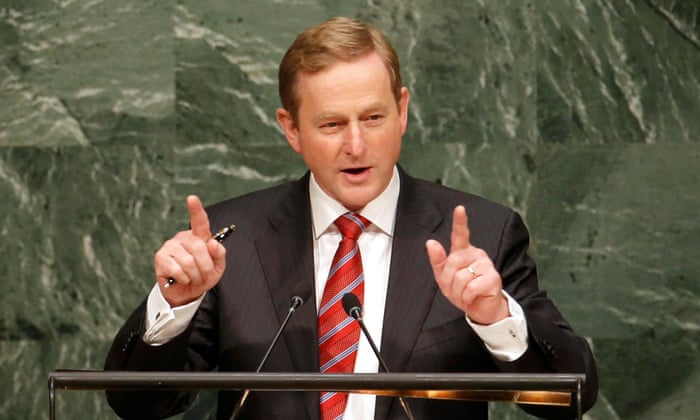

Ireland finally has a new government after its inconclusive general election in February.
The Republic’s two main parties, Fine Gael and Fianna Fáil, struck a deal on Friday that will lead to a new coalition.
Fianna Fáil has agreed to facilitate a Fine Gael minority government in a
“political ceasefire” between the two dominant political forces in the
state. But Fianna Fáil will remain on the opposition benches in the
Dáil, the Irish parliament.
After an intense day of discussions at Trinity College Dublin, the two
parties’ negotiating teams described the arrangement as “the first
initiative of its kind”.
It is understood that Fianna Fáil will allow Fine Gael to govern until a
review of the coalition’s performance in September 2018.
The 14 independent deputies in the Dáil have been summoned to government buildings in Dublin to be briefed about the deal.
They will play a key part in the formation of the new government and
will extract a constituency-by-constituency price for supporting a Fine
Gael minority administration as well as demanding major reforms over the
way the Irish parliament is run.
Michael McGrath, one of Fianna Fáil’s negotiators, said he was “pleased and relieved” that the formal discussions were over.
“Our own parliamentary party members remain on standby for a special
meeting of the party to be called at any time over the weekend if
necessary to approve or not approve at their discretion the document,”
he said.
Alluding to the original divide over the Anglo-Irish treaty in 1921 that partitionedIreland into
two states, leading to a bitter civil war and the formation of the two
parties, McGrath said: “When you consider the history of those parties,
the near 100-year history of our state, this is the first initiative of
its kind.”
In the February election, Fine Gael, led by taoiseach Enda Kenny,
lost 26 seats but it remains the largest party in the Dáil with 50
seats. Fianna Fáil made a stunning recovery from a historic low of 21
seats in the 2011 general election to 44 seats this year.
Sinn Féin remains the third-biggest party with 21 seats and whose
increased presence in the Dáil was the main reason why Fianna Fáil will
not sit in government.
With a so-called “grand coalition” between Fianna Fáil and Fine Gael
proving a step too far for rivals whose enmities were forged in the
Irish civil war, a minority Fine Gael-led administration, with the
support of a number of independents, has been the only realistic option
for weeks.
If Fine Gael manages to finalise negotiations with the independents quickly , a new taoiseach could be elected next week.
Three previous attempts in the Dáil to elect a taoiseach in the wake of the election ended in failure.
Sinn Féin’s president, Gerry Adams, accused Fianna Fáil of campaigning
in the election to put Kenny out of office but striking a deal to keep
him there. The Dáil member for Louth claimed Fianna Fáil had forfeited
its right to lead the opposition.
“Whatever deal has been reached will, I have no doubt, fallen well short
of delivering the change and investment required to tackle the housing
and homelessness crises and fix our health service, and will not bring
about a fairer, more equal society,” he said.
Puerto Rico Is on the Brink of Default

 BY DAVID FRANCIS-APRIL 29, 2016
Barring an unlikely last-minute miracle, Puerto Rico is going to default on its debt Monday.
The U.S. commonwealth owes creditors $70 billion, and $422 million of that is due on May 1. This week, Puerto Rico Gov. Alejandro Garcia Padilla said “there will be a default on Monday,” adding, “I don’t think there is a deal on the table that avoids a default.”
Earlier this year, House Speaker Paul Ryan (R-Wis.) gave lawmakers three
months to come up with a “responsible solution” to the island’s debt
crisis, but so far Democrats and Republicans can’t come to terms on how
to rescue Puerto Rico, home to
3.5 million U.S. citizens. The White House wants Congress to give
Padilla’s government something similar to Chapter 9 bankruptcy
protection, which would set up an orderly process for creditors to get
paid back some of what they’re owed.
So far, lawmakers have failed to agree on legislation that would grant
Puerto Rico this protection. Opponents of a bailout insist that the
island must be more transparent about the state of its finances before a
bailout occurs.
“I don’t think it’s fair to say it’s going to be a bailout upfront. I
think that’s accurate, but the major concern is will it end up being a
backstop?,” Rep. Dave Brat (R-Va.), a member of the conservative House
Freedom Caucus, saidearlier
this week of the proposed Puerto Rico Oversight, Management and
Economic Stability Act (PROMESA). “If we go along with setting up a
control board and something goes wrong … who’s the backstop?”
Even HBO’s John Oliver has weighed in on the crisis, urging Congress to give Puerto Rico a lifeline.
A restructuring of Puerto Rico’s $70 billion in debt would be the biggest ever
in the $3.7 trillion-dollar municipal market. State and local
governments rely on these loans to raise cash to pay for the cost of
operating.
Without congressional action, Puerto Rico’s default gets ugly quickly.
When and if the island misses its payment Monday, it opens the door to
larger and more consequential defaults on debt protected by the island’s
constitution. Puerto Rico owes $2 billion on July 1. This includes an
$805 million payment on its general-obligation bonds, guaranteed under
the island’s constitution to be paid before anything else.
In March, Padilla said that
without financial help, his government would not be able to deal with
the Zika virus, because it did not have the cash to eliminate standing
pools of water or other places where mosquitoes thrive. Bites from the
bug transmit the virus, which has been linked to birth defects, and the
CDC estimates 20 percent of Puerto Ricans living on the island could
contract it. On Friday, the Centers for Disease Control and Prevention
reported the first death from the virus on the island.
And economic conditions there show no sign of improving, so chances that
the government could eventually come up with the money it owes are
slim. Puerto Rico faces a trifecta of challenges: Its government has
spent irresponsibly for years; for five of the last six, it has failed
to pass a balanced budget, a constitutional requirement. Its GDP hasn’t
grown since 2005, floating in negative territory ever since.
And its population is shrinking, fast. According to a Pew report released
in March, its population is 3.47 million in 2015, down 334,000 from
2000, or a 9 percent drop. Seventy-five percent of this loss has
occurred since 2010. This continues the largest emigration in more than
50 years, Pew found.
Photo credit: SPENCER PLATT/Getty Images
Hokkaido rewrites ‘condescending’ etiquette guide targeted at Chinese tourists

SAPPORO – The Hokkaido Tourism Organization has revised a booklet on bad manners aimed at Chinese tourists after a local resident said it assumed Chinese lack common sense.
The new guide covers subjects ranging from shopping and hotel etiquette
to how to use a toilet. It cautions against being late, breaking wind in
public and stealing cutlery from restaurants.
An official at the Sapporo-based semi-public tourism promotion body said
it came up with the idea of a do’s and don’ts guide last year after
hoteliers expressed reluctance to host tourists from China. There have
been cases in which Chinese tourists left hotel rooms dirty or made
excessive noise.
As elsewhere in Japan recently, the number of tourists from China has
surged in Hokkaido. Figures released by the prefecture show there were
218,600 travelers from China in the period from April to September last
year, or nearly a quarter of all foreign travelers during the six
months. They were the second-largest group by nationality after those
from Taiwan, who numbered 260,500.
The official said the organization hopes the booklet would serve to
resolve issues for innkeepers as well as making a stay in Hokkaido an
enjoyable experience for Chinese tourists. It published the illustrated
booklet in August.
But the booklet was titled “Hokkaido Ryoko Joshiki” (“Common Sense When
Traveling Hokkaido”), with illustrations showing example after example
of bad tourist behavior lined with big “X” marks.
A Chinese resident in Hokkaido saw it and complained, saying it gives a
false impression to readers that all Chinese lack common sense and
manners.
The tourism organization acknowledged that “its contents were one-sided,” and decided to revise it.
The title of the revised publication, which came out in March, is
“Hokkaido Kokoroe” (“The Traveler’s Etiquette Guide to Hokkaido”). There
are no patronizing “X” marks, and instead the guide explains what kind
of behavior is considered bad manners.
For example, the old version indicated that ripping open packaging
before purchasing a product, which is acceptable in China, is “a crime.”
An illustration of it was marked with an “X.”
The new version says instead, “In Japan, you can buy products with a
sense of security that they are good, without opening their packages.”
Phrasing has been softened, removing expressions that give the impression Chinese lack manners.
Moreover, the new booklet does not just target Chinese: It is available in English, too.
The revised version, however, still contains detailed descriptions that some might perceive as patronizing.
“Japanese etiquette is based on avoiding causing discomfort or nuisance
to others,” the booklet says in its English version. “Accordingly,
Japanese will avoid bodily functions such as belching or flatulence in
public entirely, or perform bodily functions as discreetly as possible.
Of course, these functions are a necessary part of human life, but
please be modest and discreet when visiting Japan.”
Eighty-five thousand copies have been printed in Chinese and English
each, and they are now being distributed at inns and other venues across
the prefecture.
Vatican Watchdog Says Suspicious Transactions Almost Quadrupled
Officials say figures reflect greater vigilance rather than any rise in illicit financial activities
 Rene
Brulhart, president of the AIF pictured Thursday, says the Vatican’s
oversight system uses a “rather low reporting threshold.”PHOTO: ASSOCIATED PRESS
Rene
Brulhart, president of the AIF pictured Thursday, says the Vatican’s
oversight system uses a “rather low reporting threshold.”PHOTO: ASSOCIATED PRESS By FRANCIS X. ROCCA-April 28, 2016
ROME—The Vatican’s financial watchdog registered 544 suspicious
transactions in 2015—almost four times as many as the previous year—but
officials said Thursday it reflected greater vigilance rather than any
rise in illicit financial activities.
The Financial Information Authority, or AIF, said it turned over 17 of
those cases, mostly involving potential money laundering, to Vatican
prosecutors.
“I would like to see the figure zero,” René Brülhart, the AIF’s
president told reporters. “But it doesn’t reflect reality. Wherever you
have financial transactions, financial activity, you always see
something potentially suspicious.”
Mr. Brülhart said the Vatican’s oversight system uses a “rather low
reporting threshold,” in part to raise awareness of potential problems.
He said it was a “fair assessment” that none of the suspicious activity
was related to the financing of terrorism.
Thursday’s annual report was the fourth published by the AIF, which Pope
Benedict XVI set up in 2010 to work toward compliance with
international standards on financial crimes. That step began a series of
financial reforms at the Vatican, which have been continued by Pope
Francis.
Mr. Brülhart touted a December 2015 report by the Council of Europe’s
Moneyvaal committee, which praised the “intensive review process” at the
scandal-plagued Vatican bank. The bank has closed more than 4,800
accounts, in some cases because a client’s profile didn’t conform with
the bank’s stated mission to serve “works of religion.”
But Moneyvaal also put the Vatican on notice to prosecute those
suspected of financial crimes, since nobody has yet been prosecuted
under a 2013 Vatican anti-money-laundering law. Since 2011, the AIF has
referred 34 cases of suspicious activity to Vatican prosecutors.
AIF’s director, Tommaso Di Ruzza, told reporters Thursday that Vatican
prosecutors were “working very seriously” on the cases. A Vatican
statement last December noted that prosecution of suspected crimes is
especially complicated in the case of the Holy See, since such cases
often involve persons living outside the tiny city-state.
Mr. Brülhart also emphasized the Vatican’s commitment to international
cooperation. The AIF reported 380 cases of bilateral cooperation with
foreign authorities in 2015, up from 113 the previous year.
The regulator also tracks declarations of outgoing cash that exceed
€10,000 ($11,335), of which it counted 1,196 in 2015, a rise of 85 over
the previous year.
Write to Francis X. Rocca at francis.rocca@wsj.com
The Dalai Lama Converts To Atheism, Will Step Down

The Dalai Lama, head of the Buddhist faith, abruptly announced today that he no longer believes in ‘nonsense’ and has converted to atheism.
 April 29, 2016
INDIA – The Dalai Lama, head of the Buddhist faith, abruptly announced
today that he no longer believes in ‘nonsense’ and has converted to
atheism.
“I myself, I can no longer be a believer in nonsense,” the Dalai Lama
said at a press conference at the Chan Centre. “Frankly speaking, all
religions are bull excrement. So I have become atheist. When our
brothers and sisters talk about God, creator, I can only face-palm.” He
laughed, perhaps a bit too hard.
The Dalai Lama's feelings about God have changed over the years. In the
past he has indicated an agnostic worldview, but not a purely atheistic
one.
“I recently read the book ‘The God Delusion’ by Richard Dawkins. This
book made some strong arguments I could not refute,” the Dalai Lama
said, sitting in his usual lotus position on a plush armchair. “God is
the same as Santa Claus, the Easter Bunny and freedom
in China...it doesn’t exist!” The Dalai Lama thrust his head back and
laughed with reckless abandon.
“All religious traditions have good potential to get humans killed for
no reason,” the Dalai Lama said. “So I say, fuck this shit. I am done. I
have wasted my life on nonsense. But I still have time to make changes
and live a real life.” He then ripped off his microphone, stood up and
left.
The Dalai Lama was last seen boarding a plane from India to Los Angeles.
According to his aides, he plans to change his name to Tanner Jacobs
and pursue a career in sitcom writing.
April 29, 2016
INDIA – The Dalai Lama, head of the Buddhist faith, abruptly announced
today that he no longer believes in ‘nonsense’ and has converted to
atheism.
“I myself, I can no longer be a believer in nonsense,” the Dalai Lama
said at a press conference at the Chan Centre. “Frankly speaking, all
religions are bull excrement. So I have become atheist. When our
brothers and sisters talk about God, creator, I can only face-palm.” He
laughed, perhaps a bit too hard.
The Dalai Lama's feelings about God have changed over the years. In the
past he has indicated an agnostic worldview, but not a purely atheistic
one.
“I recently read the book ‘The God Delusion’ by Richard Dawkins. This
book made some strong arguments I could not refute,” the Dalai Lama
said, sitting in his usual lotus position on a plush armchair. “God is
the same as Santa Claus, the Easter Bunny and freedom
in China...it doesn’t exist!” The Dalai Lama thrust his head back and
laughed with reckless abandon.
“All religious traditions have good potential to get humans killed for
no reason,” the Dalai Lama said. “So I say, fuck this shit. I am done. I
have wasted my life on nonsense. But I still have time to make changes
and live a real life.” He then ripped off his microphone, stood up and
left.
The Dalai Lama was last seen boarding a plane from India to Los Angeles.
According to his aides, he plans to change his name to Tanner Jacobs
and pursue a career in sitcom writing.
Subscribe to:
Posts (Atom)