Peace for the World World ! Your War Our Lives

The Dalai Lama
A Brief Colonial History Of Ceylon(SriLanka)
Sri Lanka: One Island Two Nations
A Brief Colonial History Of Ceylon(SriLanka)
Sri Lanka: One Island Two Nations
(Full Story)
Back to 500BC.

Sunday, February 17, 2013
An Unfinished Life – My Father Ossie And Vijaya
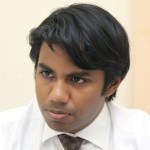
Asanga Abeyagoonasekera
 The 25th death anniversary
of Vijaya
Kumaratunga falls on 16th February. In order to honour
this fearless leader, I thought of contributing an appreciation. Vijaya and my
father Ossie Abeyagoonasekera were very close friends and I remember him
visiting our place almost every day and working together until his death in
1988. My father was always very supportive for his political cause. Even though
I was quite young when he died, I remember how people gathered to see him. His
personality was such that he managed to bring happiness to everyone, be it
through his life as an actor or as a politician. Some who didn’t like his
politics loved his movies. Vijaya along with my father and few other members of
the party were jailed in 1982 as Naxalite prisoners during J.R.
Jayawardena’s period in office. They went through many hardships in
their political journey and one could call Vijaya’s was an unfinished life. He
was assassinated at a young age of 43.
The 25th death anniversary
of Vijaya
Kumaratunga falls on 16th February. In order to honour
this fearless leader, I thought of contributing an appreciation. Vijaya and my
father Ossie Abeyagoonasekera were very close friends and I remember him
visiting our place almost every day and working together until his death in
1988. My father was always very supportive for his political cause. Even though
I was quite young when he died, I remember how people gathered to see him. His
personality was such that he managed to bring happiness to everyone, be it
through his life as an actor or as a politician. Some who didn’t like his
politics loved his movies. Vijaya along with my father and few other members of
the party were jailed in 1982 as Naxalite prisoners during J.R.
Jayawardena’s period in office. They went through many hardships in
their political journey and one could call Vijaya’s was an unfinished life. He
was assassinated at a young age of 43.
Vijaya Kumarathunga and Ossie Abeyagoonasekera during
their visit to Jaffna in 1986
He
was the founder of Sri Lanaka Mahajana Party (SLMP) which used to be the third
largest party some years ago. Unfortunately the SLMP almost died down as it lost
many members, totally about 117 who were assassinated during the 88
insurrection. Vijaya was the first to be killed.
Vijaya’s
courage became evident when he made a journey to Jaffna in 1986 to meet
the LTTE leaders
such as Kittu and Raheem. My father and Felix Perera accompanied him. The
intention of this journey was to engage in a political discussion in order to
free Sri Lankan soldiers who were detained by the LTTE. They managed to win the
hearts of the Tamilians of Jaffna. While delivering one of his most memorable
and remarkable speeches, Vijaya stated that “Sinhalese and Tamils are one …” For
a politician to utter these words in the political context which prevailed in
1986 requires courage. It should be noted that he never changed his position.
He was called a traitor by some in Colombo after this journey. Before his death
Vijaya was about to create a grand political alliance which was later created
with the leadership of my father – the “United Social Alliance” under which my
father contested for the Presidential election in 1989.
Vijaya
was not afraid to meet Tamil political leaders to discuss solutions for the
ethnic problem. He had a very close relationship even with South India. I
remember seen one photograph where he was pictured with M.G. Ramachandran. He
had the charisma to win people and people gathered to see him and listen to his
speeches where ever he visited.

Vijaya
did not go behind money or luxuries in life. He could not be bought by anyone.
He was a true politician with a kind heart. My father commemorated Vijaya each
year until his death in 1994. He built the statue at Polhengoda where he was
assassinated which was later taken to Kandana. He also opened a museum so that
people could see and remember this impressive leader. He released a stamp, a
sports trophy on behalf of him and every time he spoke of Vijaya, he was
emotional. He loved his dear friend. Every single speech I have listened to had
a bit about Vijaya and the slain heroes of Sri Lanka Mahajana Party.
Vijaya
was a courageous leader. He epitomized qualities of a courageous leader by
fearlessly adapting and changing with the intention of ensuring a greater
benefit to the society without running behind popularity. Vijaya believed in a
multiethnic society and in devolution of power. He expressed his support to the
Indo-Lanka Accord which brought about the 13th amendment very
publicly. When it is difficult to find a handful of politicians who would be
courageous enough to engage in a constructive debate on the
13th amendment even today when it had been implemented for over 25
years, the challenge Vijaya took in 1985 was enormous. One might think that most
of the Sri Lankan Sinhalese politicians did succumb to popular politics of
engaging in ethnic politics. But Vijaya was one of the few exceptions. ‘To stand
against the tide when the tide is high is foolish and irrational’, one might
say. Leaders sometimes need to make unpopular decisions as it was with Abraham
Lincoln who implemented the 13th Amendment in the US constitution to give rights
to the African Americans. It was not the most popular thing to do at that time.
It will be history which decides whether you are a great leader or not, as it is
the case with Abraham Lincoln. In the Sri Lankan case where ethnic harmony
connotes how much inter-ethnic and communal trust you can build, actions of
individuals such as Vijaya meant a lot for all the communities in Sri Lanka.
Memories of Vijaya still bring hope and stands for the reality that not all
Sinhalese are bigoted.
Had
Vijaya and many other leaders who lost their lives were alive today, we could
have witnessed a transformation in our political culture. He never had a price
tag for him; he was honest and was truly dedicated to solve the ethnic problem.
Vijaya introduced many politicians. However most them do not represent his party
or ideology today. Only a few mention his name. In his death anniversary, we can
pay tribute to Vijay by being introspective on what we can carry and introduce
to the younger generation from his personality, from his political career and
from his life.
