Peace for the World World ! Your War Our Lives

The Dalai Lama
A Brief Colonial History Of Ceylon(SriLanka)
Sri Lanka: One Island Two Nations
A Brief Colonial History Of Ceylon(SriLanka)
Sri Lanka: One Island Two Nations
(Full Story)
Back to 500BC.

Wednesday, February 13, 2013
India Losing Patience With Rajapaksa
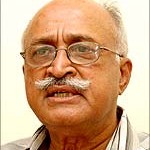
Col. (retd) R.Hariharan
 President Mahinda
Rajapaksa is well known for wrongly timing his foreign visits. In the
past his India visits were more successful than his European sojourns because
they were diplomatically ‘tenderized’ in advance to avoid any embarrassment to
the President. His two-day ‘pilgrimage’ trip, with an entourage of 70, to
Tirupati and Gaya after a stopover at Chennai that ended on February 8, 2013,
‘pilgrimate’ visit was also probably tenderized in advance. But this time, it
completely failed for two reasons.
President Mahinda
Rajapaksa is well known for wrongly timing his foreign visits. In the
past his India visits were more successful than his European sojourns because
they were diplomatically ‘tenderized’ in advance to avoid any embarrassment to
the President. His two-day ‘pilgrimage’ trip, with an entourage of 70, to
Tirupati and Gaya after a stopover at Chennai that ended on February 8, 2013,
‘pilgrimate’ visit was also probably tenderized in advance. But this time, it
completely failed for two reasons.
The
first was the unusually strong and well orchestrated protests organized across
India against his visit over allegations of war crimes and genocide. For some
time now, Rajapaksa’s hardening stand on the ethnic issue, coupled with the
increasingly authoritarian style of functioning has not endeared him to the
minorities. Increasing anti-minority activities of Sinhala
chauvinist elements particularly against anti-Muslim activities have
added to their nervousness. Collectively these developments offered a wonderful
opportunity to anti-Rajapaksa and pro-Eelam lobbies
in Dravidian parties of different alphabetical prefixes in India to raise their
voices against his visit in high decibel.
The
significance of the Communists as well as the as the Bharatiya
Janata Party (BJP) backing the anti-Rajapaksa protests should not be
missed. In a belated move, the Congress party also added its bit to this
sentiment. Perhaps for the first time, nearly all political parties seem to be
realizing the importance of the issue at the national level.
The
second was the President’s statement ruling out autonomy to Tamils three days
before his visit which enabled anti-Rajapaksa protestors to gleefully point out
“we told you so.” This ill timed statement beefed up the protestors.
Clearly New
Delhi was extremely uncomfortable with Rajapaksa’s visit particularly
after he ruled out granting any political autonomy to Tamils of the North to
resolve the political gridlock over devolution of powers in his independence day
speech at Trincomalee on February 5. He said, “It is not practical for this
country to have different administrations based on ethnicity. The solution is to
live together in this country with equal rights for all communities.”
This
statement ripped off the last vestige of credibility in New Delhi’s Sri Lanka
policy. Implementation of the13th amendment in
full as promised by him had been the only hope for New Delhi’s ruling coalition
to save its face so far. It not only to kept its Dravidian partner DMK
satisfied, but also saved a bit of Congress leaders’ reputation already
tarnished in Tamil Nadu. The Congress party was not amused by Rajapaksa’s
statement; this was evident from the Congress President Ms Sonia Gandhi’s
January 30, 2013 reply to DMK leaderKarunanidhi’s
letter on the failure of Rajapaksa to live up to his promises. She said: “I
share your concern regarding the disturbing developments in Sri Lanka vis-a-vis
the Tamils. I shall take up the matter with the Minister of External Affairs
(Salman Khurshid).”
So
it was not surprising that Manish Tiwari, Union Minister for Information and
Broadcasting, made an unusual comment on the anti-Rajapaksa protests on the day
of the President ended his visit. He said “We understand the sensitivities which
are involved with regard to the issue of Sri Lankan Tamils, especially in Tamil
Nadu. We are absolutely in sync with some of the concerns which have been
articulated…”
His
further noted that India had walked the ‘extra mile’ at the United Nations
Human Rights Commission(backing a resolution against Sri Lanka) and
engagement with Colombo “in no way means that we are insensitive or we tend to
undermine the concerns, which a section of the population of India, may
legitimately have.”
Not
to be outdone, V Narayanaswamy, Prime Minister’s points man and Minister of
State in the PMO, did not mince his words on India’s likely stand at the
forthcoming UNHRC session on the issue of Sri Lanka’s accountability. He
said:”When the UN brought forward a resolution against Sri Lanka, India voted
for it. If UN’s recommendations are not honoured by Sri Lanka, India will
support any resolution brought by it against the island nation.”
President
Rajapaksa invariably met with the Indian Prime Minister ‘informally’ during his
non-official visits in the past. Prof GL
Peiris, Sri Lanka minister for external affairs, met with Indian
Prime Minister Dr Manmohan
Singh when he was in New Delhi to attend the 8th India-Sri
Lanka Joint Consultative Commission (JCM) meeting on January 22, 2013.
Sri
Lanka needs India’s support during the forthcoming session of the UN Human
Rights Commission in Geneva in March 2013. It cannot afford to take India’s
support for granted anymore after it “betrayed” (as some of my Sri Lankan
establishment friends termed it) and voted for the U.S. resolution seeking
accountability from Sri Lanka. In this context, an informal meeting with the
Indian Prime Minister would have been useful to Rajapaksa to put across Sri
Lanka’s case for support.
So
it would be reasonable to assume that Prof Peiris probably tried to arrange such
a meeting when he met Dr Manmohan Singh. We do not know whether he did so. But
such a meeting never came through because Rajapaksa neither visited New Delhi
nor met anyone of importance except Alok Joshi, the chief of the Research and
Analysis Wing who called upon him at Tirupati after Rajapaksa’s Darshan of
Balaji. So either Rajapaksa’s visit was intended only as a pilgrimage or New
Delhi wanted to send a clear signal to Rajapaksa of its growing disillusionment
with him.
Three
senior U.S. officials – Deputy Assistant Secretary of State James
Moore, Deputy Assistant Secretary of Defense Vikram
Singh, and Deputy Assistant Secretary of State Jane Zimmerman –
visiting Colombo last month to assess the progress made by Sri Lanka on
implementing the LLRC recommendations. At the end of it they gave notice that a
‘procedural resolution’ aimed at “pushing Sri Lanka” to address human rights
concerns would be submitted at the next UNHRC meeting. This has set the
dovecotes of power in Colombo in a tizzy.
If
we go by the comments of the American visitors it looks doubtful whether Sri
Lanka would be pushed to the wall. They said, “Certainly we have seen progress
in infrastructure development, demining, rehabilitation and the release of
former combatants. However there are still families who feel that their loved
ones are being held somewhere. There is a desire for accountability with regards
to extra judicial killings. Therefore there is a need for accelerated
implementation.”
Last
month the visiting British Foreign and Commonwealth Office Minister for South
Asia Alistair
Burt had also expressed similar assessment of the work in progress in
Sri Lanka’s post war recovery. He said that he was pleased to see the post-war
recovery process in Sri Lanka, though challenges remained.
These
comments are almost the same as those made before the last UNHRC meeting when
the U.S. sponsored resolution was passed. However, this time around the U.S. and
British statements would indicate they would not go beyond what was done at the
last UNHRC. So for all practical purposes the U.S. ‘procedural resolution’ would
probably be a tepid one, reiterating all that was said earlier giving Sri Lanka
yet another opportunity to save its face by buying time.
Can
India accept this situation in an increasingly embarrassing political atmosphere
in which it has been placed by President Rajapaksa?
The
political logjam building up in Tamil Nadu over New Delhi’s passive response in
the past is unlikely to allow New Delhi to continue with business as usual as
far as Sri Lanka is concerned. So New Delhi will have to take a nuanced approach
in handling Rajapaksa.
Under
eight years of President Rajapaksa’s leadership Sri Lanka is full of ‘mores’. It
has become more inward looking, more authoritarian, more worried about the
dead LTTE rising
up again and more paranoid about foreign influence threatening its freedom. On
the whole, the country looks less confident of itself and the leader less sure
than they were when they went to war against the LTTE.
The
reason for this mess is simple. Rajapaksa is one of those political leaders who
thrive on conflict situations because they see themselves as the slayer of the
dragon on a white horse. A man blessed with uncanny ability for political
manoeuvres enjoying nationwide popularity in the wake of his military victory,
he could have helped Sri Lanka become a free, happy and peaceful democracy where
the majority and minority worked together. But he has chosen to be different. An
oligarchy is being positioned to rule the country with key reins of power in the
hands of his immediate family. He is supported by a political class that
respects only power and not propriety or people.
As
a result Sri Lanka has become a land of contradictions. Pious affirmation to the
Constitution goes hand in hand with the ditching of constitutional amendments to
ensure transparency and integrity. Talks of freeing the people from the tyranny
of Tamil Tiger terrorism goes on even as goons intimidate opponents and media
staff. Rule of law is quoted even the highest officer of judiciary is impeached
through a suspect process. Political horse trading has been replaced by
political killings as criminalization politics has gained upper hand.
So
subtle back room persuasions adopted by India so far are unlikely make headway
anymore. It would be better for India to spell out in unambiguous terms its
increasing concerns at the way things are being done in Sri Lanka.
For
starters such a statement made at the highest level should include:
- Non implementation the 13th amendment in full as promised, although it is still figures in the Constitution. Remind Sri Lanka that it is imperative to do so as it forms part of the Indo-Sri Lanka Agreement which is still in force.
- Expression of India’s concern at the slow progress made in implementing rehabilitation projects financed by India in war ravaged areas to speed up the process.
- Expression of India’s serious concern at Sri Lanka’s tardy and selective implementation of the LLRC recommendations which could affect India’s tradition support to Sri Lanka at UN forums.
- Need for adopting non-discriminative trade practices on Indian business to enable the Indo-Sri Lanka Free Trade Agreement to encourage further Indian investments with an assurance to improve facilitation for such a growth at the Indian end.
- Kick start the stalled political reconciliation process with Tamils by evolving a game plan with a clear schedule of action. Emphasize India’s readiness to assist in this respect.
Then
only Rajapaksa would understand that New Delhi has ended its futile exercise of
running with horses and hunting with hounds on complex issues affecting
India-Sri Lanka relations which are getting out of hand. And the people on both
sides of Palk Strait would understand that India means action now and refuses to
be a pushover anymore.
Of
course, the $64 question is would India do it? Should not the national parties
take it up rather than leaving it to Dravidian parties to keep the limelight on
this issue?
*Col
R Hariharan, a retired Military Intelligence specialist on South Asia, is
associated with the Chennai Centre for China Studies and the South Asia Analysis
Group. E-Mail: colhari@yahoo.com Blog:www.colhariharan.org
