Peace for the World World ! Your War Our Lives

The Dalai Lama
A Brief Colonial History Of Ceylon(SriLanka)
Sri Lanka: One Island Two Nations
A Brief Colonial History Of Ceylon(SriLanka)
Sri Lanka: One Island Two Nations
(Full Story)
Back to 500BC.

Thursday, February 28, 2013
Sri Lanka: US ‘Procedural’ Resolution At UNHRC
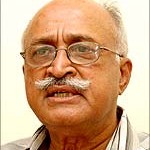
Col. (retd) R.Hariharan
 A
U.S. draft resolution on Sri Lanka’s accountability for alleged war crimes being
brought before the 24th meeting of the United Nations
Human Rights Council (UNHRC) now in circulation (received from an
Indian TV news channel) is at Annexure. While it is not an official version, in
this article I have analysed its contents in the belief it is probably the real
one.
A
U.S. draft resolution on Sri Lanka’s accountability for alleged war crimes being
brought before the 24th meeting of the United Nations
Human Rights Council (UNHRC) now in circulation (received from an
Indian TV news channel) is at Annexure. While it is not an official version, in
this article I have analysed its contents in the belief it is probably the real
one.
There
is a feeling of déjà vu about the US draft. So far the reaction of the important
players both for the U.S. move to bring a “procedural” resolution as a follow up
to the UNHRC in March 2012 is almost the same as before. However, the protests
were less shrill in Colombo (or is it too early for protests?) perhaps due to
the realisation of the inevitability of karma catching up with inaction; or as
we say in army “if it is inevitable better to grin and bear it.”
Would
this indicate a change Sri Lanka’s attitude to dispassionately investigating the
allegations? I doubt; in the present scheme of things ‘pigs will have to fly’
for it to happen. The reason is simple: the U.S. has given no indication that it
is contemplating any new action but only follow up on what has been said
before.
The
draft resolution I have received is no threat to status quo but it is a little
more elaborate in listing the things not done as promised by Sri Lanka. It
neither proposes scaling up the degree of pressure on PresidentRajapaksa,
nor contemplates any collective action against Sri Lanka for non compliance with
the earlier resolution. It buys more time for President Rajapaksa to set the
house in order. Its title “Promoting reconciliation and accountability in Sri
Lanka” (the same as the March 2012 resolution) sets the tone of U.S. action. In
no way it either intimidates or intrudes into Sri Lanka’s internal
affairs.
In
essence the draft expresses concern:
- At the continuing reports of violations of human rights in Sri Lanka, threats to judicial independence and the rule of law, and failure by the Government of Sri Lanka to fulfill its public commitments, including on devolution of political authority to provinces as called for in Sri Lanka’s constitution,
- That Sri Lanka’s National Action Plan does not adequately address all of the findings and constructive recommendations of the Lessons Learnt and Reconciliation Commission (LLRC) report, including the need to credibly investigate widespread allegations of extra-judicial killings and enforced disappearances, demilitarize the north of Sri Lanka, implement impartial land dispute resolution mechanisms, re-evaluate detention policies, strengthen formerly independent civil institutions, reach a political settlement on the devolution of power to the provinces, promote and protect the right of freedom of expression for all and enact rule of law reforms.
Setting
the future course for action it:
- Reiterates its call upon the Sri Lanka government to expeditiously implement the constructive recommendations made in the Lessons Learnt and Reconciliation Commission (LLRC) report and to take all necessary additional steps to fulfil its relevant legal obligations and commitment to initiate credible and independent actions to ensure justice, equity, accountability, and reconciliation for all Sri Lankans;
- Urges the Sri Lanka government to formally respond to outstanding requests, including by providing unfettered access, by special procedures mandate holders, in particular the Special Rapporteurs on independence of judges and lawyers; human rights defenders; freedom of expression; freedom of association and assembly; extrajudicial, summary or arbitrary executions; minority issues; and the Working Group on enforced or involuntary disappearances; and discrimination against women;
- It would like the UN High Commissioner for Human Rights in consultation and in concurrence with the Sri Lanka government provide advice and technical assistance on implementing the above-mentioned steps. It also requests the High Commissioner to present a report on assistance provided and progress on reconciliation and accountability, including investigations of violations of international law in Sri Lanka, in the 25th session of the UNHRC.
So
the U.S. draft is truly procedural to give a push to the unfinished issues
raised in the March 2012 resolution and nothing more. As things are done in the
UN forums, the draft treads the middle path and takes cognisance of progress
made by Sri Lanka and what it should be doing. If Sri Lanka has lived with the
earlier resolution, there is no reason for it to go on a tizzy now.
But
Sri Lanka should be concerned that this draft is more damaging than the earlier
one as it notes Sri Lanka’s growing list of actions lacking accountability a
little more elaborately in comparison with the earlier resolution which was more
generalised. It underlines the growing unhappiness of international community at
Sri Lanka’s continued disregard not only for issues of internal governance and
post war reconciliation, but for the larger issue of violations of international
law as well. As war crimes are violations of international law, the draft
provides the space for taking up recourse to international investigations into
them.
Discussion
in Indian parliament yesterday went on expected levels. Opposition parties
particularly the AIADMK and the CPI went at the government at hammer and tongs
for ignoring the war crimes and human rights violations in Sri Lanka, while DMK
as usual wanted to prove they were the sole champions of Tamils the world over.
The External Affairs Minister Mr. Salman Khurshid’s speech was pedestrian; he
skirted the war crimes issue but expounded upon India’s determination to pursue
the devolution issue and full implementation of the 13th amendment.
It
is indicative of India’s lack of new ideas turning its Sri Lanka policy into the
realms of irrelevance. India still talks of implementing
13th amendment when President Rajapaksa has consigned it to the
constitutional morgue.
The
U.S. draft is not going to exactly set either Kealaniya in Colombo or the Palk
Strait on fire. It is only follow up on a resolution India has already voted.
Considering this Mr Khurshid’s silence on Indian vote at the UNHRC was
surprising. Only a few days back the Minister of State at PMO Mr Naryanaswamy
categorically said India would be voting for the U.S. resolution. What is this,
misinformation or confusion?
While
it could be business as usual for all some stakeholders, Sri Lanka may not have
that luxury. Sri Lanka should take serious note of mounting protests around the
world. Every action of the Sri Lanka government is now coming under close
scrutiny and commented upon worldwide. This time the protests were better
orchestrated and coordinated than before and involved Channel
4 video releases, release of INGO reports, civil society protests
organised at important global capitals, protest organised by Tamil
Diaspora organisations, and political lobbying in important capitals
including New Delhi and Geneva.
It
does not matter whether Sri Lanka calls it international conspiracy or global
plot to destabilise it. Unless it changes its style it could get only worse.
The decibels raised against it will be shriller, the protests more massive, and
embarrassments for Sri Lanka officials and government a little more frequent. It
is a pity that a nation which rode the crest of victory over one of the most
dreaded terrorist groups in the world three years back, has been brought to this
pass.
*Col
R Hariharan, a retired Military Intelligence specialist on South Asia, served
with the Indian Peace Keeping Force in Sri Lanka as Head of Intelligence. He is
associated with the Chennai Centre for China Studies and the South Asia Analysis
Group. E-Mail: colhari@yahoo.com Blog: www.colhariharan.org
Annexure
US
Draft Resolution: Promoting Reconciliation and Accountability in Sri
Lanka
The
Human Rights Council,
Guided
by the Charter of the United Nations, the Universal Declaration of Human
Rights, the International Covenants on Human Rights and other relevant
instruments,
Recalling Human
Rights Council Resolution 19/2 on Promoting Reconciliation and Accountability in
Sri Lanka,
Reaffirming that
it is the responsibility of the Government of Sri Lanka to ensure the full
enjoyment of all human rights and fundamental freedoms of its entire
population,
Taking
note of the Government of Sri Lanka’s National Action Plan and its commitments
as set forth in response to the findings and recommendations of the Lessons
Learnt and Reconciliation Commission (LLRC) of Sri Lanka,
Noting
with concern that the National Action Plan does not adequately address all
of the findings and constructive recommendations of the LLRC,
Recalling the
constructive recommendations contained in the LLRC’s report, including the need
to credibly investigate widespread allegations of extra-judicial killings and
enforced disappearances, demilitarize the north of Sri Lanka, implement
impartial land dispute resolution mechanisms, re-evaluate detention policies,
strengthen formerly independent civil institutions, reach a political settlement
on the devolution of power to the provinces, promote and protect the right of
freedom of expression for all and enact rule of law reforms,
Also
noting with concernthat the National Action Plan and the LLRC’s report do
not adequately address serious allegations of violations of international
law,
Expressing
concern at the continuing reports of violations of human rights in Sri
Lanka, threats to judicial independence and the rule of law, and failure by the
Government of Sri Lanka to fulfill its public commitments, including on
devolution of political authority to provinces as called for in Sri Lanka’s
constitution,
1. Welcomes the
report of the High Commissioner for Human Rights on the human rights situation
in Sri Lanka;
2. Reiterates its
call upon the Government of Sri Lanka to expeditiously implement the
constructive recommendations made in the LLRC report and to take all necessary
additional steps to fulfill its relevant legal obligations and commitment to
initiate credible and independent actions to ensure justice, equity,
accountability, and reconciliation for all Sri Lankans;
3. Urges the
Government of Sri Lanka to formally respond to outstanding requests, including
by providing unfettered access, by special procedures mandate holders, in
particular the Special Rapporteurs on independence of judges and lawyers; human
rights defenders; freedom of expression; freedom of association and assembly;
extrajudicial, summary or arbitrary executions; minority issues; and the Working
Group on enforced or involuntary disappearances; and discrimination against
women;
4. Encourages the
Office of the High Commissioner for Human Rights and relevant special
procedures mandate holders to provide, in consultation with, and with the
concurrence of, the Government of Sri Lanka, advice and technical assistance on
implementing the above-mentioned steps;
5. Requests the
Office of the High Commissioner for Human Rights, with input from relevant
special procedures mandate holders, as appropriate, to present a report on the
provision of such assistance and progress on reconciliation and accountability,
including investigations of violations of international law, in Sri Lanka to the
Human Rights Council at its twenty-fifth session.
