Peace for the World World ! Your War Our Lives

The Dalai Lama
A Brief Colonial History Of Ceylon(SriLanka)
Sri Lanka: One Island Two Nations
A Brief Colonial History Of Ceylon(SriLanka)
Sri Lanka: One Island Two Nations
(Full Story)
Back to 500BC.

Wednesday, February 13, 2013
State Sovereignty And The United Nations Organization

By R.M.B
Senanayake -February 13, 2013
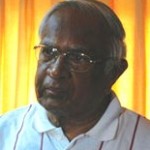
R.M.B Senanayake
The President in
his Independence speech has stated that the UNO is violating the sovereignty of
individual states. But the UNO has come a long way since the original
Declaration in 1948 and his Advisers don’t seem to have briefed him on the
present status of the UN. Then the emphasis was on preventing wars between
States. The UNO is committed to maintaining peace between States. One of its
earliest attempts was to have a UN mission to monitor the line of control
frontier between the Arab States and Israel and in Kashmir between Indian and
Pakistani Armies. But after the end of the Second World War most conflicts have
been within individual States rather than between States although the latter
was not totally absent.
Next
came the end of the cold war between the West and the Communist States . It has
meant that the UN Security Council, a body earlier paralyzed by US and USSR
vetoes, was able to make progress and intervene in aid of international peace
and security in a way that had never been possible before. The 1990’s saw a host
UN attempts to stop violent conflict within States.
There
are two chapters of the UN Charter that deal with settlement of disputes that
are likely to endanger the maintenance of international peace and security. The
first, Chapter VI, deals with pacific settlement, and also gives the Security
Council the right to investigate and arbitrate, which are usually put in
practice under observer missions, diplomatic envoys, and good offices (UN
Charter). Chapter VII gives the Security Council the right to impose economic
sanctions under Article 41 and the right to ―take such action by air, sea, or
land forces as may be necessary to maintain or restore international peace and
security‖ under Article 42 (UN Charter).
Obviously,
diplomatic means are always the first employed by the United Nations, and
Chapter VI takes precedent in all cases. This can range from preventive
diplomacy, peacemaking or negotiating settlements, to post-conflict maintenance
and continued negotiation. Peacekeeping goes a step beyond this with the
deployment of troops. However, the presence of troops does not mean that the UN
is using force. Peacekeepers have a wide range of mandates,
Early
goals of peace keeping were limited to maintaining ceasefires and stabilizing
violence in order to make diplomatic solutions more reachable, but as the Cold
War ended, the range of activities and mandates for peacekeepers has expanded.
Peacekeepers now help build government institutions, promote human rights, set
up local police forces, and disarm former combatants (UN Peacekeeping) to
protecting and building peace after a conflict. UN peacekeeping aims to adapt to
each conflict in order to meet the challenges of each situation.
The
widely publicized peacekeeping missions in the former Yugoslavia, Rwanda, and
Somalia called into question the legitimacy and limitations of UN military
interventions. This led to the concept of the Responsibility to Protect (R2P),
conceived in 2001 and formally accepted into UN vernacular at the 2005 World
Summit. The R2P asserts that if a state is manifestly failing to protect its
citizens from mass atrocities and peaceful measures are not working, the
international community has the responsibility to intervene: first
diplomatically, then more coercively, and as a last resort with military force.
States are bound by the UN Declarations on Human Rights and are required to
abide by them and cannot plead State Sovereignty to shut out the UNO.
(With
acknowledgments to “UN Intervention in Civil War and Post-Conflict Economic
Recovery by Kelly Siegel)
