Peace for the World World ! Your War Our Lives

The Dalai Lama
A Brief Colonial History Of Ceylon(SriLanka)
Sri Lanka: One Island Two Nations
A Brief Colonial History Of Ceylon(SriLanka)
Sri Lanka: One Island Two Nations
(Full Story)
Back to 500BC.

Saturday, February 9, 2013
The Theatre Shifts To Geneva
By S.
Ratnajeevan Hoole -
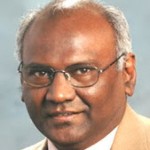
Prof S. Ratnajeevan H. Hoole
“Habitual
Lying-February 9,
2013
 Elmore
Perera has described how the President claimed that he did not
appoint his “good friend” and then senior-most justice Shirani
Bandaranayakeas CJ when he made Nihal Jayasinghe CJ because Ranil
Wickramasinghehad misdirected him by saying that 25 years of judicial
service was required. Rajapaksa then asked Lalith Weeratunga to produce Ranil’s
document and after Weeratunga vigorously checked his files for 2-3 minutes, the
President directed him to “send it to Mr. Perera tomorrow.” Perera never got the
letter despite several tries and believes the document never existed.
Elmore
Perera has described how the President claimed that he did not
appoint his “good friend” and then senior-most justice Shirani
Bandaranayakeas CJ when he made Nihal Jayasinghe CJ because Ranil
Wickramasinghehad misdirected him by saying that 25 years of judicial
service was required. Rajapaksa then asked Lalith Weeratunga to produce Ranil’s
document and after Weeratunga vigorously checked his files for 2-3 minutes, the
President directed him to “send it to Mr. Perera tomorrow.” Perera never got the
letter despite several tries and believes the document never existed.
India,
the UN and the world, after having been strung along for 3-4 years with promises
of a devolution package, have finally been told on Independence Day that there
will be no devolution but “equal rights to all communities.” What is equal
rights for Tamils when we do not know the language of government, we are
frightened of the armed forces, the little safety we have in numbers in our
areas is threatened by state-sponsored Sinhalese settlers, and Hindu temples are
demolished to build Buddhist temples? What are equal rights when we are killed,
and our killers are appointed ministers to lord it over us?
India
by now should know they are dealing with a habitual, incorrigible, inveterate
prevaricator.=
India’s Obligations
India
has the legal right under the Indo-Lanka
Accord – and the obligation to Tamil parties who, trusting India,
accepted it – to insist that Sri
Lanka is a multi-ethnic, multi-lingual, plural society; that each
ethnic group has a distinct cultural and linguistic identity to be nurtured;
that the Northern and Eastern provinces are historical habitations of Tamil
speaking peoples; that elections to Provincial Councils are held; that the
emergency be lifted; that security personnel be confined to barracks; that Tamil
and English also be official languages; that all paramilitary personnel be
withdrawn; and that India will underwrite and guarantee these resolutions.
It
is no secret that India helped Sri Lanka crush the LTTE.
If India can be used and tricked so easily by a rogue government, and still have
nothing to show for it, India is reduced to a joke, with ambitions to be a
permanent member of the Security Council, while lacking the required skills and
powers.
Sovereignty and Geneva
As
Independence Day approached, the absence of the national flag in the Tamil
regions, and the forces ordering shops to sell flags and homeowners to fly them,
pronounced the deep divisions within.
Many
of us, especially Tamils, now say that under a corrupt regime that does not
respect the judiciary, there is no sovereignty to speak of. We would therefore
welcome international action by the Commonwealth andUNHCR.
The TNA has accordingly called for stern action, arguing it is necessary to
persuade our government to discontinue its harmful agenda against Tamils.
Prospects
seem good. James Moore of the US
State Department who led a high-powered team to Colombo had expressed
confidence that India would back the US’s Geneva resolution insisting on the
“prompt” implementation of the LLRC recommendations.
China, Russia, Cuba and Saudi Arabia having been rotated out of UNHRC membership
augurs ill for Sri Lanka. Sonia Gandhi writing to Karunanidhi that she shares
his concerns over the plight of Sri Lankan Tamils is suggestive of Indian
support. Callum
Macrae’s thirddocumentary on Sri
Lanka’s Killing Fields is being done in consultation with Frances
Harrison and Benjamin Dixie for release before the Geneva vote.
Reluctance to Act against States
It
is unclear, however, that nations would act forcefully for human rights. States
somehow feel reluctant to punish errant states.
Reports
indicate that India needs time to study the resolution. After watering down last
year’s resolution as the price for its vote, if India now dithers on insisting
on its implementation, it would seem that India is not ready to wield the
immense responsibilities of a permanent seat on the Security Council. Tamil Nadu
Governor K. Rosaiah, however, does not lack the resolve that his Prime Minister
seems to. He urged Manmohan Singh to impose economic sanctions on Sri Lanka and
take steps to ensure that those displaced by the ethnic conflict returned to
their original homes and are allowed to live with dignity, self-respect and
equal constitutional rights on par with the Sinhalese.
On
the other hand, India’s former Chief Justice J.S.
Verma was to arrive on a fact-finding mission for the International
Bar Association, but Colombo cancelled his visa, The Sunday
Island claimed, “out of respect for the former Chief Justice of India.” Yet
Verma tried to save Colombo embarrassment, saying he himself cancelled the trip.
But Colombo let him down in justifying the cancellation!
Jehan
Perera predicts that Geneva will be a disappointment to those hoping
that the UNHRC will insist on accountability, and that without new mechanisms,
the resolution will reiterate the old, emphasizing its implementation. Betraying
Colombo’s nervousness, this respected Perera who is circumspect and not given to
histrionics, has had an intemperate tirade launched against him in an editorial
by a once stately newspaper. Professional jealousy was evident in alluding to
Perera gaining “a little learning at some Ivy League talk-shop,” meaning
Harvard.
If
India is not firm, South Africa could vote for Sri Lanka where it has growing
investments, and influence other votes. Australia’s stand also seems vague as
one branch of the federal government documented war crimes in Mullivaikaal,
while another appeased Colombo to stop boat people.
Minority Management Policy
There
have been rumours that a young MP involved in a law college exam controversy was
smuggling Tamils out of Mullaitivu for Rs. 300,000 and because of his connexions
only one boat out of five is nominally caught. In apparent confirmation, the
respected Australian based on conversations with “several Australian
officials” reported that “a senior Sri Lankan government official
… known to be close to President Mahinda
Rajapaksa” is personally “complicit” in people-smuggling.
Australia has denied the report confirmed by several officials, indicating their
instinct to save face for governments, however obnoxious, in
Geneva.
Academic
writings allege a government “Minority Management Strategy” of containing
minorities below 10%; other sources say 7%. People smuggling is part of this
strategy. The current population of Jaffna Peninsula, 600,000, would have been
1,200,000 without the war. Fifty-two villages outlying Trincomalee have been
fully cleansed of Tamils by the security forces. Tamils have been managed. Are
Muslims next?
Change of US Policy?
John
Kerry replacing Hillary
Clinton as Secretary of State makes changes in US policy possible.
Kerry is critical of Clinton’s approach, speaking of the need to re-evaluate
US’s relationship with Sri Lanka, and “for time [for Sri Lanka] to implement
change without losing face.” It was the classic formula the US used to prolong
dictatorships in Latin America, South Africa and Rhodesia. But it is unlikely
Kerry will act quickly enough to change US plans for Geneva already in
play.
Overseas
Tamils: Reconnecting?
Overseas
Tamils have an important role in Geneva. However, with no real stake in Sri
Lanka, TamilNet has blamed Bishop Thomas Soundaranayagam for thanking the army
for organizing a Christmas function and its development work.
The
army runs Jaffna. The Bishop’s is a complex task of looking after the spiritual
needs of the people (including Sinhalese), their physical welfare and the Church
as an institution. He cannot, like TamilNet, launch one-sided tirades.
The
army asked for a Christmas party. The Bishop had to oblige. He thanked the
government for the roads as a preface to his subsequent “nevertheless”
statements on “the dark spots”, i.e., the closure of the university, violence,
alcoholism etc. I think most Tamils would say the Bishop spoke for them when he
said “we do not want war again” but “we request the government to accept us as
equals.”
An
elderly Hindu gentleman commented, “It is because the Bishop is balanced that
foreign delegations come to him to find out how we Tamils are faring. They take
the Bishop at his word. He is the only one so bold and honest in Jaffna.”
Tamils
abroad, to give meaningful direction to their activism, need to reconnect with
their Sri Lankan brethren by discerning their perspectives.
