Peace for the World World ! Your War Our Lives

The Dalai Lama
A Brief Colonial History Of Ceylon(SriLanka)
Sri Lanka: One Island Two Nations
A Brief Colonial History Of Ceylon(SriLanka)
Sri Lanka: One Island Two Nations
(Full Story)
Back to 500BC.

Monday, April 29, 2013
Lights Off For Lanka?
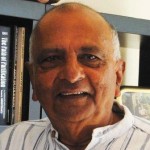
Shyamon
Jayasinghe
 The editorial of the Sunday Leader of the 28th
April cried: “the Lights are going out in Sri Lanka.” Isn’t this to be read as a
metaphorical foretelling of events to come? We know that The Sunday Leader
recently changed hands to an owner known to be sympathetic to the Mahinda
Rajapakse government. Yet, he thinks the lights are off not only for
the country but for the government!
The editorial of the Sunday Leader of the 28th
April cried: “the Lights are going out in Sri Lanka.” Isn’t this to be read as a
metaphorical foretelling of events to come? We know that The Sunday Leader
recently changed hands to an owner known to be sympathetic to the Mahinda
Rajapakse government. Yet, he thinks the lights are off not only for
the country but for the government!
The
Opposition in Parliament-long dormant-awoke and protested with candle lights on
two successive sittings. It has been noted that even the senior SLFP MPs who
were present in Parliament had not come to the defense of the government. At the
time of this writing people are seen protesting everywhere and the Opposition is
gaining significant ground. All signs are that the people are now saying,
”Enough is enough.” They are fed up so much. The euphoria that President
Rajapakse and his siblings exploited to retain and consolidate the political and
constitutional bases of their rule is now wearing away. Trade Unions are
organizing strikes. The independent media, long under pressure to walk with
government, are now picking up self-courage. This explains why The Sunday Leader
is emboldened. Sunday Divine of the 28th April carries a bold headline that
charges that the “Big Shots in the CEB have
played out millions doing deals with private thermal suppliers.”
The
raise in the electricity charges to customers is indeed huge; going up sixty
eight per cent of previous charges! This is going to be very badly felt when
householders, already hard put to it by galloping costs of living, receive their
next bill. Ordinary Lankans looked with dismay at the previous repeated hikes on
bread, flour, vegetables, petrol and other essential items. After this enormous
power hike students in rural areas and in battling urban areas will have to cut
down on study time and go to bed. Or they may have to get back to the old days
of the bottle lamp. In rural areas people will go picking old leaves and sticks
to light a fire. The ramifications won’t end with this. With consequent
increases in cost of production all other locally produced items will have to go
up once again. Items produced for export will also become more costly and
therefore less competitive in markets. Hotels are bound to have their prices
jacked up, which means a blow to the tourist industry. The chain effects are
going to be considerable.
Truly
“the mother of all crises,” as stated by the Sunday Leader editorial, is now
well under way. Nor will the hike result in the CEB’s ability to balance itself
as it is reported that even after the hike the CEB will be left with a loss of
45 billion at the end of this year.
What’s
more serious is that the move to jack up prices signals a tip of a huge iceberg,
namely of incompetence and corruption in the overall government machinery. It is
clear that the governance has failed in Sri Lanka after the war. Witness the
Minister of Power and Energy, Pavithradevi
Wanniarachchi, absenting herself in Parliament when the issue is
discussed. She is unable to explain other than to shift the blame on her
predecessor, Champika
Ranawake. Ranawake did not keep quiet as he held a media conference
denying that charge and in fact issuing a warning that when the Sampur plant
becomes operational it would increase costs of electricity still further.
Former
Central Bank Governor, Nimal Sanderatne, writing in the Sunday Times Economics
Column disagrees that a rise in the price is the path to go. He puts the blame
on the entrenched inefficiency and corruption in the running of enterprises such
as the CEB. The CEB, Ceylon Petroleum Corporation, Sri Lankan Air are public
enterprises that have been White Elephants all along. Now they are dead
elephants and a cremation in urgently needed. Government has put its henchmen in
charge of these organizations instead of appointing competent managers that know
what they are doing. Political interference in the day to day disciplining of
these enterprises has impeded efficiency further. These institutions have also
become repositories for the country’s unemployable; there are vast numbers of
surplus employees who add to cost.
The
losses in public enterprises last year amounted to an astounding Rs. 185
billion. The Ceylon Electricity Board (CEB) recorded a loss of Rs. 61.2 billion
last year, an increase from the Rs. 19.3 billion loss in 2011.
The
strategy of raising prices to meet these and other management inefficiencies is
counterproductive. Says Sanderatne, “the fundamental issue is that when a public
enterprise incurs losses year in, year out, these losses have to be financed by
the government. The government has to either increase taxes that the public have
to bear or resort to borrowing that is inflationary. Either of these means that
the public pay through taxes or by general price increases.”
Hence
by raising prices to consumers the government is merely passing the burden of
misrule to the public instead of trying to rectify its own act. The sooner
President Rajapakse realizes this the better it would be. On the other
hand, Minister Keheliya Rambukwella went on record saying that people have to
learn to share increasing costs and that government cannot subsidize consumers.
He made this reference to cover even farmers’ input costs. The Governor of the
Central Bank who is another political appointee possessing no qualifications for
his post sings the same tune as Keheliya. His Annual Report makes it clear that
the pricing of public enterprises “should reflect their costs of production.”
They deliberately hide the fact that such “costs of production” are largely
caused by bad government that can be corrected.
A
government that attempts to thrive on politicization cannot make such
correction. The current government model is one founded on a strategy of
distribution to cronies opportunities for gain by corruption. In this way the
government is kept secure by hordes of cronies that run it from Parliament level
down to the more specific entity management level. To double secure the whole
operation, the government has brought in the police and law and order machinery
under the politicians’ heel.
This
template of governing a country can last at least for some time as long as the
people at large are kept stupid by brainwashing as in North Korea. In that
country people are on starvation edge but they are made to believe in their
“Eternal Leader,” who is prepared to bomb America without feeding his people!
Sri Lanka, on the other hand, is simply not North Korea.
*Shyamon
Jayasinghe, a Peradeniya University graduate in Philosophy, worked as a public
servant in Sri Lanka specializing in Management. He subsequently worked in
Australia where he is now domiciled. A frequent commentator on social and
political issues in Sri Lanka, he is renowned for his astonishing role as the
Narrator (POTE GURA) of the original production, in 1956, of Ediriweera
Sarchchandra’s theatre classic Maname. His interpretation of this role has
become the model that all performers of the role in subsequent plays of this
genre have emulated.
