Peace for the World World ! Your War Our Lives

The Dalai Lama
A Brief Colonial History Of Ceylon(SriLanka)
Sri Lanka: One Island Two Nations
A Brief Colonial History Of Ceylon(SriLanka)
Sri Lanka: One Island Two Nations
(Full Story)
Back to 500BC.

Saturday, April 20, 2013
Tehelka report misled on British treatment of Tamils: Jaffna academic
[TamilNet, Saturday, 20 April 2013, 08:03 GMT] The
Tehelka feature on Friday by Revati Laul is highly appreciable on many counts,
as it has brought out the multifaceted genocide committed on Eezham Tamils so
that they would remain “people without a nation, much like the Palestinians in
the Gaza Strip,” the military-occupied situation that is worse than that of
Afghanistan and the double game of the world cum UN expecting that the “idea of
nationhood could be the next to disappear,” but yet the reality and
determination of the people alive with the idea of a separate Tamil nation
despite the terror and genocide. However, the feature is misled by a repeatedly
told myth by the adversaries of Tamils and believed by the gullible even among
the Tamils especially in the diaspora, that British colonialism once favoured
the Tamils, writes an academic in Jaffna.
The
Tehelka feature on Friday by Revati Laul is highly appreciable on many counts,
as it has brought out the multifaceted genocide committed on Eezham Tamils so
that they would remain “people without a nation, much like the Palestinians in
the Gaza Strip,” the military-occupied situation that is worse than that of
Afghanistan and the double game of the world cum UN expecting that the “idea of
nationhood could be the next to disappear,” but yet the reality and
determination of the people alive with the idea of a separate Tamil nation
despite the terror and genocide. However, the feature is misled by a repeatedly
told myth by the adversaries of Tamils and believed by the gullible even among
the Tamils especially in the diaspora, that British colonialism once favoured
the Tamils, writes an academic in Jaffna. Further comments from the academic in Jaffna:
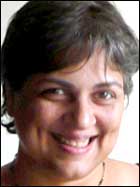
Revati
Laul
“This meant the Tamils ended up better educated, often returning with degrees from abroad; they had a greater share of the few plum jobs in the colonial civil services; they bought the biggest properties in Colombo,” the Tehelka feature further said.
What Revati Laul has written is a repeatedly told myth by the Sinhala politicians and academics including some Tamil lobbyists. Sri Lanka’s former President, Chandrika Bandaranaike Kumaratunga recently reiterated that while delivering a lecture at Osigwe Anyiam-Osigwe Foundation in 2012.
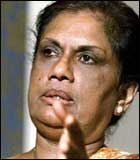
Chandrika
Kumaratunga
The anti-colonial, anti-British and anti-imperialist political struggle of affected people in the entire island did not originate from the Sinhalese or from the Colombo Tamils. It originated from the Jaffna Youth Congress in the early 1920s, much before the appearance of Sinhala Left political parties, or for that matter any political party at all in the island.

Jaffna
Youth Congress bringing Mahatma Gandhi to Jaffna in 1927
It is true that the Tamils in Jaffna were educated, but the British did very little compared to what the then anti-colonial Americans and native revivalists did to education. The Jaffna Tamils had no other option as their economy of the Dutch times collapsed and was subordinated to plantation-based, Colombo-centric colonial economic outlook of the British.
If the British were favouring Tamils in education why a university was not given to Tamils during the entire British rule? Even the native institutions in Jaffna that were affiliated to Calcutta and Madras were made into ‘secondary schools’ by the British-Colombo administration, while a university college and later a university was started only in Colombo.

Lord
Soulbury and DS Senanayake inauguarating the first Parliament of the so-called
independent Ceylon
The coastal Sinhalese were the most ‘progressive’ people in the island according to the Donoughmore Report, which implied that they were the favourite of the British in having a special relationship and in eventually transferring power.
That’s what the British did under the Donoughmore constitution and between 1945 and 1948 under the Soulbury constitution– transferring power to the coastal Sinhala leadership, despite witnessing an All-Sinhala cabinet for 10 years under Donoughmore constitution.
Deserving to their misplaced calculations, even their military bases were kicked out of the island by the Oxford-educated father of Chandrika Bandaranaike Kumaratunga.

Transfer
of Power from the British to the Sinhala State
Chandrika’s family, ancestors and their ilk were much more beneficiaries of the British than any Tamil. It is a joke that she speaks on British favouritism to Tamils. But then she is not the only person to come out with this myth, which by repetition, like the Aryan origins of the Sinhalese, has become almost a fact to many.
Journalists are ‘compelled’ to show that they are ‘balanced’ in their writings and often they rub wrong areas.
Revati comes out with the myth as a passing reference and as something insignificant to the plight of today’s Tamils.
But, perhaps she is not aware of the fact that how the myth has taken a new avatar in sections of the diaspora to ‘inspire’ the gullible in the diaspora on the ‘virtues’ of not questioning the West and behaving as good children like their forefathers to the British, so that the West would bring back the pre-independence era through ‘regime change’ and would keep Tamils in contentment–never mind Tamil Eelam or any sovereignty-based solutions.
Revati also perhaps may not be aware that it is this attitude that is not questioning the LLRC-based ‘reconciliation’ even when it is worse than the rotten 13th Amendment rejected by Eezham Tamils.
The Tehelka feature says international actors like the UNHRC, the US and Indian governments take ambivalent positions on what happened. But they are not ambivalent. They are the ones who have taken a determined stand on making Eezham Tamils to forget Tamil Eelam, whether there is genocide or not. The Youth uprising in Tamil Nadu has grasped the issue and that is what makes many uncomfortable today.
