Peace for the World World ! Your War Our Lives

The Dalai Lama
A Brief Colonial History Of Ceylon(SriLanka)
Sri Lanka: One Island Two Nations
A Brief Colonial History Of Ceylon(SriLanka)
Sri Lanka: One Island Two Nations
(Full Story)
Back to 500BC.

Wednesday, April 24, 2013
Ushering In A New Era Of Purified Judiciary?
By Basil
Fernando -
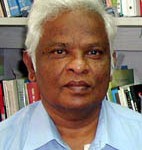
Basil
Fernando
 President Mahinda
Rajapaksa was recently quoted as saying that he will take stern
action to see that the judiciary will remain ‘pure’. This statement raises many
questions.
President Mahinda
Rajapaksa was recently quoted as saying that he will take stern
action to see that the judiciary will remain ‘pure’. This statement raises many
questions.
The
test of a good judiciary is its ability to act independently. Here,
‘independent’ means the absence of dependence on the executive. The judiciary
must be able to take any action when the law requires it to do against any
executive agency including the executive president himself. Quite simply, no
such independence exists in Sri Lanka now. What kind of purity can therefore
exist in a judiciary when it is not allowed to be independent? The moment the
judiciary avoids taking decisions that the law requires due to a reckoning with
the actual circumstances and exigencies of the time, it is already compromised
and therefore it cannot act in any manner that might be considered ‘pure’. The
president has created that situation. Therefore, when he speaks of making the
judiciary pure it cannot mean that there is going to be an overturning of the
policy so far prevailing and that the judiciary can now make decisions
independently without fearing that the executive will punish them.
In
any case it is not the task of the executive to see that the judiciary is pure.
In the relationship between the judiciary and the executive the duty is really
with the judiciary to scrutinise the executive and to see that the executive
acts within the law. What the president is trying to do is to turn this
relationship on its head by taking upon himself the job of scrutinising the
judiciary. When that happens this is no longer the operation of the separation
of power principle but, in fact, the very opposite. In this new setup the
relationship between the judiciary and the executive would hardly be a
democratic relationship. In short the president’s declaration is just further
confirmation that all relationships are now being transformed into relationships
within an authoritarian system.
In
such circumstances taking stern action to see that the judiciary remains pure
could only mean that completely ‘pure’ subservience to the executive is
expected. Those who are unwilling to extend such subservience will be subjected
to ‘stern action’. Thus, purification does not mean the de-politicisation of the
judiciary but rather the completion of the politicisation process.
In
the South Asia context we know that the word purification has been used for
millenniums in a very dirty sense. In the Brahmanical order doing anything that
was against the interest of the Brahmans was considered polluting or impure. For
the poorer classes who are called Dalits and low caste, they were always
considered polluting and impure. Anything they would do to better their position
and improve their lot would amount to making themselves even more polluted and
impure. The doctrine of purity was also used against women to ensure their
subjugation.
It
appears that the manner in which the president is going to purify the judiciary
implies that it is presently polluted with alien notions of independence and the
rule of law and therefore must be purified through stern action so that they are
ready to serve the interests of the executive alone.
One
such strong action has already been taken by way of the removal of the Chief
Justice, Dr. Bandaranayke.
A further act of purification was the reappointment of a judge who was
interdicted by the Judicial Service Commission on a charge of corruption. A
further act of purification has been to transfer a large number of judicial
officers who opposed the government’s removal of the chief justice without a
proper inquiry acceptable to their judicial minds. All these are indications of
the kind of stern action that will continue to be taken to keep the judiciary
‘pure’ in the eye of the president.
