Peace for the World World ! Your War Our Lives

The Dalai Lama
A Brief Colonial History Of Ceylon(SriLanka)
Sri Lanka: One Island Two Nations
A Brief Colonial History Of Ceylon(SriLanka)
Sri Lanka: One Island Two Nations
(Full Story)
Back to 500BC.

Friday, April 19, 2013
Venerable Voices: Stirrings Of A Sleeping Conscience ?
By H.L.Seneviratne -April 19, 2013
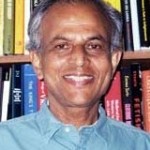
Prof.
H.L. Seneviratne
 In the 1930s and ‘40s educated urban Buddhist
monks launched a movement of rural development, proclaiming that their work is
not ritual but “social service”. They achieved some successes in the early
period of their work, but by the mid-1940s this largely social and economic
movement had deteriorated into a majoritarian political movement that identified
the island with Buddhism and the Sinhala ethnic group, thereby marginalizing the
minorities. Thus, while these monks talked about social service, their actions
were devoid of a social conscience. With the assassination of Prime
MinisterS.W.R.D.
Bandaranaike by a Buddhist monk, their vociferous support of the
ethnic war while obstructing attempts at a negotiated settlement, and most
recently, the attacks on Muslims in Dambulla and Pepiliyana led
by them, the image of the “political monk” has been severely tarnished. The
ochre robed monk, the messenger of the world’s most peaceful religion and symbol
of tranquility and compassion, has become the symbol of violence and
intolerance.
In the 1930s and ‘40s educated urban Buddhist
monks launched a movement of rural development, proclaiming that their work is
not ritual but “social service”. They achieved some successes in the early
period of their work, but by the mid-1940s this largely social and economic
movement had deteriorated into a majoritarian political movement that identified
the island with Buddhism and the Sinhala ethnic group, thereby marginalizing the
minorities. Thus, while these monks talked about social service, their actions
were devoid of a social conscience. With the assassination of Prime
MinisterS.W.R.D.
Bandaranaike by a Buddhist monk, their vociferous support of the
ethnic war while obstructing attempts at a negotiated settlement, and most
recently, the attacks on Muslims in Dambulla and Pepiliyana led
by them, the image of the “political monk” has been severely tarnished. The
ochre robed monk, the messenger of the world’s most peaceful religion and symbol
of tranquility and compassion, has become the symbol of violence and
intolerance.
But,
recent statements by some monks seem to indicate the stirrings of a monastic
conscience that had been asleep for centuries. The Venerable Galkande
Dhammananda, a lecturer at the Kelaniya University, has spoken out
against ethnic violence, and the related problem of stereotyping individuals or
groups as a prelude to demonizing them. In two video clips published in
the Colombo Telegraph, the Ven. Dhammananda reminds us of some simple
truths well known to Buddhists, but hardly ever practised, though given lip
service at the drop of a hat. He emphasizes that differences can and should be
settled before they escalate into violence; and that could be achieved through
the practise of virtues that the Buddha advocated, like compassion, patience,
and tolerance.
The
Ven. Dhammananda further impresses upon us that every individual is different,
and that it is senseless to stereotype a given group as violent or gentle, lazy
or industrious, greedy or generous. Each group has its mixture of good and bad
individuals, and our challenge is to seek internal action in our own communities
so that the bad are reformed. He places the blame for our past ethnic violence
squarely on the elites. And elites are also behind the present violence
perpetrated by the Bodu
Bala Sena and other
extremists. He takes the realistic view that differences are bound to
arise within nations, like within families, and the wise approach is to settle
these with compromise and mutual understanding. He sums up by saying that we
must make a firm determination to bequeath a peaceful society to the next
generation. Sentiments similar to these have been expressed recently by some
other monks as well, like Madoluvave Sobhita, Baddegama Samita and Dambara
Amila.
Renunciation
of the world is always problematic, because the renouncer must at least have
minimal contact with the world. In the case of Buddhist renunciation, that
contact has been elaborate and luxuriant, with the Sangha, the monastic order,
developing into a class of ritual specialists, scholars, political activists and
holders of property interests, in sum, an influential social elite. Their social
organization represents a displacement of goals as reflected in recurring
attempts to seek alternatives, like contemplative isolation in caves and forest
hermitages. This process itself could get routinized as we see in the division
between the village dwelling (gramavasi) and forest dwelling
(vanavasi) monks, with the latter eventually developing the very
organization it escaped from, and returning to the fold of worldly
monasticism.
Some
pious laymen have been critical of established monasticism and have called for
reforms, and at times, tried to form alternative religious cultures. While
understandable, such responses could be excessively harsh and socially negative.
From the point of a healthy relation between religion and society, it is more
useful to accept divergences from orthodoxy when these are consonant with
positive social goals. Thus the laity should accept monks playing such positive
roles even if these might seem to them inappropriate when viewed from a purely
orthodox perspective. The laity however are entitled to expect from the monks an
internalization of ethics and a resulting genuineness of interest in
facilitating social well being. This has indeed been forthcoming in the case of
some monks, and has been pithily articulated by a leading mid twentieth century
scholarly and activist monk, the Ven. Hendiyagala Silaratana, in his maxim
“economic development is inner development”. We can oversimplify this to say
“business must be ethical”, business meaning not just economic activity but all
activity that relates to society, most importantly political activity. Since
such ethical standards ensure equality and fairness, they contribute to social
wellbeing, and are therefore rational.
If
monks are able to make an ethical and rational contribution to social wellbeing
they should not just be allowed but actively encouraged to do so. This was the
position taken by the Buddhist reformer Anagarika
Dharmapala who sought to enlist monks in a war of economic and moral
regeneration. Unfortunately, the empowerment of the educated modern monk that
ensued led them on a different path, that of building a Sinhala Buddhist utopia
in which other ethnic and religious groups were to be second class citizens.
This pursuit came to fruition when forces led by the nationalist monks of
the Eksat Bhikshu Peramuna (United Monks Front) elected to power the
beginning of our problems, the Sinhala nationalist government of 1956. The most
disastrous of its ill-conceived legislations was Sinhala
Only, which marks the end of the attempt, going back to late colonial
rule, to build a multi ethnic and multi religious nation.
In
the monks mentioned above, Madoluvave Sobhita, Baddegama Samita, Dambara Amila
and now, Galkande Dhammananda, we seem to have a growing nucleus of monks with a
social conscience whom we must encourage and persuade to take up the task of
resurrecting the nation that was killed in its infancy by a previous generation
of their colleagues. All patriotic citizens, especially those who have the power
to do so, must urge these monks to participate in organized action to spring up
a thousand streams to confluence into a river that would douse our racial and
other petty hatreds and turn our charred land into a fertile field. As numerous
correspondents have suggested, now is the day, now is the hour, when we must
organize, calmly and systematically, putting our heads together, and preparing
ourselves to brave all odds. Some ideas have already been mooted, such as a
single-issue candidate for the presidency, and the need to prepare for the
Provincial Council elections. We need more. We also need more effort to raise
public awareness of the need for action. For, it is neither a question
of halal, nor women’s apparel, nor indeed any anti-Muslim
violence at all that we are facing. It is a question of the spectre
that is haunting our land, the all pervasive dysfunction of the social organism
rooted in corruption, nepotism, the abuse of power, the dismantling of
democratic institutions, and the imprisonment of the rule of law. We must
proceed with the conviction that even an apathetic people can be persuaded to
rise.
