Peace for the World World ! Your War Our Lives

The Dalai Lama
A Brief Colonial History Of Ceylon(SriLanka)
Sri Lanka: One Island Two Nations
A Brief Colonial History Of Ceylon(SriLanka)
Sri Lanka: One Island Two Nations
(Full Story)
Back to 500BC.

Thursday, May 16, 2013
Managing 1983 Refugee Inflow In Jaffna
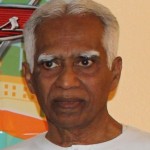
S.Sivathasan
 At the stroke of the midnight hour on Saturday
22nd of July
1983, landmine explosions in Thinnavely on the borders of Jaffna town
disturbed an uneasy calm. The events that followed tore the country apart for
over 25 years. The immediate challenge was for Jaffna society to respond and to
measure up to the tasks of managing the inflow of refugees. What happened was
magnificent, reinforcing our faith in the goodness of humanity. Jaffna
receiving her beleaguered kith and kin, with warmth and affection made lasting
impressions on many.
At the stroke of the midnight hour on Saturday
22nd of July
1983, landmine explosions in Thinnavely on the borders of Jaffna town
disturbed an uneasy calm. The events that followed tore the country apart for
over 25 years. The immediate challenge was for Jaffna society to respond and to
measure up to the tasks of managing the inflow of refugees. What happened was
magnificent, reinforcing our faith in the goodness of humanity. Jaffna
receiving her beleaguered kith and kin, with warmth and affection made lasting
impressions on many.
In
the event of a crisis it is the arm of the government, possessing authority and
commanding the resources, that is looked up to for leadership. The Government
Agent Dr. Devanesan
Nesiah supported by the senior officials of the Kachcheri provided
it. On this occasion there was a different dimension as well. Those in the lead
of the social polity came forward spontaneously, to coalesce with the official
segment. Youth volunteers turned up in substantial numbers to add to the
strength. Without a call everybody expressed their anxiety to share in the
social responsibility. There was a rare display of unity of purpose for social
action that was well sudtained.
The
events of 1983 were unprecedented in their magnitude. They were not comparable
to 1958 or 1977. Yet it was possible to estimate the likely inflow. The figure
settled to 50,000 of whom over 28,000 were expected by ship, about 2,000 by
plane and the balance by road and rail. Actuals corresponded to estimates after
two months of operation. Receiving the refugees using sea transport, who arrived
at KKS and sending them to their place of choice claimed priority attention and
consumed much of our time and energy. Time of ship departure from Colombo and
likely arrival in Jaffna were critical to this operation. There was however no
regular intimation from Colombo. Mr.AK Nesaratnam of the Sathya Sai
Organization, Colombo on his initiative conveyed this information every morning.
To us this was invaluable help. The operation was a complex one, but was well
executed.
Logistics
support for refugee movement was a prime requirement and an arrangement was
worked out. With fuel supplies in limited quantity, issues had to be controlled
and GA had a controlling voice over it. Van operators were summoned and the
proposal was put across for them to provide free transport to the refugees in
return for them to pay for and obtain fuel for their normal plying. They readily
agreed because it was attractive by them. Without assured supplies they will be
immobilized. But it was really altruism that motivated them to participate in a
well synchronized service. Mr. M Panchalingam Additional GA handled this work
and did it well. Time of docking of ships, transport to college and thence to
the homes were communicated to the drivers and they adhered to them steadfastly.
There was never a breakdown because the operation was a community affair.
The
first plan of action was to receive them at the harbor and transport them one km
to Nadeshwara College the centre of operations. Thoughtfully their health needs
were attended to. Medical specialists about six on the first day were present to
help and to get a feel of things for assistance on subsequent days. As the
refugees got down from the harbor they were given a welcome drink. After some
rest and socializing with known faces, they were treated to lunch. With that
they were taken by van and dropped at the doorstep of their homes. A splendid
feature of this service was, perhaps for once all the volunteers whatever their
social position were seen doing their work with humility. They displayed a
blindness to class and caste that was total. It was done with love and respect
knowing well the ordeal they had experienced.
At
the harbor as they landed and at the college where they moved about, I was able
to observe on all days something noteworthy. After a harrowing experience in
Colombo, and though the journey mostly by cargo ship was unpleasant and tiresome
none of them showed signs of fatigue. Nor were they distraught or dejected. They
seemed happy and had smiles. A feeling of relief and release was writ upon their
face. This was remarkable. They had come into free territory where the mind was
without fear. Warmly received by mostly unknown faces and sent to their own
place of residence to join their relatives was to them a memorable
experience.
The
refugees were spared the pain of unloading, carrying or loading their luggage.
This was all done by youth volunteers. In the first few days we met in the
afternoon to review operations so as to smoothen them. When we noted that pieces
of luggage were numerous we thought tags would help. A volunteer who owned a
press happily agreed to do it free and brought a consignment the following
morning. He did that till the operation was completed. The refugees numbering
28,000 brought with them over 100,000 pieces and nothing was lost.
Rice
and vegetables needed in huge quantities day after day for nearly 50 days were
all donated at the college centre. Some organizations even provided cooked
meals. There were donations received at the Kachcheri too. Volunteers were
engaged in cooking and serving. The youth in large numbers attended to much of
the back breaking work. When organization was in place and once work got
stabilized, GA and some officers made their visits less frequent.
Our
attention was now required for relief work. State responsibility and our
obligation did not end with sending the refugees home. Refugees who had no home
to return to or no relatives to accommodate them needed support from the state
or social and religious institutions. Within the limitations of resources and
organizational capacity what could be provided was done. In this regard from the
beginning of the influx, religious organizations too played a part worthy of
appreciation. Sustained effort required above all grit. The Catholic Church with
resources, together with a disciplined clergy and a host of nuns, made its
contribution over a long period of time and stretching across several
locations.
A
major item of assistance from the state was food. GA struck upon the strategy of
extending to the refugees the food stamp scheme that was in operation. This had
easy acceptance because it is in the nature of the government to endorse the
existing over a new formulation. But an improvement urged and approved was one
kilo of milk powder per food stamp package. This arrangement went on for some
months. At this point of time Mr. Bradman
Weerakoon was appointed Commissioner General of Essential Services, a
new office that was created to smoothen matters. He was adequately empowered to
take speedy decisions. When GA spoke to him about the above proposal approval
was given immediately. Documentation was subsequent.
Apart
from government support, funds were required for several other needs. The first
organization to move in this direction on its own initiative was OXFAM from UK.
The representative given a brief presentation at the GA’s Residency gave a
cheque for a good amount. This institution continued to give assistance for some
years more. Individuals and organizations happily gave cash donations since the
management of refugees had become a continuous programme. Anticipating an inflow
of cash from several corners it was deemed best to have a single fund with a non
kachcheri account. RRF ’83, was the name assigned to the organization. It was
created with about ten members. Well known personalities enjoying the confidence
of the community were drawn into it. Dr. Yogu Pasupathy, very personable and of
equable temperament was invited to be its first Chairman. An engineer became the
Secretary and he offered the facilities of his private office for meetings. For
nearly two months, GA and I participated in all meetings held daily at 8
am.
Managing
the refugees on arrival and thereafter was a great operation done with
acceptance to all. It was a labour of love tinged with sympathy. Within two
months when pressure eased, all those in the forefront of operations – more than
100 – were invited to the kachcheri by the GA for an expression of gratitude
and our indebtedness.

 May 14, Colombo: The Sri Lankan government has lifted its ban on fact-finding visits by the International Bar Association's Human Rights Institute (IBAHRI).
The government has said that the institute is welcome to make an "objective and impartial analysis of the reality of contemporary Sri Lanka," according to the institute.
In February 2013 Sri Lankan authorities revoked the visas of a previously constituted delegation and prevented them from undertaking a rapid response mission to Colombo to probe the impeachment of the former Chief Justice Dr. Shirani Bandaranayake.
The External Affairs Ministry of Sri Lanka said the four members of the delegation provided inaccurate information on their visa applications and therefore the delegation was barred form entering the country.
Last month the institute released a report on Sri Lanka raising the issue whether Sri Lanka is a suitable venue to hold the Commonwealth Heads of Government Meeting (CHOGM) in Colombo in November 2013.
Since the delegation was not allowed to visit the country, it conducted interviews and consultations remotely in preparing the report "A Crisis of Legitimacy".
Sri Lanka’s High Commissioner tells BBC that IBAHRI is ‘absolutely welcome to come in’
The International Bar Association’s Human Rights Institute (IBAHRI) welcomes the Sri Lankan High Commissioner to the United Kingdom’s recent public statement that IBAHRI representatives will be granted visas to enter Sri Lanka.
Made during a live interview, broadcast on the BBC Radio 4 Today programme on 30 April 2013, the comment follows the Sri Lankan authorities’ refusals on two occasions to accord individuals of high-level IBAHRI delegations entry to Sri Lanka to investigate the independence of the legal profession and the impeachment proceedings against Chief Justice Bandaranayake.
In response to a direct question asking whether IBAHRI would be let in to Sri Lanka Dr Chris Nonis replied: ‘Yes, if they come in the official manner in which we or any institution of ours would apply to come to Britain.’ He added, ‘What we look forward to and what we invite is all of you, everyone, to come to Sri Lanka...and make an objective and impartial analysis of the reality of contemporary Sri Lanka.’
During the interview the Today programme’s journalist, Justin Webb, said: ‘Just on that point, because it’s such an important one isn’t it, because this is the association that represents lawyers right around the world, the International Bar Association – if their Human Rights Institute comes back to you and says, “This is what we would like to do, these are some top lawyers who would like to come to Sri Lanka…” They are obviously not visa risks, they are not going to engage in some abuse of the process…if they say what they want to do, will you let them in?’
Dr Nonis replied: ‘Naturally, if any institution is formally invited and has reciprocity with an institution there, as is done [in the UK], naturally of course we would’.
The full interview is available on the BBC website until 6 May. Click here to listen. Also, the transcript is available to read here.
Dr Mark Ellis, Executive Director of the International Bar Association commented, ‘The International Bar Association has long-established links with Sri Lanka’s legal community and is taking a close interest in the independence of its legal profession. We welcome Dr Chris Nonis’ commitment to allow the IBA’s Human Rights Institute entry to Sri Lanka, paving the way for constructive conversations to facility what he describes as “impartial analysis of the reality of contemporary Sri Lanka”’.
ENDS
ENDS
NOTES TO THE EDITOR
A high-level IBAHRI delegation applied for visas to enter Sri Lanka on 21 January 2013, using the official online visa application process. The online form provides four options to indicate the ‘purpose of visit’. Option one was selected, to ‘participate in conferences, workshops and seminars’, the category which best fits the intentions of the delegation, which were to hold a range of consultations and seminars with various participants. The alternative options were to participate in ‘art, music and dance’, ‘business meetings and negotiations’, and ‘short training courses’. The online visa application process does not allow applicants to provide further information on the purpose of their trip. Approval to enter the country was suspended on 29 and 30 January in the cases of the delegates who had applied and been approved for entry to Sri Lanka through the online application process. A further visa had been issued to one member of the delegation, facilitated through the relevant national diplomatic channels on 18 January 2013 but was revoked on 29 January.
A high-level IBAHRI delegation applied for visas to enter Sri Lanka on 21 January 2013, using the official online visa application process. The online form provides four options to indicate the ‘purpose of visit’. Option one was selected, to ‘participate in conferences, workshops and seminars’, the category which best fits the intentions of the delegation, which were to hold a range of consultations and seminars with various participants. The alternative options were to participate in ‘art, music and dance’, ‘business meetings and negotiations’, and ‘short training courses’. The online visa application process does not allow applicants to provide further information on the purpose of their trip. Approval to enter the country was suspended on 29 and 30 January in the cases of the delegates who had applied and been approved for entry to Sri Lanka through the online application process. A further visa had been issued to one member of the delegation, facilitated through the relevant national diplomatic channels on 18 January 2013 but was revoked on 29 January.
The IBAHRI subsequently wrote to the High Commission requesting visas to conduct a fact-finding mission to investigate the independence of the legal profession and the impeachment proceedings against Chief Justice Bandaranayake. The IBAHRI did not receive a response from the High Commission, and was not granted permission to enter the country.
The IBAHRI conducted a remote fact-finding mission through a series of in-depth conversations by telephone and via the internet with a range of key players in Sri Lanka, including judges, lawyers, journalists, parliamentarians and civil society activists. The delegation found there to be a systematic effort to intimidate and discredit lawyers and others who advocate and promote respect for fundamental rights in Sri Lanka.
The report was launched at the House of Lords, London, hosted by Baroness Kennedy of the Shaws, on 22 April 2013.
- Click here to read the transcript of the exchange between Dr Chris Nonis, Sri Lanka’s High Commissioner to the United Kingdom, and BBC Radio 4 Today programme’s Justin Webb.
- Click here to download the IBAHRI report A Crisis of Legitimacy: The Impeachment of Chief Justice Bandaranayake and the Erosion of the Rule of Law.
- Click here to read more about the launch of A Crisis of Legitimacy at the House of Lords, London.
Click here to watch a four-minute film on the IBAHRI report and recommendations.
For further information please contact:
Romana St. Matthew - Daniel
Press Office
International Bar Association
4th Floor, 10 St Bride Street,
London EC4 4AD
Press Office
International Bar Association
4th Floor, 10 St Bride Street,
London EC4 4AD
Mobile: +44 (0)7940 731 915
Direct Line: +44 (0)20 7842 0094
Main Office: +44 (0)20 7842 0090
Fax:+44 (0)20 7842 0091
Direct Line: +44 (0)20 7842 0094
Main Office: +44 (0)20 7842 0090
Fax:+44 (0)20 7842 0091
May 14, Colombo: The Sri Lankan government has lifted its ban on fact-finding visits by the International Bar Association's Human Rights Institute (IBAHRI).The government has said that the institute is welcome to make an "objective and impartial analysis of the reality of contemporary Sri Lanka," according to the institute.
In February 2013 Sri Lankan authorities revoked the visas of a previously constituted delegation and prevented them from undertaking a rapid response mission to Colombo to probe the impeachment of the former Chief Justice Dr. Shirani Bandaranayake.
The External Affairs Ministry of Sri Lanka said the four members of the delegation provided inaccurate information on their visa applications and therefore the delegation was barred form entering the country.
Last month the institute released a report on Sri Lanka raising the issue whether Sri Lanka is a suitable venue to hold the Commonwealth Heads of Government Meeting (CHOGM) in Colombo in November 2013.
Since the delegation was not allowed to visit the country, it conducted interviews and consultations remotely in preparing the report "A Crisis of Legitimacy".
