Peace for the World World ! Your War Our Lives

The Dalai Lama
A Brief Colonial History Of Ceylon(SriLanka)
Sri Lanka: One Island Two Nations
A Brief Colonial History Of Ceylon(SriLanka)
Sri Lanka: One Island Two Nations
(Full Story)
Back to 500BC.

Sunday, September 1, 2013
China’s Ethnic Minorities: Wonder Whether Gota And Basil Went To Night School In Beijing?
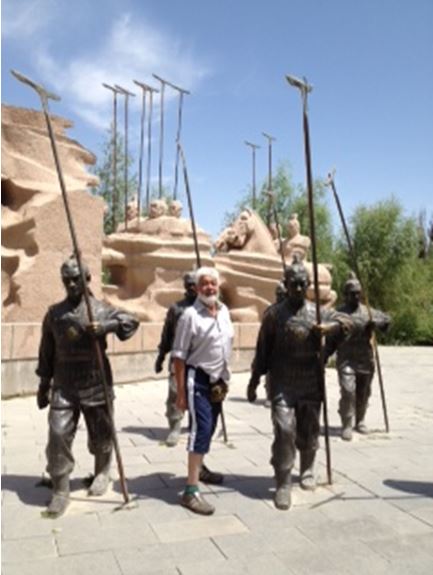
Marching with the Han army in 100BC to conquer ethnic lands
By Kumar David -

Prof Kumar David
Identity, a hard to understand mystery: Status quo of China’s ethnic minorities

 China
has been successful in smoothing over potential conflicts with all its
55 ethnic minorities but two – Tibetans and Uighurs. Interestingly these
are two large, but not the largest, but they differ from the nation’s
92% Han Chinese in religion, race and language. The 18 million Zhuang
are the largest of the 55 officially recognised minorities, but account
for only 1.3% of the population. They are the ancient indigenous people
of the southern Guangxi Province, but well integrated. Hui (mainly in
north-western Ningxia), Manchu of Manchuria and Uighurs of westernmost
Xinjiang, numbering 10 million each, come next. Seven million Tibetans,
the tenth biggest minority in China account for only half a per-cent of
the nation’s population.
China
has been successful in smoothing over potential conflicts with all its
55 ethnic minorities but two – Tibetans and Uighurs. Interestingly these
are two large, but not the largest, but they differ from the nation’s
92% Han Chinese in religion, race and language. The 18 million Zhuang
are the largest of the 55 officially recognised minorities, but account
for only 1.3% of the population. They are the ancient indigenous people
of the southern Guangxi Province, but well integrated. Hui (mainly in
north-western Ningxia), Manchu of Manchuria and Uighurs of westernmost
Xinjiang, numbering 10 million each, come next. Seven million Tibetans,
the tenth biggest minority in China account for only half a per-cent of
the nation’s population.
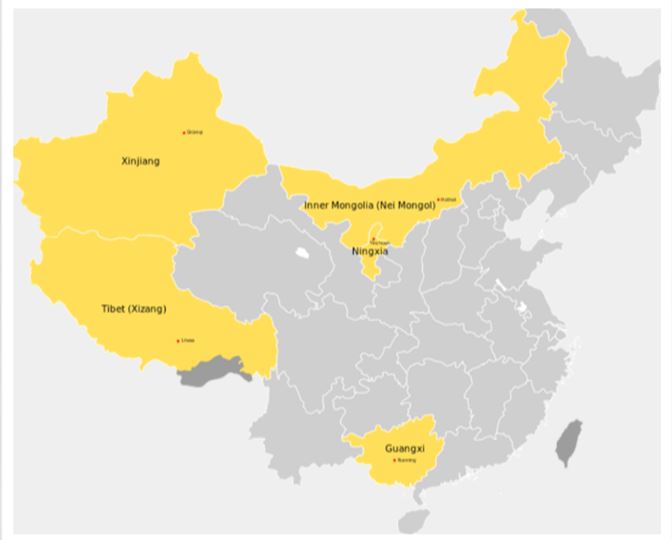
Apart from 23 provinces and four giant
municipalities, China has five autonomous regions (AR) endowed with
more powers than provinces to shelter ethnic identities. Interestingly
only one, Tibet, is majority ethnic (90% Tibetan). Two, Ningxia and
Guangxi, are one-third ethnic (Hui and Zhuang, respectively) but the
two-thirds Han Chinese do not support AR status. In Xinjiang the ratio
of Uighurs to Hans is about equal, while Mongols in the fifth AR, Inner
Mongolia, are less than 20%. Anxious to forestall charges of unfairness
to minorities the Communist Party pushed through AR status for these
five; a reverse attitude to the Sinhala majority and government of
Lanka.Read More
In Memory Of My Grandfather Sir Claude Corea
By Harindrini Corea - September 1, 2013

Harindrini Corea
My paternal grandfather Sir George Claude Stanley Corea devoted his life
in service to Sri Lanka. His inspiring career in diplomacy is
remembered and respected. He was a humble and charismatic Christian
gentleman who chose his words wisely and was a patient listener.
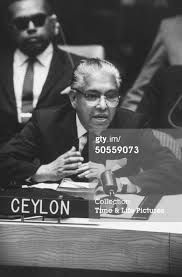
Sir Claude Corea at the United Nations Security Council meeting 1960
Sir Claude was born on the 29th of
January 1894 in Chilaw, a seaside town situated on the North Western
coast of Ceylon (Sri Lanka). An old boy of Wesley College, he entered
politics as a representative from Chilaw and was elected to the State
Council in 1931. He served as Minister of Labour, Industry and Commerce
from 1936 until 1946. He was elected to the presidency of the Ceylon
National Congress in 1932, 1939 and 1941. During the Second World War,
Sir Claude Corea insisted that the Ceylon National Congress should not
be lobbying for “mere constitutional reforms”, but should seek transfer
of sovereignty to the people of Ceylon. After 1945, Sir Claude served as
Chairman of the Board of Ministers Sub Committee with the mandate of
resolving post-war problems. He was viewed as a potential first prime
minister of Ceylon but chose a diplomatic career instead and accepted
the post of Ceylonese Representative in the United Kingdom in 1946. He
was appointed as the first Ceylonese Ambassador to the United States in
1948. He attended the 5th session of Food and Agriculture Organization of the United Nations in Washington DC from 21st November to 6th December 1949. On the 8th of
September 1951, J. R Jayewardene (later President Jayewardene), Sir
Claude Corea and R. G. Senanayake signed the Treaty of Peace with Japan,
on behalf of Ceylon, in San Francisco.Read More
