Peace for the World World ! Your War Our Lives

The Dalai Lama
A Brief Colonial History Of Ceylon(SriLanka)
Sri Lanka: One Island Two Nations
A Brief Colonial History Of Ceylon(SriLanka)
Sri Lanka: One Island Two Nations
(Full Story)
Back to 500BC.

Thursday, January 9, 2014
Industrial Face Of Tamil Nadu
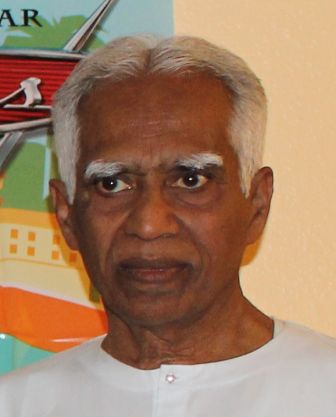
S. Sivathasan
 “Read
not to contradict and confute; nor to believe and take for granted; nor
to find talk and discourse; but to weigh and consider” – Francis Bacon
“Read
not to contradict and confute; nor to believe and take for granted; nor
to find talk and discourse; but to weigh and consider” – Francis Bacon
Among Prime States
To a fair degree the size of the economy will be conveyed by GDP data. Its composition will indicate both
health and direction. UNIDO has ranked Japan first in industrialization, China seventh and India 43rd.
Indian industry is 17.6% of GDP. Industry in Tamil Nadu is 34% of state
gdp. The impression immediately created is that in TN, industry surges
ahead of that in India. It is so, having registered second rank in
industrialization next only to Maharastra. This change in the profile
and the quickening pace of growth have also made TN the most urbanized
state.TN is also the second largest economy. The state’s wealth gave
the citizen a gdp per capita of Rs.72,993 in 2011/12. Comparative
figures are Rs: 63,961 for Andhra, 60,458 for Gujarat and 59,763 for
Karnataka – (source: Planning Commission of India)
Prelude

Daimler Light & Heavy Commercial Vehicle Factory at Oragadam
A survey of the industrial sector will indicate how TN came to this
position. It was certainly not by sudden flight. Two millennia of
intellectual tradition, premium value on education resulting in the
establishment of Madras University in 1857, together with state wide
growth in education and the development of human resources explain this
wholesome phenomenon. Business culture given a fillip to in Coimbatore
by the advent of Gujaratis too made its contribution. It may also be
said that the diligent selection of industrial projects by the Tamil
entrepreneurs, support extended by the British before independence,
initiatives of TN government thereafter account for success. Never to be
missed are commitment and work ethic of the workforce.
Read MoreAssumption Is The Mother Of All Development

Arjuna Seneviratne
The point:
In December 2012, at their annual symposium of the Center for Poverty
Analysis (CEPA) and titled “Reimagining development”, Dr. Harni
Amarasuriya, in her address, made one of the most significant
observations on development that I have heard in recent times from
anywhere in the world. Referring to log-frame analysis, she said “We
discuss in particular the column that is titled ‘assumptions’ and we
reflect on how the assumptions columns describe in detail the context
within which development is practiced. However, the ‘logic’ of the
log-frame places the assumption column outside of the project – what is
listed in this column is usually regarded as those issues that may
impede the successful implementation of a carefully constructed
development project. In other words, the social, political,
environmental and cultural processes that shape our lives are seen as
‘external factors’ beyond the control of the development project. Herein
lies one of the greatest contradictions of development: while
professing to be about transformation, development is also particularly
uncomfortable with risk, or uncertainty. Therefore, it is hardly
surprising that more than after 50 years of development, we are still
debating its worth”.
She goes on to pick apart the nature of development as essentially a process through which “global and local interests converge with a sufficient level of incoherence so that multiple interests can be served” through a delightful and insightful anthropological treatment of the issue, the full text of which may be read here.
I propose, through this post, to consume a few hundred words to try to
start the process of unpacking the implications of her assertion from a
more procedural / mechanistic standpoint. Read More
