Peace for the World World ! Your War Our Lives

The Dalai Lama
A Brief Colonial History Of Ceylon(SriLanka)
Sri Lanka: One Island Two Nations
A Brief Colonial History Of Ceylon(SriLanka)
Sri Lanka: One Island Two Nations
(Full Story)
Back to 500BC.

Monday, January 6, 2014
Truth & Reconciliation Commission: A Time Buying Ploy?
By Dinesh D. Dodamgoda -January 6, 2014
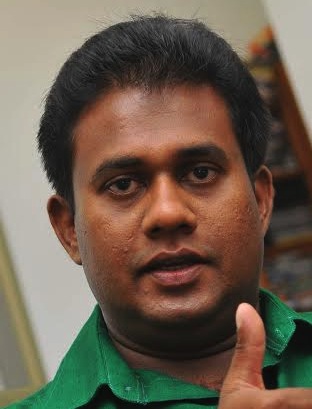
Dinesh Dodamgoda
 Is the proposal to initiate a Truth and Reconciliation Commission (TRC)
in Sri Lanka with the assistance from South African government a time
buying ploy to thwart the call for an international inquiry into war
crimes? No doubt, the answer relies on Rajapaksa government’s sincerity
in initiating a genuine post-conflict reconciliation process.
Is the proposal to initiate a Truth and Reconciliation Commission (TRC)
in Sri Lanka with the assistance from South African government a time
buying ploy to thwart the call for an international inquiry into war
crimes? No doubt, the answer relies on Rajapaksa government’s sincerity
in initiating a genuine post-conflict reconciliation process.
During the CHOGM in Colombo in last November, President Mahinda Rajapaksa asked the South African President Jacob Zuma twice
to provide assistance to set up a Truth and Reconciliation Commission
(TRC), similar to the South African model. However, it was learnt that
the President Zuma replied and advised President Rajapaksa, “Not to
rush” as the President Zuma views, “This is not something you do
politics with”. Nonetheless, it was further learnt that during the
CHOGM, President Rajapaksa wanted to announce the CHOGM leaders the TRC
initiative that could secure the South African assistance, yet again
President Zuma advised, “Not to rush”.
It is obvious that the Rajapaksa government is in a kind of a rush
either to initiate or to show the world that the government is keen on
initiating a post-conflict reconciliation process, four and a half years
later to the end of conflict. As some critics also argue, “Why did the
Rajapaksa government take so long to initiate such process?”
During his visit to Sri Lanka in late May 2009, UN Secretary General Ban
Ki-moon proposed a post-conflict framework for Sri Lanka that had three
key issues: resettlement of internally displaced persons (IDPs),
political reconciliation, and accountability for war-time atrocities. A
few months later, then the US Ambassador to Colombo, Patricia A. Butenis,
proposed a wider framework with four key issues: treatment of IDPs,
human rights, political reconciliation, and accountability for alleged
war crimes. Both frameworks suggested initiating a political
reconciliation process. However, Rajapaksa government had a different
opinion.
Giving an interview to Headline Today television, Defence Secretary Mr. Gotabaya Rajapaksa in
2011 thrashed “the political solution talk” and said that it was
“simply irrelevant” as “we have ended this terrorism in Sri Lanka”.
Nonetheless, no clarification was made by the Rajapaksa government
regarding Mr. Gotabaya Rajapaksa’s position on political reconciliation
and indicated Rajapaksa government’s endorsement to Defence Secretary’s
opinion.
Nevertheless, on 15 November 2011, the Lessons Learnt and Reconciliation Commission (LLRC)
handed over its final report to President Mahinda Rajapaksa with
various recommendations to build post-conflict Sri Lanka. As the report
pointed out in page 368, the essence of the report is about reconciling
the society: “What needs to be done for reconciliation and
nation-building is that the State has to reach out to the minorities and
the minorities, in turn must, re-position themselves in their role
vis-à-vis the State and the country.”
