Peace for the World World ! Your War Our Lives

The Dalai Lama
A Brief Colonial History Of Ceylon(SriLanka)
Sri Lanka: One Island Two Nations
A Brief Colonial History Of Ceylon(SriLanka)
Sri Lanka: One Island Two Nations
(Full Story)
Back to 500BC.

Monday, April 7, 2014
Gamani Corea’s Noble Mission: Unfinished Then But May Be Irrelevant Now

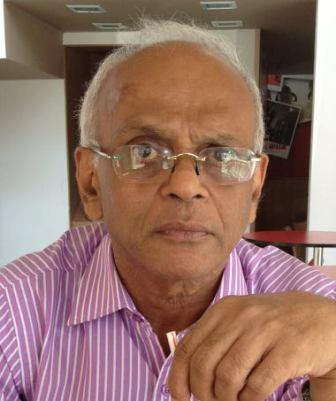
Dr. W.A. Wijewardena
An economist with a noble mission
Gamani Corea,
by any comparison, Sri Lanka’s most respected economist of
international renown, embarked on a noble mission when he assumed the
post of Secretary General of UNCTAD – United Nations Conference on Trade
and Development – in 1973. That was to uplift the conditions of
hundreds of poor countries in the world which had been mercilessly hit
by markets by depressing the prices of primary commodities they had been
supplying to the rest of the world. The result was for them as a group
to undergo economic hardships and unexpected losses in welfare whenever
the prices fell in the market. In the opposite, they had a good time
when they went up.
International division of labour
 Dr. Gamani Corea
It was a time when the world had been divided into two groups which economists call ‘international division of labour’.
According to this division, one group produced manufactured products and supplied them to the rest of the world. This group comprised the rich world. The other group produced primary commodities – ranging from cereals to agricultural produce to minerals – and supplied them to the rest of the world. This latter group consisted of poor countries in the world. What was observed in the global markets was that while the prices of manufactured products continued to rise or remained stable, the prices of primary commodities had been depressed or had undergone frequent changes from increases to decreases showing a high degree of volatility.
Unfavourable terms of trade for poor countries
Sri Lanka, victim of unfavourable TOT Read More
How Much Is That Bottle Of Water?
By Thahira Cader -April 7, 2014

Thahira Cader
“Water promises to be to the 21st century what oil was to the 20th
century: the precious commodity that determines the wealth of nations” -New York Press[i]
It is the 21stcentury and according to UNICEF statistics[ii] 783
million people do not have access to safe drinking water. Each day at
least 5,000 children die from preventable water and sanitation-related
diseases. The world is plummeting towards a situation of extreme water
scarcity. Indeed, between now and 2025, it is expected that we will need
17% more water to produce food for the swelling populace of developing
countries. Meanwhile, total water consumption will increase
disproportionately by some 40%. In optimal conditions, the average human
being can survive up to a maximum of six days without drinking water.
The rising levels of pollution, steadily expanding populations and
unprecedented climate change, however, have combined to make the
conditions we thrive in far from optimal. The odds are daunting. And as
we summersault into a future in which access to clean drinking water
promises to be uncertain, new talking points are developing. Among the
many intriguing questions that are being asked today, one, “Is drinking water a commodity or a human right?” takes centre stage.
The fundamental role played by water in the sustenance of all life forms
is obvious: water is life. Thus, it is natural to assume that people
shouldn’t have to pay a price for this basic right. Unfortunately, the
real state of affairs is far from the ideal, which is that clean
drinking water should not have to be bought under any circumstances.
The United Nations (UN) sustained a series of dialogues spanning
multiple decades on this issue. The result was that binding resolutions
were passed in 2010 declaring, “the human right to safe drinking water
and sanitation is derived from the right to an adequate standard of
living and inextricably related to the right to the highest attainable
standard of physical and mental health, as well as the right to life and
human dignity.” [iii]
Water facilitates the provision of other fundamental human rights, thus
to deprive people of access to clean water is to impose limitations on
their right to live.
