Peace for the World World ! Your War Our Lives

The Dalai Lama
A Brief Colonial History Of Ceylon(SriLanka)
Sri Lanka: One Island Two Nations
A Brief Colonial History Of Ceylon(SriLanka)
Sri Lanka: One Island Two Nations
(Full Story)
Back to 500BC.

Thursday, April 3, 2014
Sri Lanka: Lessons From Geneva

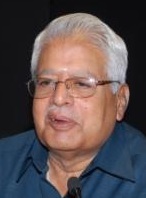
Prof. V Suryanarayan
Gross human violations that took place in Sri Lanka during the last
stages of the Fourth Eelam War have come into sharp focus once again.
The UN Human Rights Council, on March 27, after taking note of the
recommendations of the UN High Commissioner, highlighted the “need for an international inquiry mechanism”. The resolution was supported by 23 members, 12 voted against and 12, including India, abstained.
It should be pointed out that when human rights violations figured in
the UN soon after the Fourth Eelam War, India, along with Russia and
China, opposed the move and bailed out the Sri Lankan government. What
is more, India went ahead and got a resolution passed which
congratulated the Lankan government for defeating one of the most
ruthless terrorist organisations in the world. But as the Lankan
government began to show its true colours, went back on assurances for
credible internal investigation and implementation of devolution
proposals, New Delhi had to revise its policy. There was also a domestic
compulsion, namely the political parties in Tamil Nadu were insisting
on punishing the guilty in Sri Lanka. Hence, in 2012 and 2013, India
voted against Sri Lanka. In fact, behind the scenes, Indian diplomats
were trying to get the resolution worded strongly. But the thrust of the
resolution was to persuade Sri Lanka to have its own investigative
mechanism and speed up the process of ethnic reconciliation.
The 2014 resolution represented a basic departure from the earlier ones.
Mandate for international investigation means intrusion into the
domestic affairs of a sovereign state. Amb. Dilip Sinha pointed out that
by asking the Office of the High Commissioner for Human Rights (OHCHR)
to “investigate, assess and monitor the human rights situation” the
resolution ignored the progress Sri Lanka has made like the holding of
the Northern Provincial Council election and
the successful rehabilitation of the internally displaced people. The
Indian delegate highlighted that the resolution was “inconsistent and
impractical” because it asks both Colombo and the OHCHR to
simultaneously conduct investigation. Amb. Sinha concluded that it had
been India’s firm conviction that an “intrusive approach that undermines
national sovereignty and integrity is counter-productive”.
The Indian abstention represents a definite victory for Indian
bureaucracy. They are of the view that Indian voting in the 2012 and
2013 meetings was an aberration and it needs to be corrected. They feel
that if New Delhi supports an intrusive approach, at a future date, it
can also be used against India itself. New Delhi has many skeletons in
the cupboard—human rights violations in Jammu & Kashmir, Nagaland,
Mizoram and encounter killings in the Naxalite-hit areas. It should also
be pointed out that in 2012 and 2013 the Tamil Nadu factor was very
decisive. But the situation has changed today. The mandarins in South
Block know that Indian abstention will be subjected to severe criticism
in Tamil Nadu. After weighing the pros and cons the government agreed
with the bureaucrats, because whatever may be the nature of voting the
ruling Congress party will not be able to win a single seat in Tamil
Nadu.
Colombo is determined to stonewall any effort to institute an
international inquiry mechanism. Amb. Dayan Jayatilleka echoed the
feelings of the majority Sinhalese when he wrote: “As Sri Lankans our
rejection of an international inquiry must be unconditional. Such an
inquiry is unfair, hypocritical and an affront to our self respect as a
nation.” The Tamil National Alliance (TNA) that got a resolution passed
in the Northern Provincial Council for international investigation,
naturally welcomed the UN resolution.
From an Indian point of view it will be relevant to compare and contrast
Mahinda Rajapaksa’s earlier views on UN humanitarian intervention and
his present policy. The Sinhalese generally refer to the period,
1987-89, as Bishana Samaya, Days of Terror. The Janatha Vimukti Peramuna
(JVP) had unleashed unprecedented violence following the conclusion of
the India-Sri Lanka Accord and the induction of the Indian Peace Keeping
Force (IPKF). The brutality of the JVP was more than matched by the
savage reprisals of the Lankan armed forces. As Lionel Bopage, former
JVP leader, has written, “For every one person killed by the JVP, the
security forces killed ten”. Rajapaksa was a budding Sinhalese
politician; he left the shores of Sri Lanka, camped in Geneva and
demanded UN humanitarian intervention to save his people. Obviously, he
would not like to be reminded of his earlier stance on UN humanitarian
intervention.
While Rajapaksa’s
support base among the majority Sinhalese is intact, evident from
recent win in the council elections in the Western and Southern
Provinces, there are dark clouds hovering in the horizon. As the
resolution in the UN aptly pointed out, “there are continuing reports of
violation of human rights, including sexual and gender violence,
enforced disappearances, extra-judicial killings, torture and violation
of the rights to freedom of expression, association and peaceful
assembly, threats to judicial independence and rule of law as well as
intimidation of and reprisals against human rights defenders, members of
civil society, lawyers and journalists. There are also attacks against
religious minority groups, Hindus, Moslems and against Christians”.
A recent violent incident in Kilinochchi district in the Northern
Province needs mention. The shooting was attributed to Gopi, a former
Tiger guerrilla. A virtual man hunt followed. According to government
spokesmen, it was an illustration of LTTE resurgence. The TNA maintained
it was a government excuse to justify the continuing military presence
in the Tamil areas. The TNA, under the leadership of Wigneswaran and
Sampanthan, represents the saner elements in the Tamil society who are
eager to find a political solution within a united Sri Lanka. If the TNA
gets weakened and marginalised in the hands of the government, it is
likely to be replaced by more extremist forces. And there are fringe
groups in the Tamil diaspora who would like to resurrect the Tigers and
finance the armed struggle.
It is necessary to recall that Sri Lankan Tamils were reluctant
secessionists and the genesis and growth of Tamil militancy was a
consequence of the many acts of discrimination perpetuated by
Sinhalese-dominated governments. Sri Lanka’s future hinges on whether
Sinhalese leaders will draw the right lessons from history. Those who do
not learn will be compelled to relive history.
*V Suryanarayan - former senior professor, the Centre for South and Southeast Asian Studies, University of Madras
