Peace for the World World ! Your War Our Lives

The Dalai Lama
A Brief Colonial History Of Ceylon(SriLanka)
Sri Lanka: One Island Two Nations
A Brief Colonial History Of Ceylon(SriLanka)
Sri Lanka: One Island Two Nations
(Full Story)
Back to 500BC.

Wednesday, June 4, 2014
Behind India's shocking gang rapes lies a deep crisis among young men
Rapes have spiralled as a lost generation of jobless, ill-educated men has reached adulthood and sought refuge in violence
Girls
protest in Lucknow, India, after the gang-rape and murder of two
sisters in Uttar Pradesh. Photograph: Azam Husain/Barcroft India
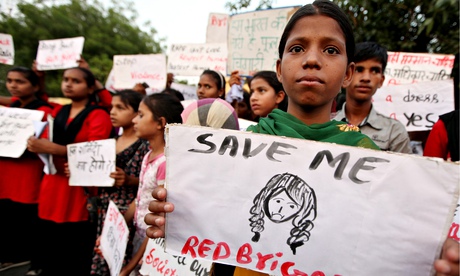
 Kishwar Desai-Wednesday 4 June 2014
 For
anyone who maintains that women are raped because of the way they dress
or the way they look, the image of two thin and scrawny teenagers
hanging from a mango tree, gang raped and murdered by their neighbours
in Budaun, Uttar Pradesh, provided a powerful lesson. It was a poignant
reminder that, according to the National Crime Records Bureau, incidents
of rape in India have gone up tenfold in the last 40 years.
For
anyone who maintains that women are raped because of the way they dress
or the way they look, the image of two thin and scrawny teenagers
hanging from a mango tree, gang raped and murdered by their neighbours
in Budaun, Uttar Pradesh, provided a powerful lesson. It was a poignant
reminder that, according to the National Crime Records Bureau, incidents
of rape in India have gone up tenfold in the last 40 years.
From 1971 to 2012 recorded cases shot up from just under 2,500 to almost
25,000, and activists believe only 10% of cases are actually reported
to the police. This rising trend of sexual violence needs to be better
understood. And today it was reported that a judge in Aligarh, Uttar Pradesh, was the victim of an attempted rape in her well-protected home.
The enormous spike in rape incidents has been ascribed, in urban areas,
to women joining the workforce and facing aggressive male resistance;
and in rural areas to the all-pervasive caste system, as in this case,
where the girls belonged to a lower caste than the rapists. But the
underlying problems go far wider, and point to a deeper crisis, which
India must urgently address.
Uttar Pradesh, where these latest horrific attacks took place, is one of
the poorest states in India, with more than 60 million people living on
less than a pound a day. At the same time, India is grappling with a
lost generation of those who were born after economic liberalisation but
are ill-educated, unemployed – and, mostly, male. According to the
International Labour Organisation, India saw a growth in joblessness between 2004 and 2009.
Unemployment and poverty are common features among the gangs who rape.
In this environment, and within a patriarchal structure, violence is one
of the few things that can command respect. As young men become
increasingly unable to participate in the "India shining" fairytale, they reassert their identities, and power, in a savage and cruel act.
During the last 10 years, especially, there was an incredibly slow
creation of educational and job opportunities. It is no coincidence that
many marginalised men, born in the last two or three decades, have
reached adolescence or adulthood in the same period as rape incidents
began to spiral upwards.
And the police are often willing participants. In the Budaun case, not
only were the rapists known to the victims' family, but two of the
suspects are policemen. Indeed, they have sympathisers at an even higher
level: the former chief minister of Uttar Pradesh, Mulayam Singh
Yadav, said recently about jailed rapists: "Boys will be boys."
Underlying all this is the fact that around half of India's population
is under 30. And thanks to years of systematic sex selection, a
significant majority of them are men. In Uttar Pradesh, for instance, there are just 912 girls for every 1,000 boys. This shortage of young women makes it very difficult for these men to have a normal relationship.
It is now obvious that the important anti-rape law passed last year,
after the shocking gang-rape of a young woman on a bus in Delhi, has not been enough:
there are too few fast-track courts, and too many criminals are finding
it easy to escape identification. They either hunt for younger and
younger girls, who are less likely to name them; or, more and more, they
kill or torture their victims – by pouring acid into their throats,
setting them alight or, as in this case, hanging them.
Of course, it is important to note that rape happens behind closed doors
in upper-class homes as well, and we cannot put the blame entirely on
these marginalised, ill-educated young men. But as this trend of gang
rapes becomes more prevalent, some economic solutions will have to be
found to assimilate these increasingly frustrated young men into civil
society, and ensure that education and jobs are offered. Otherwise
Indian women will continue to pay the price.
