Peace for the World World ! Your War Our Lives

The Dalai Lama
A Brief Colonial History Of Ceylon(SriLanka)
Sri Lanka: One Island Two Nations
A Brief Colonial History Of Ceylon(SriLanka)
Sri Lanka: One Island Two Nations
(Full Story)
Back to 500BC.

Monday, June 2, 2014
Deviation Of Buddhist Philosophy In Sri Lanka
By Ayathuray Rajasingam -June 2, 2014
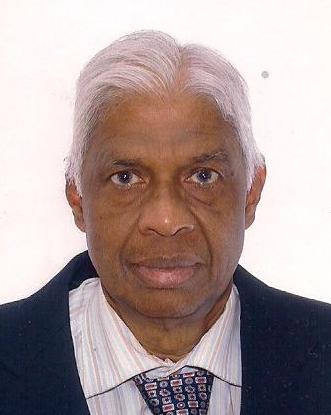
Ayathuray Rajasingam
 Buddhism
was established around 500 BC. The ultimate goal of Buddhism is to
overcome conflict in the consciousness of the individual. Buddhist
teachings maintain that under any circumstances (whether it be
political, religious, cultural or ethnic) violence cannot be accepted in
solving disputes. It asserts that violence is a perversion of Buddhism
and a rejection of Buddhist heritage. As such it has become a
questionable issue whether the conduct of the political leaders,
religious extremists or the Military Forces had profound effect on the
spiritual progress and culture of the Buddhist Sinhalese.
Buddhism
was established around 500 BC. The ultimate goal of Buddhism is to
overcome conflict in the consciousness of the individual. Buddhist
teachings maintain that under any circumstances (whether it be
political, religious, cultural or ethnic) violence cannot be accepted in
solving disputes. It asserts that violence is a perversion of Buddhism
and a rejection of Buddhist heritage. As such it has become a
questionable issue whether the conduct of the political leaders,
religious extremists or the Military Forces had profound effect on the
spiritual progress and culture of the Buddhist Sinhalese.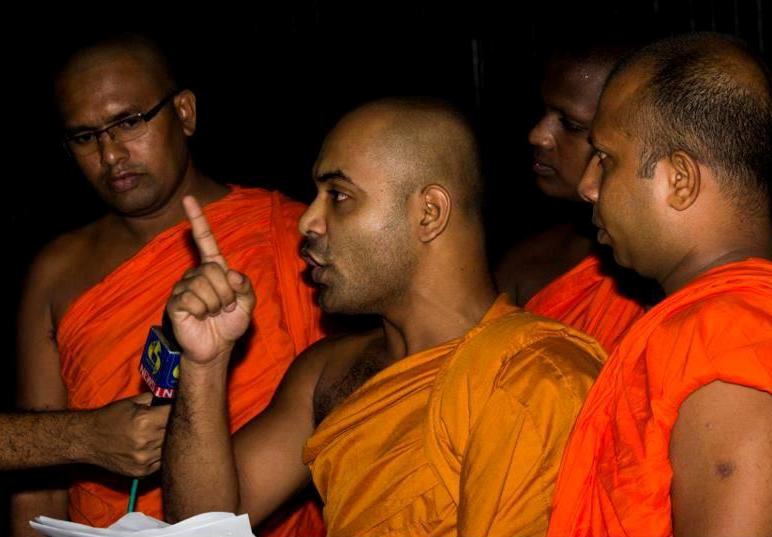
Even the most respected Maha Sangha at Kandy are unable to condemn the activities of the BBS and the Military forces.
It is during the period of King
Devanampiya Tissa, Sri Lanka saw the introduction of Buddhism. King
Devanampiya Tissa laid aside his bow and arrow when Arahat Mahinda said
that ‘we are the disciples of the Lord of Dhamma. In compassion towards
you, we have come here from India’. Prior to the arrival of Vijaya,
Nagas and Yakkas were inhabitants in Sri Lanka who are said to have been
considered as aborigines. The origins of Nagas can be traced through
the great epic Maha Bharath where there is reference about Arjuna’s
pilgrimage to Keerimalai in Sri Lanka and worshipped at Naguleswaram.
Further, Maha Bharath mentions that Nagas were a civilized people living
in Central India and Sri Lanka while Mahavamsa mentions that both Nagas
and Yakkas were Hindus. It is after the meeting of Arahat Mahinda, King
Devanampiyatissa and his subjects embraced Buddhism because of its
noble path, though the Nagas worshipped serpants signalling the presence
of the worship of Lord Shiva, while the Yakkas were described as devil
worshippers. Read More
