Peace for the World World ! Your War Our Lives

The Dalai Lama
A Brief Colonial History Of Ceylon(SriLanka)
Sri Lanka: One Island Two Nations
A Brief Colonial History Of Ceylon(SriLanka)
Sri Lanka: One Island Two Nations
(Full Story)
Back to 500BC.

Saturday, June 7, 2014
Kent’s Illustrious Exiles: Sir John Kotelawala
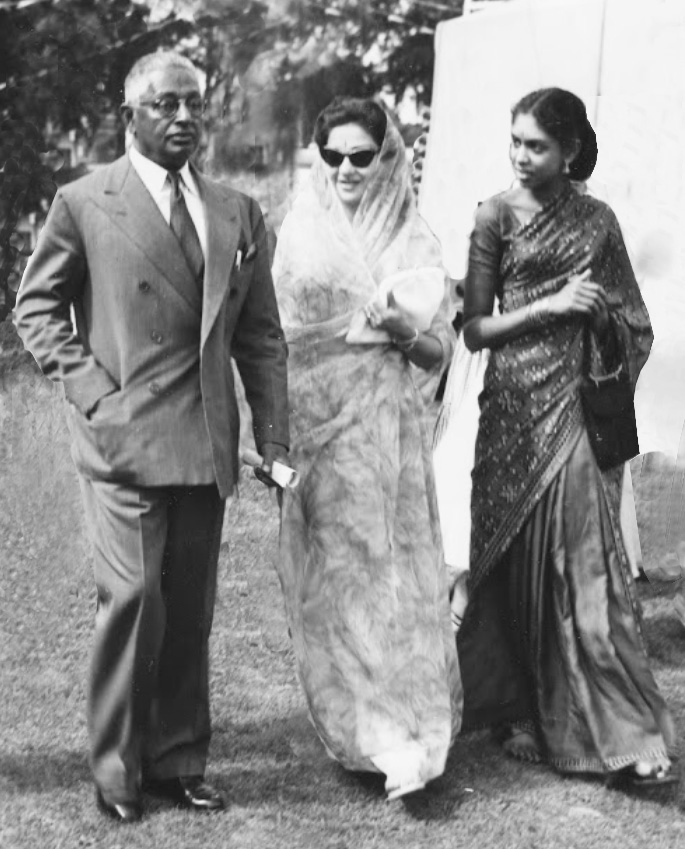
Sir John Kotelawala and companions at a local fete in Kent
By T. Thurai -

T. Thurai
When
a character, encountered only in books, suddenly steps off the page, it
is an electrifying experience. Nothing prepares you for that moment
when the bare bones of history suddenly acquire flesh. You do not know
where the discovery will come, or when. It is so unexpected that it
seems surreal. Yet one thing is certain, it is always accompanied by a frisson of excitement.
I was fortunate enough to have such an experience at a birthday party
held in a converted barn only three miles from my home. I was sitting
next to a local farmer – the owner of the barn – and had mentioned my
interest in 1950s Ceylon, including one its Prime Ministers Sir John Kotelawala.
“Oh,” said the farmer. “My Dad knew Sir John. He lived around here, didn’t he?”
He did indeed, but I had not expected to meet anyone who recognised the
name – let alone had any memory – of the colourful and pugnacious man
who was Prime Minister of Ceylon.
Sir John must have inherited her
determination, climbing the exceptionally greasy pole of post-colonial
politics to become the country’s third Prime Minister after Independence
(1953 -1956). Cast in the ‘old school’ mould, he maintained close ties
with the British establishment, being appointed to the Privy Council in
1954 and proving himself a fierce anti-Communist.Sir John’s
personal story was a remarkable one of rags-to-riches. Having been
accused of murder, his father had committed suicide and the family had
faced destitution. However, Sir John’s mother had staged a remarkable
comeback and rebuilt the family fortunes.
Pathé News reels show him on several official trips abroad, including a
summit of Commonwealth Prime Ministers at 10 Downing Street where he
rubbed shoulders with Winston Churchill and Pandit Nehru.
While Sir John is only briefly mentioned in my book The Devil Dancers,
he acquired a particular interest for me when I discovered that, after
losing Ceylon’s 1956 General Election, he had bought a house in the
English county of Kent where he lived for a number of years.
On Saturday, 7 July 1956, The Times’s Property Correspondent recorded
Sir John’s purchase of Brogues Wood estate at Biddenden in Kent.
Interestingly, this idyllic village with its medieval half-timbered
houses had previously provided a home for another political exile: the
King of Siam.
Situated a couple of miles from the genteel country town of Tenterden,
Brogues Wood was described by The Times as having “four reception rooms
and four principal and three secondary bed rooms and stands in grounds
of some 103 acres.”
Sir John appears to have pre-empted an auction of the property which was
to have taken place later that month; however, The Times politely omits
to report how much he paid for it.
While his attendance at glittering social events was frequently recorded
in the columns of the Court Circular, Sir John Kotelawala also appears
to have taken a keen interest in local Kentish life. A number of old
black-and-white photographs show him attending local fêtes, including
one at Tenterden.
My meeting with the local farmer fleshed out the fascinating, but
ephemeral information that I had already gleaned about Sir John’s life
in Kent.
“Sir John Kotelawala and my father both shared an interest in horses,”
explained the farmer who told me that his father had arranged tickets
for Sir John and his retinue to attend the racing at Ascot.
“The ladies in Sir John’s entourage all wore beautiful saris,” said the
farmer. “They turned a lot of heads in the royal enclosure!”
Pathé news reel showing Sir John Kotelawala at a meeting of Commonwealth Premiers at 10 Downing Street in 1955
