Peace for the World World ! Your War Our Lives

The Dalai Lama
A Brief Colonial History Of Ceylon(SriLanka)
Sri Lanka: One Island Two Nations
A Brief Colonial History Of Ceylon(SriLanka)
Sri Lanka: One Island Two Nations
(Full Story)
Back to 500BC.

Thursday, June 5, 2014
No New Life With Changing Name & Face Of Regime
By Kusal Perera - June 5, 2014
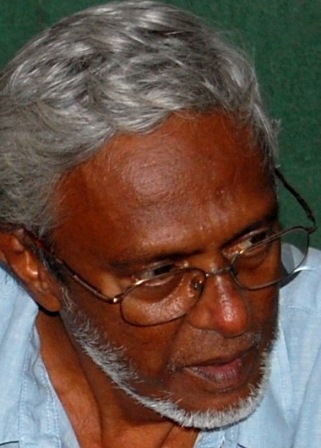
Kusal Perera
 The “Modi-fied Indian factor” has stirred Sri Lankan urban political minds, more after President Rajapaksa‘s return from Narendra Modi‘s
swearing in ceremony as the new Indian PM, than after Indian Lok Sabha
election results. President Rajapaksa’s 20 minute sit-in with PM Modi
and Indian MEA officials, reportedly sent shock waves within the
Rajapaksa regime. For Modi to have raised the issue of delayed
reconciliation with insistence that the 13 Constitutional Amendment should
be implemented in full, the request to begin the stalled Sampur coal
power project and then the fishermen’s issue was not what was expected
immediately after swearing in.
The “Modi-fied Indian factor” has stirred Sri Lankan urban political minds, more after President Rajapaksa‘s return from Narendra Modi‘s
swearing in ceremony as the new Indian PM, than after Indian Lok Sabha
election results. President Rajapaksa’s 20 minute sit-in with PM Modi
and Indian MEA officials, reportedly sent shock waves within the
Rajapaksa regime. For Modi to have raised the issue of delayed
reconciliation with insistence that the 13 Constitutional Amendment should
be implemented in full, the request to begin the stalled Sampur coal
power project and then the fishermen’s issue was not what was expected
immediately after swearing in.
With that Modi as PM raised some confidence and trust for himself in
Tamil Nadu and among Sri Lankan Tamils for sure. While Modi could sail
through Lok Sabha without any allies and with ease, he still needs
allies in the Rajya Sabha. His straight talk with President Rajapaksa
was meant for such allies. The “TN lady” who boycotted the swearing in
of Modi as PM, wrote immediately to Modi to say she wish to meet him in
New Delhi. The 50 minute meeting with PM Modi on Tuesday and then with
Finance Minister Jaitely, made all jibes during elections, a thing of
the past for Jeyalalithaa. The TNA too wrote, requesting an early
opportunity to brief PM Modi on the SL Tamil issue.
Obviously, the Rajapaksa regime has reasons to be disturbed not knowing
what they could do, except to say, they would do all what the Parliamentary Select Committee (PSC) would decide. A PSC, the main Opposition and the TNA have rejected for almost 02 years for now. Meanwhile Navi Pillay has
also lined up the mechanism and framework for the probe on war crimes
and accountability based on the UNHRC Resolution adopted last March. She
perhaps would not leave any loose ends for any other to tie up, when
she retires in end August, about 02 months from now.
 That
external political build up is being ignored and avoided here in
Colombo with the regime leaking news about an early 2015 Presidential
election, now advanced to late 2014. Probably to late November or early
December this year. With that, the oppositional groups are frantically
looking for a “Common Presidential Candidate”. Some claim, Rev Maduluwave Sobhitha thero is
the most “common” and would honour the mandate given to him. The
mandate according to spokesperson Ravi Jayawardne is only to abolish
the executive presidencyand that would rally enough support to defeat President Rajapaksa. Defeating Rajapaksa for what, remains an unanswered question.
That
external political build up is being ignored and avoided here in
Colombo with the regime leaking news about an early 2015 Presidential
election, now advanced to late 2014. Probably to late November or early
December this year. With that, the oppositional groups are frantically
looking for a “Common Presidential Candidate”. Some claim, Rev Maduluwave Sobhitha thero is
the most “common” and would honour the mandate given to him. The
mandate according to spokesperson Ravi Jayawardne is only to abolish
the executive presidencyand that would rally enough support to defeat President Rajapaksa. Defeating Rajapaksa for what, remains an unanswered question.
If and when asked, there are two popular answers for now. One,
especially in the Tamil Diaspora and the other in the Sinhala South by
those who cater to a “common presidential candidate”. The former would
say, war criminals can not be allowed to go scot free. They have to be
punished and the Tamil people must have justice, sooner than later.
Their other slogan of a “separate Thamil State” posed as the final
solution to be internationally sponsored. Within the Sinhala Opposition,
the answer reflects a thin consensus that some democratic space has to
be regained for anything to happen, for which this Rajapaksa regime has
to be replaced. The broadest alliance for such change they argue, is to
rally around the promise to abolish the Executive Presidency. As in any
political society, there are deviations and differences within both
Sinhala and Tamil propositions. Deviations and differences in how each
aspiration could be achieved. Yet they all stop with targeting this
Rajapaksa regime and not saying what would be left for the future once
the regime is replaced.
