Peace for the World World ! Your War Our Lives

The Dalai Lama
A Brief Colonial History Of Ceylon(SriLanka)
Sri Lanka: One Island Two Nations
A Brief Colonial History Of Ceylon(SriLanka)
Sri Lanka: One Island Two Nations
(Full Story)
Back to 500BC.

Sunday, June 1, 2014
Reconciliation, Identity & Security: Pact For Postwar Political Reconciliation
By Dayan Jayatilleka -June 1, 2014
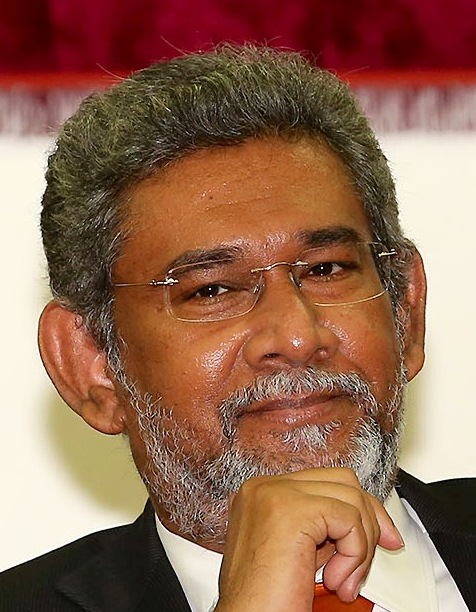
Dr. Dayan Jayatilleka
 Like President JR Jayewardene before him, President Rajapaksa will
win the (re) election and lose the crisis. In these days when
‘homespun’ is all the rage, one may well resort to the Sinhalese saying
“do not fall in broad daylight, into the pit one plunged into at
night”. The Rajapaksa regime is about to take a long jump in broad
daylight into the same pit that his most illustrious predecessor
President Jayewardene plunged into at night as it were, in the 1980s, culminating in the traumatic events of 1987.
Like President JR Jayewardene before him, President Rajapaksa will
win the (re) election and lose the crisis. In these days when
‘homespun’ is all the rage, one may well resort to the Sinhalese saying
“do not fall in broad daylight, into the pit one plunged into at
night”. The Rajapaksa regime is about to take a long jump in broad
daylight into the same pit that his most illustrious predecessor
President Jayewardene plunged into at night as it were, in the 1980s, culminating in the traumatic events of 1987.
How does one define political reconciliation in Sri Lanka? I regard it
as the problem of the reconciliation of collective political identities
in a manner that permits a larger, shared political identity to be
negotiated or evolve.
That definition was the easy part. The effort at political
reconciliation must take place on the terrain of reality, not of
abstract concepts or ideologies. How does one define reality? Reality in
this case denotes the realities of power relations, which in turn
derive from and reflect, in some considerable measure, external and
domestic geopolitical realities. This must be the framework, parametric
more than prescriptive, of the discussion.
The unreality and unreason of the Sri
Lankan discourse, in both its (state/govt) policy and (civil society)
critical commentary manifestations, never ceases to amaze me. Reading
the opinions on political reconciliation and the obstacles to such, in
the commentary on the fifth anniversary of the end of war, I am struck
by the representatives or ideologues of the Sri Lankan state who take up
postures which ignore that we are vulnerably located in a uni-polar South Asian region and
on the doorstep of the pre-eminent (or hegemonic) regional power. I am
similarly struck by the number of holders of postgraduate degrees as
well as aspirants to them, who are able to pontificate confidently on
what needs to be done in and by Sri Lanka, without mentioning, still
less taking into very serious account, the factor of a 300,000 (Plus)
strong battle-hardened military. These errors have tragic antecedents.
