Peace for the World World ! Your War Our Lives

The Dalai Lama
A Brief Colonial History Of Ceylon(SriLanka)
Sri Lanka: One Island Two Nations
A Brief Colonial History Of Ceylon(SriLanka)
Sri Lanka: One Island Two Nations
(Full Story)
Back to 500BC.

Thursday, June 5, 2014
Ways To Move Forward In Negotiation
By Rajiva Wijesinha -June 5, 2014
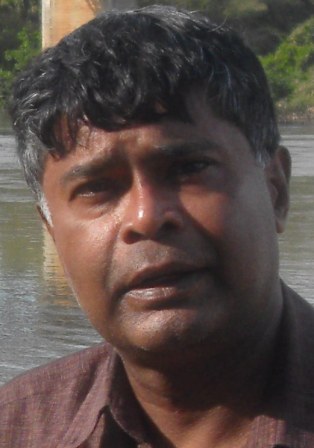
Prof. Rajiva Wijesinha MP
 I was pleased that Laksiri Fernando had picked up on my publication of documentation with
regard to the negotiations between the government and the TNA way back
in 2011. I suspect he is right in saying that some might think this is
betrayal, given that even my efforts to defend the Secretary of Defence
against Sarath Fonseka’s allegations in 2009 were described as betrayal.
But this was by those such as Wimal Weerawans who wanted to take
political advantage of those allegations and therefore did not mind
insinuating that they were true.
I was pleased that Laksiri Fernando had picked up on my publication of documentation with
regard to the negotiations between the government and the TNA way back
in 2011. I suspect he is right in saying that some might think this is
betrayal, given that even my efforts to defend the Secretary of Defence
against Sarath Fonseka’s allegations in 2009 were described as betrayal.
But this was by those such as Wimal Weerawans who wanted to take
political advantage of those allegations and therefore did not mind
insinuating that they were true.
However I trust that those concerned with political reconciliation and
long term peace, as Prof Fernando is, will realize that these notes are
meant to make clear how easy it would be to reach a consensus with the
TNA. But this needs negotiations to be conducted in good faith, and
systematically, with appreciation of what the other side might fear. It
is also important to move swiftly on whatever is agreed, as Nimal
Siripala de Silva tried to do in 2011 with regard to the Concurrent
List, only to be rebuffed by G L Pieris., even though we had obtained
the President’s agreement to proceed.
To illustrate what I mean, I will look at the question of a Senate,
which seems to have been a priority only for the President and me on the
government side. To go into the history of that proposal, when I was
appointed to head the Peace Secretariat in 2007, I should perhaps have
participated actively in the discussions of the All Party
Representatives Conference, which SCOPP hosted. But the Chairman, Prof
Tissa Vitharna, thought that someone new should not be involved, so I
stayed away. My main contribution was to cut down on the food bill,
which had been enormous when I took over, largely because the practice
previously had been to stuff up the delegates while waiting for the
proceedings to start. This took for ever given prevailing standards of
punctuality, and with the orders being placed beforehand, much went to
waste when hardly anyone turned up.
But apart from tactfully getting Prof
Vitharna’s agreement to cut down on the food, I did have one serious
discussion with him, which was to suggest that he introduce the idea of a
Second Chamber. This was not entirely to his liking, given the
animosity of the Old Left to the Senate that they had abolished in the
seventies, but I managed in time to convince him that Senate based on
Provinces (rather than being a rubber stamp similar in constitution to
the main House of Parliament) could play a useful role.
Read More
