Peace for the World World ! Your War Our Lives

The Dalai Lama
A Brief Colonial History Of Ceylon(SriLanka)
Sri Lanka: One Island Two Nations
A Brief Colonial History Of Ceylon(SriLanka)
Sri Lanka: One Island Two Nations
(Full Story)
Back to 500BC.

Sunday, September 28, 2014
Friendship And Enmity
By Malinda Seneviratne - September 28, 2014
Malinda Seneviratne

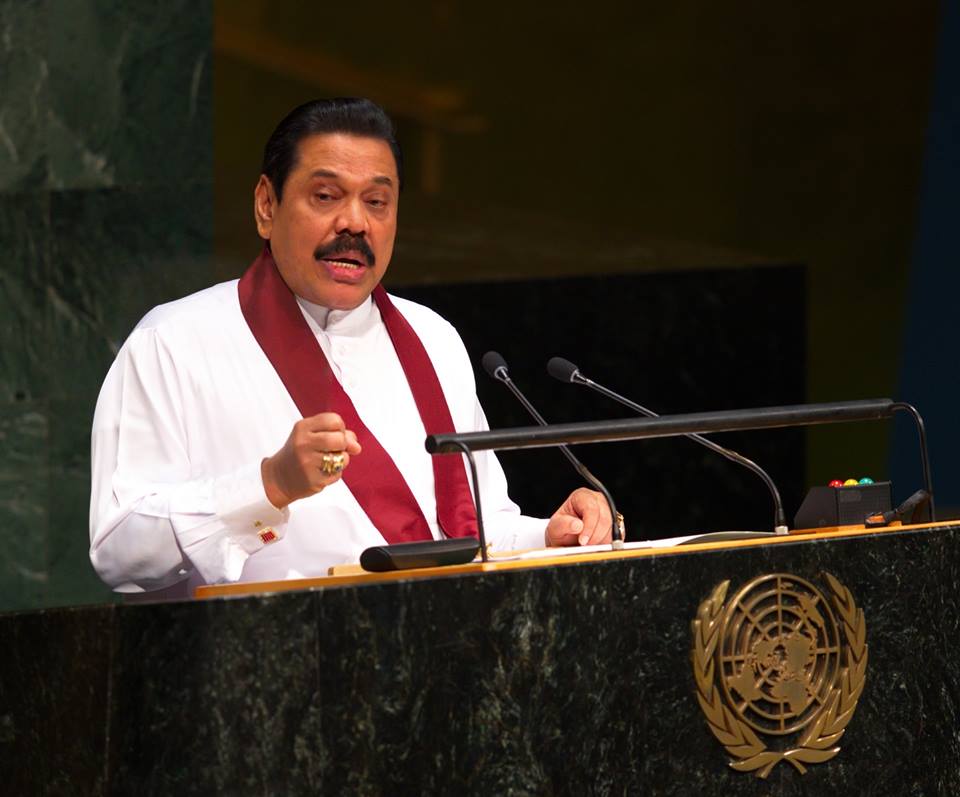
Addressing the UN General Assembly last week, President Mahinda Rajapaksasubsequent
to what can be called a pointed but relatively mild critique of the
movers and shakers of the organization, reiterated the bottom-line of
Sri Lanka’s foreign policy: ‘Friendship towards all and enmity towards
none.’
We live in a world where it is not easy to distinguish friend from enemy
or worse are required as per diplomatic courtesies to call everyone
‘friend’. It gets more difficult if you belong to the powerful class.
The USA, for example, is at war with Syria and the ‘Islamic State’ (IS)
even as Syria and IS are at each others’ throats. The US is at
loggerheads with Iran, but that country is against the IS. The US sees
friend in Saudi Arabia but that country is not exactly anti-IS.
The edge that the USA has, though, is the ability to do as it pleases
without having to explain these contradictions. In short, the USA can
say ‘Our foreign policy is simple: enmity to all and friend to none’. It
won’t stop the rest of the world from listening to Barack Obama and
even cheering his double-speak, absolute disregard for history, utter
lack of remorse over error and crime and indeed a celebration of both as
justified and of benefit to all including victims, respectively.
Those who are less privileged (in terms of wealth and firepower) can
afford to have a friend-to-all foreign policy and demonstrate it for the
most part. It won’t elicit any cheers though. We do not live in a
happy world and that is the reason.
Still, if sentiments have worth, the Sri Lankan position has to be
applauded. It is not too different to sentiments once expressed by the
former President of Iran Mahmoud Ahmadinejad, again at the UN, ‘we
support the notion of nuclear power for peaceful purposes for everyone
and we are against anyone having nuclear power designed for non-peaceful
purposes.’
Let’s face it. Sri Lanka can take the most principled positions in any
forum and still go ‘unheard’ and have pernicious and destructive agenda
thrust down its throat. Articulation is easy but enforcement
unfortunately is not in our hands.
But what is not possible in one forum can be possible elsewhere. This
is where President Rajapaksa has work to do, can-be-done work that is.
What guides engagement with the rest of the world can also guide all
domestic engagement as well, especially since he is the all-powerful
chief executive of the country.
Again, we see the dilemmas and the privileges of the powerful. What the
USA, for example, does and does not do (regardless of slick Obamian
rhetoric), the confusion of identities (enemies and friends), scant
disregard for objection and celebration of bad as good (with raucous
cheering) we see here in Sri Lanka as well.
It is all done in the name of the people, in the name of development,
justice, improving opportunities, buttressing political stability and
the like, but there’s palpable disenfranchisement and disempowerment
even as there is some truth in the claims made. At times the regime
seems people-friendly, but at times it appears extra-friendly to some
people and not others. At times it appears at odds with the
constitution and with the law. There have been occasions when the high
and mighty has sided with wrongdoers and defend wrongdoing and clearly
show enmity to the victims.
President Rajapaksa, perhaps more than any national leader since
Independence has shown an enormous capacity to forgive and forget, and
to turn enemy into friend. There have been times when he has not
exactly acknowledged error and arrogance of his political associates but
has nevertheless taken corrective measures. This is why many want him
and no one else to intervene and resolve disputes. He has the people’s
pulse, he has the constitutional powers and he has the parliamentary
numbers to put the system in order, re-invent the institutional
arrangement and ensure compliance of politician and official so that no
one has to depend on his kindness when seeking redress for wrongs done
to them.
That would be the best ‘friendship’ (to all) that he can deliver. That would be the legacy that lasts.
*Malinda Seneviratne is the Chief Editor of ‘The Nation’ and his articles can be found at www.malindawords.blogspot.com
