Peace for the World World ! Your War Our Lives

The Dalai Lama
A Brief Colonial History Of Ceylon(SriLanka)
Sri Lanka: One Island Two Nations
A Brief Colonial History Of Ceylon(SriLanka)
Sri Lanka: One Island Two Nations
(Full Story)
Back to 500BC.

Wednesday, December 3, 2014
States Of Denial, The President And His Brother Gotabaya

By Rajiva Wijesinha -

Prof. Rajiva Wijesinha MP
Enemies of the President’s Promise: Grumpy 2
So
his attitude seemed to harden with the passing years. Also, sadly, even
though he might not have been ambitious himself, he seemed to see
himself as the principal guardian of the victory the forces had won,
with an obligation therefore to block the way of those who were anxious
to give more political powers to Tamil politicians. Though, under threat
from the LTTE,
some of these had seemed to subscribe to the LTTE ideology, in fact
most Tamil politicians were moderates who were relieved that the LTTE
had been vanquished. They were prepared to disavow terrorism as well as
separatism, but they were anxious to exercise political power in
predominantly Tamil regions, at least in terms of the Provincial
Councils Act of 1987. But those who were opposed to even that limited
devolution, on the grounds that it would inevitably lead to separatism,
saw Gotabaya as their champion, and he came in time to articulate their
views with increasing assertiveness.
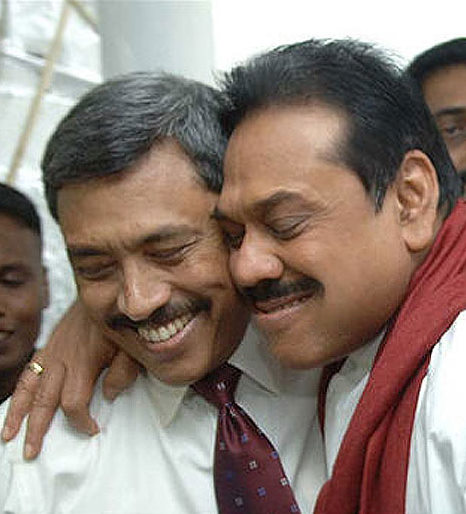 An extreme example of this came when, in 2013, with the President making
preparations to have the long delayed Provincial Council election in
the North, he declared publicly that it should not be held. Ironically,
according to the President, he had been in favour of holding those
elections a few years earlier, soon after the war ended, which would
have been a sensible move, and would have led to a better result for the
government. It was Basil then who had insisted on delay, on the grounds
that his building programme would ensure more and more support for the
government. But by 2013, more perceptive perhaps than Basil about
political realities in the area, perhaps realizing too how he had
contributed to increasing unpopularity, he came out strongly against
having a poll. And typically this occurred while one of the more
extreme coalition partners of the government, which was seen as close
to Gotabaya,
had introduced a Bill to amend the Provincial Councils Act so as to
water down their powers. So powerful did this combination seem, even
though the evidence of elections had made it clear they had minimal
popular support, that it was feared the President would back down.
An extreme example of this came when, in 2013, with the President making
preparations to have the long delayed Provincial Council election in
the North, he declared publicly that it should not be held. Ironically,
according to the President, he had been in favour of holding those
elections a few years earlier, soon after the war ended, which would
have been a sensible move, and would have led to a better result for the
government. It was Basil then who had insisted on delay, on the grounds
that his building programme would ensure more and more support for the
government. But by 2013, more perceptive perhaps than Basil about
political realities in the area, perhaps realizing too how he had
contributed to increasing unpopularity, he came out strongly against
having a poll. And typically this occurred while one of the more
extreme coalition partners of the government, which was seen as close
to Gotabaya,
had introduced a Bill to amend the Provincial Councils Act so as to
water down their powers. So powerful did this combination seem, even
though the evidence of elections had made it clear they had minimal
popular support, that it was feared the President would back down.