Peace for the World World ! Your War Our Lives

The Dalai Lama
A Brief Colonial History Of Ceylon(SriLanka)
Sri Lanka: One Island Two Nations
A Brief Colonial History Of Ceylon(SriLanka)
Sri Lanka: One Island Two Nations
(Full Story)
Back to 500BC.

Tuesday, February 10, 2015
Berlin’s attitude to Syriza looks condescending, the Greek popular mood is verging on a national revolt – and there is little sign of either side backing down
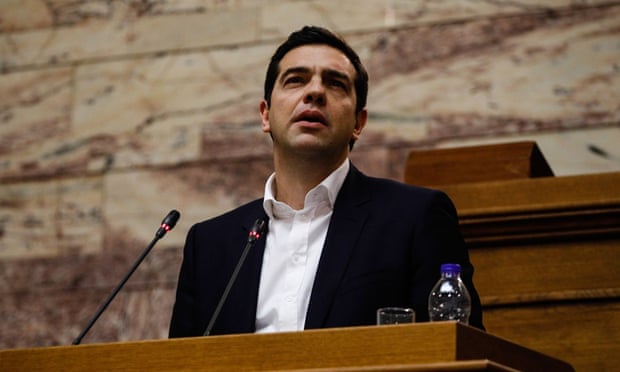
Alexis Tsipras: 'exactly the kind of guy you find in German business meetings.' Photograph: Kostis Ntantamis/NurPhoto/REX

Sunday 8 February 2015
Last week, after the European Central Bank staged
its coup against the Greek banks, forcing them to rely on emergency
assistance, I asked a friend in Athens whether there’d been a rise in
anti-German sentiment. “Hard to say,” he replied. “It has been running
at such a fever pitch recently that it would be difficult for it to get
any higher.”
Hellenic culture, of course, has a unique relationship with Germany. The Greek-American comedian Yannis Pappas, whose alter-ego Mr Panos parodies the “lazy Greek” stereotype, responded to the ECB’s move with an instant video blog. With cruel humour, it evoked the high death toll among German paratroopers landing on Crete in 1941. And it went viral.
This is the cultural background to the meeting last week between Wolfgang Schäuble and Yanis Varoufakis,
respectively the German and Greek finance ministers. It took Varoufakis
less than five minutes in the press conference to get to the N-word.
“Germany must and can be proud that nazism has been eradicated here,”
said the Greek finance minister, “but it’s one of history’s most cruel
ironies that nazism is rearing its ugly head in Greece, a country which
put up such a fine struggle against it.”
The subtext understood by many Greeks was: you were once Nazis, we
fought and beat you, you have no moral right to push our country into
chaos. It must have been tough for the Germans to hear – but they’ll be
hearing an even tougher message should their politicians succeed in
ejecting Greece from the euro.
For Germany’s unwillingness to lead Europe is the old problem. The new
problem is Germany’s demonstrable willingness to break up Europe. Pleas
for the continent’s largest economy to expand state spending are met
with the schwarze null policy: 0% budget deficits, imposed by
law. Brazen acts of proxy warfare by the Kremlin are met with diplomatic
dithering. The sight, on top of that, of large anti-Muslim demonstrations in
this, the richest and most politically stable country in Europe, is now
reviving hostility towards Germany way beyond Greece.
As a child in the 1960s, I swapped bubblegum cards showing the
depredations of the SS and the Luftwaffe’s dastardly behaviour at
Dunkirk. But, being trained in classical music, I was also lucky to be
exposed to the best of German culture: to Beethoven, Mozart, Bach,
Brahms. So, when I say what follows, it is not out of hostility or
ignorance.
Germany is eating itself over Greece. It is eroding its moral authority,
and seems prepared to destroy the eurozone’s integrity just to make a
point. As long as the Greeks obeyed the troika,
they could be cast as the stereotypes on which Mr Panos plays:
foul-mouthed, lazy Mediterraneans, addicted to a welfare system they
cannot afford, which is the subtext of magazines such as Bild. By voting
for Syriza, the Greeks have challenged the stereotype. Prime minister
Alexis Tsipras is exactly the kind of guy you find in German business
meetings; a polyglot with a polite smile and no tie. Varoufakis, if you
took away his Greek passport and gave him a better suit, could be a
German technocrat from central casting.
Against the Greeks, suddenly it is German politicians who look old,
condescending, out of touch. While various Anglo-Saxon politicians have
tried to foster positive relations with Tsipras – New York Mayor Bill de
Blasio going publicly tie-less in his congratulation call after the
election – the German political class has not.
Meanwhile, the German press has concentrated on disparaging the new
Greek leaders, suggesting they are, among other things, antisemitic. In
that context, it was welcome that Syriza’s most senior female
politician, Rena Dourou, used a Holocaust memorial speech last week to
make an eloquent attack on modern antisemitism.
Dourou also used the speech to state Syriza’s only case for debt relief:
that Greece is as central to western culture as Judaism, and that
solidarity should be moral as well as economic. “The dialectical tension
between Athens and Jerusalem, symbolising the claims of reason and
revelation,” she said, citing Leo Strauss, “feeds the heart, the nucleus
of the political tradition of the so-called western world.”
Greece may be near-insolvent, its pensioners huddled over wood stoves in
freezing flats without electricity, but – says Syriza – it stakes a
superior claim than Germany when it comes to the creation of Europe and
modernity. It may be at the bottom of the economic pecking order, but
Europe was supposed to be more than an economy. Greece, like Germany,
is a strong, visceral state of mind. If nations were measured by the
salience of their culture – its bite, its saltiness, its addiction to
beauty – Hellenic culture would stand equal to its Teutonic counterpart.
And that is what makes the economic clash of will so visceral, too.
What’s about to happen is a fight to the death. Either Germany drives
Greece to insolvency, and out of the eurozone, or the German taxpayer
signs up to an outcome that flies in the face of the rules-based
mentality at the heart of German culture.
Germany needs to handle this carefully; the rest of Europe is
watching. My pals and I from the bubblegum card era were brought up in a
country that had not seen occupation or fascism or genocide. Greece saw
all of these, and Syriza’s victory has opened a floodgate of
discussions about the past at Greek dinner tables. The popular Greek
response to the ECB’s move last week is in danger of taking on the
character of national revolt: a replay of the Battle of Crete, where the
Greeks lose physically but win morally, at irreparable cost to the
attacker.
That imagery like this is being thrown around in modern Europe is a testimony to how badly modern Europe is failing.
Paul Mason is the economics editor at Channel 4 News. Follow him@paulmasonnews
