Peace for the World World ! Your War Our Lives

The Dalai Lama
A Brief Colonial History Of Ceylon(SriLanka)
Sri Lanka: One Island Two Nations
A Brief Colonial History Of Ceylon(SriLanka)
Sri Lanka: One Island Two Nations
(Full Story)
Back to 500BC.

Friday, February 6, 2015
Efforts by UN and others to educate parents and doctors could take a generation in country where practice is endemic
Awatef
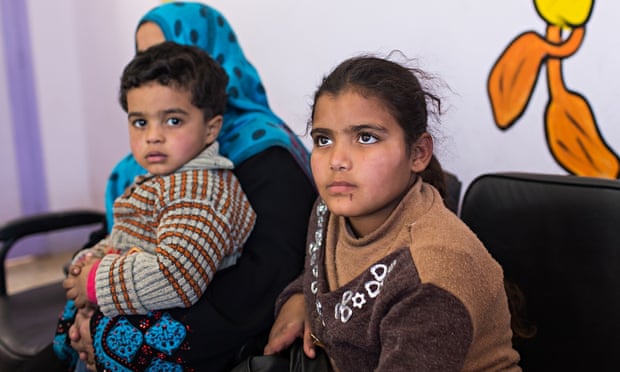
Mohamed Ali with her son and daughter, Shahd, at a meeting in Assiut,
Egypt this week. Photograph: Christina Rizk/Christina Rizk /UNFPA
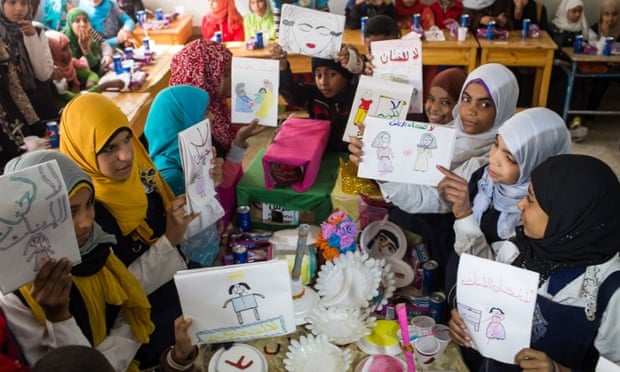
Children holding up anti-FGM pictures they drew at a school in Assiut, Egypt, on 1 February.Photograph: Christina Rizk/UNFPA

Awataf Mohamed Ali’s son lies fast asleep
on her lap, but her 10-year-old daughter, Shahd, is very much awake. In
fact, she looks horrified. Ali has just calmly explained that in just 18
months’ time, if she can find a doctor willing to help, Shahd will
probably be subjected to female genital mutilation.
FGM has been illegal in Egypt since 2008. But Ali claims that adherence
to the law will result in her daughter “being ill-mannered and doing bad
things, and being badly behaved”. Sitting to her left, Shahd says
nothing. In this remote village in southern Egypt, girls’ bodies are not theirs to control.
In Egypt, Social Pressure Means FGM is Still the Norm by Thavam Ratna
In Egypt, Social Pressure Means FGM is Still the Norm by Thavam Ratna
