Peace for the World World ! Your War Our Lives

The Dalai Lama
A Brief Colonial History Of Ceylon(SriLanka)
Sri Lanka: One Island Two Nations
A Brief Colonial History Of Ceylon(SriLanka)
Sri Lanka: One Island Two Nations
(Full Story)
Back to 500BC.

Wednesday, February 11, 2015
Tiran tries to reunite with Mangala!

 Tuesday, 10 February 2015
Mawbima owner Tiran Alles is trying to
reunite with external affairs minister by meeting him in Great Britain,
where the minister is on tour. Arriving in London yesterday (08),
minister Samaraweera was met by Tiran and his business partner there
Basnayake.
From the time Samaraweera arrived there,
the duo gave repeated calls to his phone, but he did not answer. It is
his habit not to answer telephone calls. But, not discouraged, Tiran got
through to him through the mobile phone of his personal aide Sameera.
That was followed by their meeting last night in Central London.
The aim of the meeting was to prevent
the CID’s coming after Tiran in connection with his facilitator role in
the fake agreement that has sent Tissa to remand prison. However,
Mangala did not promise him anything. Since, Tiran is a long term friend
of his, the minister met him.
The wife of Sameera, minister
Samaraweera’s personal aide, works in a company owned by Tiran. He
intentionally employs that woman in order to balance Mangala. The
minister refrains from using telephones in order to escape from his
friends and relatives. Anyway, we respect him for his lone struggle
against crony politics.
Tuesday, 10 February 2015
Mawbima owner Tiran Alles is trying to
reunite with external affairs minister by meeting him in Great Britain,
where the minister is on tour. Arriving in London yesterday (08),
minister Samaraweera was met by Tiran and his business partner there
Basnayake.
From the time Samaraweera arrived there,
the duo gave repeated calls to his phone, but he did not answer. It is
his habit not to answer telephone calls. But, not discouraged, Tiran got
through to him through the mobile phone of his personal aide Sameera.
That was followed by their meeting last night in Central London.
The aim of the meeting was to prevent
the CID’s coming after Tiran in connection with his facilitator role in
the fake agreement that has sent Tissa to remand prison. However,
Mangala did not promise him anything. Since, Tiran is a long term friend
of his, the minister met him.
The wife of Sameera, minister
Samaraweera’s personal aide, works in a company owned by Tiran. He
intentionally employs that woman in order to balance Mangala. The
minister refrains from using telephones in order to escape from his
friends and relatives. Anyway, we respect him for his lone struggle
against crony politics.
The Unheard Voices Of The Tuna Fishermen Of Sri Lanka

By Rahul Aryasinha -February 10, 2015

Rahul Aryasinha
Sri Lankan fishermen have been accused of being involved in illegal
fishing activities in unauthorized territories including Marine
Protected Areas. As a result we have just lost 74 million Euros worth of
fish exports per year to Europe. Now the Sri Lankan authorities are
working on amending the fisheries act and taking steps to comply with EU
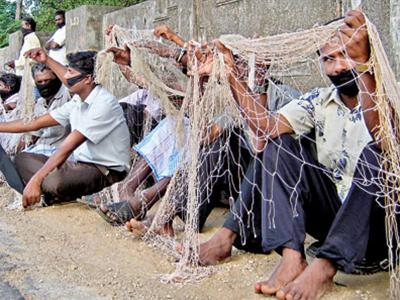
regulations to curb illegal fishing activities. Why were these fishermen involved in illegal fishing activities in the first place? Even
prior to the European ban, the most important stakeholders of this
industry – the fishermen and boat owners, were facing daunting
challenges and in many cases were failing to operate profitably. The EU
ban has only exacerbated an existing unfavorable condition.
Technology versus hearsay
For the fishermen and the boat owners
every single trip out at sea has turned into a gamble. All though the
sole income for both parties depends on a successful catch of tuna,
minimal catches have resulted in low profits for boat owners as well as
for the fisherman who work on a profit sharing basis. Many of these boat
owners are liable to financial institutions on a monthly basis and
endure the inconvenience of not being able to honor timely payments.
Having no scientific knowledge on where to find fish the conventional
fisherman mainly rely on word of mouth. Facing low income and at times
even a loss they are forced to do whatever it takes to catch fish and
save the day. At this point the fishermen start poaching in restricted
territories and many times they target marine protected reserves. When
these fishermen get caught poaching they face even worse economic
burdens in the form of fines to get the detained vessels and the crew
members released. With all
these risks involved in illegal fishing, why do our fishermen still take
the risk of fishing in restricted or protected areas? Secondly why do
our fishermen practice unsustainable methods of fishing such as ring
netting that kill thousands of juvenile pelagic fish, ultimately
depleting fish stocks and risking the future of the fishing industry?
