Peace for the World World ! Your War Our Lives

The Dalai Lama
A Brief Colonial History Of Ceylon(SriLanka)
Sri Lanka: One Island Two Nations
A Brief Colonial History Of Ceylon(SriLanka)
Sri Lanka: One Island Two Nations
(Full Story)
Back to 500BC.

Friday, April 24, 2015
Ban Mechanized Bottom Trawling in Sri Lankan Waters – M. A Sumanthiran, MP,TNA
 23/04/2015
A Bill prohibiting mechanized bottom trawling was filed in parliament on
the 21st of April 2015 by M. A Sumanthiran, Member of Parliament. The
Bill calls for the amendment of the Fisheries and Aquatic Resources Act,
No 2 of 1996.
The Bill in essence proposes to prohibit trawling operations in Sri Lankan waters. The Bill seeks to:
• Amend legislation which allows for licenses to be granted for trawling operations;
• Prohibit the use, possession, import, transport, purchase and sale of trawl nets for the purpose of carrying trawling operations in Sri Lankan waters;
• Specify the action to be taken in the event of persons engaging in trawling operations in contravention of these provisions.
• Amend legislation which allows for licenses to be granted for trawling operations;
• Prohibit the use, possession, import, transport, purchase and sale of trawl nets for the purpose of carrying trawling operations in Sri Lankan waters;
• Specify the action to be taken in the event of persons engaging in trawling operations in contravention of these provisions.
bottom trawling
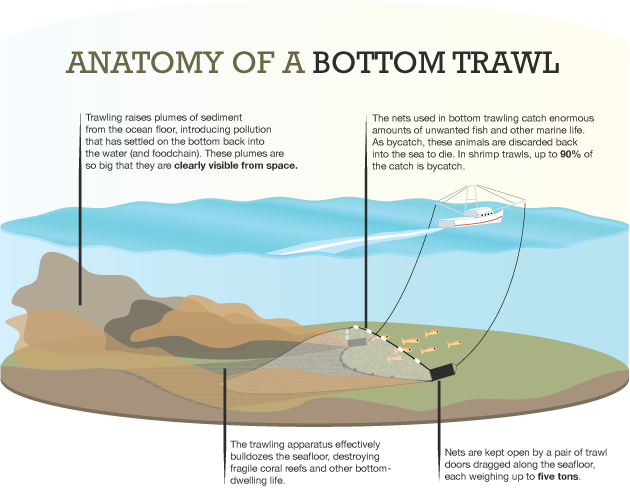
Bottom trawling is an extremely destructive form of fishing and can
result in long term damage to marine resources. Over the past few years
we have witnessed the extent to which Indian trawlers have continued to
enter Sri Lankan waters, and exploit our resources. “Foreign fishermen
fishing in our water has caused great distress to our fishermen
specially those living in the north”, M.A. Sumanthiran stated regarding
the issue. In addition to these Indian trawlers, there are also Sri
Lankan trawlers operating within Sri Lankan waters.
The Sri Lankan marine system is rich in resources. The impact of
mechanized bottom trawlers on these marine resources is extremely
detrimental to the livelihoods of all Sri Lankan fishermen who depend
upon these resources for fishing. These trawlers dig through the seabed
indiscriminately catching all organisms in its path. The seabed is
destroyed, and all resources on the seabed, which are not required, are
discarded, thereby destroying the sustainability of these resources. The
effect of these trawlers are such that it destroys resources for the
present and future generations. It is our Sri Lankan fishermen who are
at stake, as a result of the continued operation of these vessels.
Whilst there are proposals tabled to police the International Maritime
Boundary Line (IMBL) and to introduce a licensing regime, an independent
analysis done by Verité Research explains why neither proposal will
actually solve the problem, and suggests the introduction of a better
alternative – imposing a total ban on mechanized bottom trawling which
is the objective of the Bill.
Sumanthiran further stated, “We have taken several remedial measures
pertaining to the same, one of which was a discussion with the
President. One such measure is to bring in a legislative measure towards
which a Bill has been presented to Parliament. If this act is
implemented deep sea trawling will be banned and will be considered an
offence. The offender will be sentenced to a two year prison term and
will have to pay a fine of Rs. 50,000.”
Source: Verité Research – www.ft.lk/2014/11/05/
