Peace for the World World ! Your War Our Lives

The Dalai Lama
A Brief Colonial History Of Ceylon(SriLanka)
Sri Lanka: One Island Two Nations
A Brief Colonial History Of Ceylon(SriLanka)
Sri Lanka: One Island Two Nations
(Full Story)
Back to 500BC.

Thursday, April 23, 2015
Bangladesh garment workers suffer poor conditions two years after reform vows
Assault,
verbal abuse and forced overtime persist following the Rana Plaza
disaster, which killed 1,100 people in Dhaka, Human Rights Watch claims
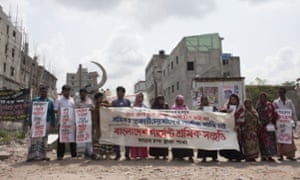 Relatives
and former Rana Plaza workers demand their compensation in front of the
site of the tragedy in Savar, near Dhaka, Bangladesh. Photograph: Suvra
Kanti Das/Zuma Press/Corbis
Relatives
and former Rana Plaza workers demand their compensation in front of the
site of the tragedy in Savar, near Dhaka, Bangladesh. Photograph: Suvra
Kanti Das/Zuma Press/Corbis
Workers in factories in Bangladesh making
clothes for western firms continue to suffer from poor working
conditions two years after a factory collapse that killed 1,100 people
and prompted widespread promises of reforms, a new report by campaigners
claims.
The report from Human Rights Watch,
the independent advocacy organisation, comes on the second anniversary
of the collapse of the Rana Plaza factory on the outskirts of Dhaka, the
capital of Bangladesh.
More than 1,100 garment workers working
on orders for high-street retailers in the west died in the tragedy,
which briefly focused global attention on the problems created by the
booming global clothing industry.
Following the disaster, retailers and Bangladesh’s government promised
widespread reforms. Thousands of factories have since been checked for
structural problems with dozens closed and others refurbished, and many
more helped to improve working conditions and treatment of employees in
initiatives partly paid for by western retailers. However, the report
suggests problems remain.
Researchers interviewed more than 160 workers from 44 factories in and
around Dhaka, including many that supply garments to high streets in
North America, Europe and Australia. They heard complaints of physical
assault, verbal abuse, forced overtime, unsanitary conditions, denial of
paid maternity leave, and failure to pay wages and bonuses on time or
in full.
Western companies often insist on high standards in contracts with
Bangladesh-based producers but are not always successful in monitoring
the situation on the ground, observers say. One persistent problem has
been the sub-contracting of orders by local manufacturers.
Human Rights Watch said it had contacted all those western manufacturers
that use factories where the group believes there are problems. Two
denied any link, eight said they were investigating the claims and 13
had not replied.
The clothing industry in Bangladesh is
second only to China’s in size and employs about four million people,
mainly women, in approximately 3,500 factories. Ready-made garments
account for nearly four-fifths of the country’s exports and contributes
more than 10% of GDP of the developing south Asian nation.
Following the Rana Plaza tragedy,
retailers set up two consortia: the Accord on Fire and Building Safety,
including 180 firms most of which are based in Europe, and the Alliance
for Bangladesh Worker Safety, a group of 26 North American retailers –
to help local employers fund structural improvements and an inspection
regime. The two organisations cover more than 2,000 factories. The
Bangladeshi government’s own inspectors, supported by the International
Labour Organisation and funded by the EU, are inspecting and overseeing improvements in another 1,500.
The government also made legal changes that have helped increase the
number of unions. There are now more than 400 – three times more than in
2012. However, the report says, many workers who try to form unions to
address such abuses face threats, intimidation, dismissal, and sometimes
physical assault by factory managers or hired thugs.
Phil Robertson, Asia deputy director at Human Rights Watch, said: “If
Bangladesh wants to avoid another Rana Plaza disaster, it needs to
effectively enforce its labour law and ensure that garment workers enjoy
the right to voice their concerns about safety and working conditions
without fear of retaliation or dismissal.”
Earlier this week organisers of a compensation fund set up by retailers
and labour groups for victims of the Rana Plaza tragedy said only $24m
(£15.9m) of the $30min compensation estimated as necessary had been paid
or pledged to the families of those killed.
Sultan Uddin Ahmed, a member of a committee that runs the trust fund,
criticised retailers for not doing enough for dependants along with
1,500 workers who suffered horrific injuries in the disaster. “It is
unfortunate, we could not clear all the dues in two years ...
Bangladeshi factory-owners are also to blame. They did not pay anything
to the fund,” Ahmed said.
Last week, the Italian fashion retailer Benetton announced it
would pay $1.1m into the trust fund. Benetton, which initially denied
using any firms located in Rana Plaza, said it was donating double the
amount advised by experts.
Campaigners claim about a dozen clothing companies linked to the Rana Plaza factories have yet to pay any compensation money.
However, the Human Rights Watch report acknowledges the role played by
the garments industry in the economic development of Bangladesh.
“Continuing the economic success of the Bangladesh garment sector offers
benefits for everyone – the retail companies and their consumers,
factory owners, and the government ... But those gains should not come
at the cost of lives and the suffering of garment workers struggling for
a better future,” it said.
