Peace for the World World ! Your War Our Lives

The Dalai Lama
A Brief Colonial History Of Ceylon(SriLanka)
Sri Lanka: One Island Two Nations
A Brief Colonial History Of Ceylon(SriLanka)
Sri Lanka: One Island Two Nations
(Full Story)
Back to 500BC.

Thursday, April 23, 2015
Electoral Reforms In Sri Lanka: Small Parties & The Proposed 20th Amendment

By Sujata Gamage -April 21, 2015

Dr. Sujata Gamage
We finally have some legislative language to start a discussion on
electoral reforms. Kudos to the SLFP for doing a draft on the 97th day
of the 100-day program.
What was the government doing all this time is a good question, but,
for the moment let us think positively and focus on improving the draft.
Frustrated by the lack of action by the government half-way into hundred
day program, a group of us joined by CaFFEsrilanka.org started a
campaign to jump-start electoral reforms using an evidence-based
approach. The first workshop was held at Nagarodaya, Borella. The
workshop was based on what-if simulations of results of the past four
general elections for which variations of the method proposed in the
2007 interim report of the Parliamentary Select committee (PSC) on
electoral reforms were applied.
The method proposed by PSC is what we called the MMM-LK method. In MMM
or Mixed Member Majoritarian systems, the parliament is made up two
components – the first-past-the post FPP component and the PR component.
To select the FPP component,
slates of candidates are offered by parties for electorates in one or
more of the 22 electoral districts. The difference from the ‘PR with
Manape’ familiar to us in Sri Lanka is the fact that a candidate is
designated for each electorate. There are no excess candidates except in
the nominations for national-list MPs. Whether there should be a
district list is not specified yet. At the polling station you would get
a single ballot with the candidates for your electorate, say, Borella.
You mark your preference with a single “X” and drop the ballot in the
ballot box and you are done. The candidate who gets the most votes, even
by a margin of one, gets elected for the FPP component. A variation of
this procedure will apply to multi-member electorates.
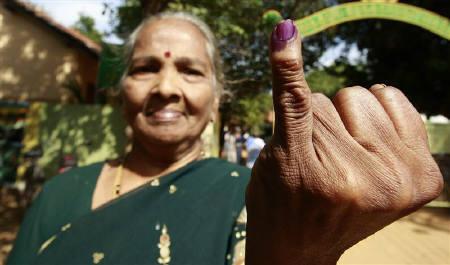 The
PR component is typically based on the results of a second ballot where
you vote for the party of your choice. The Sri Lankan twist in the PSC
method is that we have only one ballot (apparently, Taiwan started with
one ballot before moving onto two). The tally of the votes cast in the
FPP contest is also used to determine the PR component. The elections
Commissioner allocates the PR seats to parties in proportion to the
remainder votes or the total votes minus the votes of the FPP winners
and those who got less than 5% of the vote in any electoral district.
Since these votes are essentially votes received by the runners-up, the
bulk of the PR seats go the best runners-up, with each party retaining
some. Read More
The
PR component is typically based on the results of a second ballot where
you vote for the party of your choice. The Sri Lankan twist in the PSC
method is that we have only one ballot (apparently, Taiwan started with
one ballot before moving onto two). The tally of the votes cast in the
FPP contest is also used to determine the PR component. The elections
Commissioner allocates the PR seats to parties in proportion to the
remainder votes or the total votes minus the votes of the FPP winners
and those who got less than 5% of the vote in any electoral district.
Since these votes are essentially votes received by the runners-up, the
bulk of the PR seats go the best runners-up, with each party retaining
some. Read More 