Peace for the World World ! Your War Our Lives

The Dalai Lama
A Brief Colonial History Of Ceylon(SriLanka)
Sri Lanka: One Island Two Nations
A Brief Colonial History Of Ceylon(SriLanka)
Sri Lanka: One Island Two Nations
(Full Story)
Back to 500BC.

Monday, April 27, 2015
Putin says US helped North Caucasus separatists against Russia in the 2000s
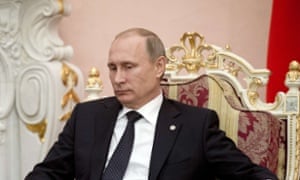 Russian
president Vladimir Putin has said the US supported North Caucasus
separatists in the 2000s. Photograph: Alain Jocard/AFP/Getty Images
Russian
president Vladimir Putin has said the US supported North Caucasus
separatists in the 2000s. Photograph: Alain Jocard/AFP/Getty Images- Associated Press in Moscow-Sunday 26 April 2015
.png) Russian president cites intercepted calls as he makes assertion in documentary
Russian president cites intercepted calls as he makes assertion in documentary- Bush said he would ‘kick the ass’ of intelligence officers involved, Putin says
- Intercepted calls showed that the US helped separatists in Russia’s North Caucasus in the 2000s, Russian president Vladimir Putin claimed in a new documentary in which he underscored his suspicions of the west.The two-hour documentary, to be aired on the state-owned Rossiya-1 TV channel later on Sunday, is dedicated to Putin’s 15 years in office. It focuses on Putin’s achievements as well as challenges to his rule – which the producers and Putin blame on western interference.Putin was elected Russian president on 26 March 2000, after spending three months as acting president, and was sworn in on 7 May 2000.The documentary shows Putin interviewed at the Kremlin in the dimly lit St Alexander’s Hall. In excerpts released shortly before the film’s broadcast, Putin said Russian intelligence agencies had intercepted calls between the separatists and US intelligence based in Azerbaijan during the early 2000s, proving that Washington was helping the insurgents.He did not specify when the calls took place.Following a disastrous war in the 1990s, Russia fought Islamic insurgents in Chechnya and neighboring regions in the volatile North Caucasus.“They were actually helping them, even with transportation,” Putin said.Putin said he raised the issue with then-US President George W Bush, who promised Putin he would “kick the ass” of the intelligence officers in question. But in the end, Putin said the Russian intelligence agency FSB received a letter from their “American counterparts” who asserted their right to “support all opposition forces in Russia”, including the Islamic separatists in the Caucasus.Putin also expressed his fears that the west wishes Russia harm as he recalled how some world leaders told him they would not mind Russia’s possible disintegration.“My counterparts, a lot of presidents and prime minister told me later on that they had decided for themselves by then that Russia would cease to exist in its current form,” he said, referring to the time period around the second conflict in the Caucasus. “The only question was when it happens and what consequences would be.”The latest poll by the independent Levada agency showed that the approval rating for Putin, whose third term in office ends in 2018, was a whopping 86% in April.
