Peace for the World World ! Your War Our Lives

The Dalai Lama
A Brief Colonial History Of Ceylon(SriLanka)
Sri Lanka: One Island Two Nations
A Brief Colonial History Of Ceylon(SriLanka)
Sri Lanka: One Island Two Nations
(Full Story)
Back to 500BC.

Monday, April 27, 2015
The Lucky Ones
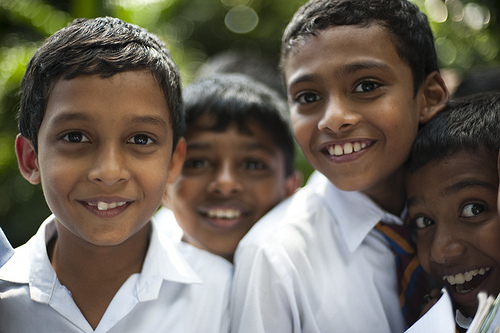 Photo via Open, Equal Free
 I
wish it were easier not to care. I wish I could grow up to be a
corporate lawyer or a banker and just be content with a “normal” life.
Have common, cliché` dreams like a beautiful house, a flashy car, a
happy marriage and kids, learn to find joy in the little victories in
life. But when you belong to a generation of people who were born to and
grew up with a war, when you’ve seen certain things, it changes you. It
makes you a different person. Your entire idea of happiness, and life
gets redefined. You are not “normal” anymore. You can’t be, even if you
wanted to. It completely turns your world around, and no matter how much
you try to run away from it, you can’t.
I
wish it were easier not to care. I wish I could grow up to be a
corporate lawyer or a banker and just be content with a “normal” life.
Have common, cliché` dreams like a beautiful house, a flashy car, a
happy marriage and kids, learn to find joy in the little victories in
life. But when you belong to a generation of people who were born to and
grew up with a war, when you’ve seen certain things, it changes you. It
makes you a different person. Your entire idea of happiness, and life
gets redefined. You are not “normal” anymore. You can’t be, even if you
wanted to. It completely turns your world around, and no matter how much
you try to run away from it, you can’t.
Civil wars can go on for decades, but when they do come to an end they
are like thieves in the night. They just end, leaving entire generations
of people orphaned, confused and traumatized. Everyone talks about the
death tolls, and the war crimes, the winners and the losers, the heroes
and fallen villains. But nobody talks about that invisible third party;
the children. I know this, because I was one of them. And we were lost,
abandoned, amidst more “important” things like bombs and bullets,
political propaganda and blind nationalism.
They said they were fighting for the nation’s future. Nobody stopped to
think if they had gotten it all wrong. Weren’t the children the future
of the nation? What good did the war give the children in return for
their stolen childhoods, their abandoned education and the things
they’ve seen, that will stay with them for a long, long time? Nobody
cared. Nobody wants to talk about PTSD because the entire nation suffers
from it. We live in a world that tends to believe that if something
hurts everyone it’s not a problem, there’s no significance to it. There
are no two sides. Just victims. We were and still are all victims in
denial. Victims of a system that makes us blind to the fundamental
causes of our own errors.
You know how they say Wall Street is too big to fail? That’s kind of how
our country views its problems: too big to solve. From the ethnic
conflict to climate change to its education system we refuse to believe
that these issues are penetrable if we start from their very fundamental
causes. An island just barely larger than the Maldives, we will most
probably be one of the first few to go under water. But hey, to us,
there are more important problems, like “are we saying goodbye to being a
“unified state” by letting our minorities have a decentralized local
government in the Northern Province?” “Are we taxing the rich too much?”
And I won’t lie, sometimes in the utter madness of it all, I do feel
that the problems may really be too big to solve. The people are too
traumatized to believe again, to have faith in change, or to fight for
it. They’ve fought enough already, for the wrong causes.
Sometimes I wonder if I should stay as far away as I can from home for
anything to make sense, to not feel as broken as everyone else, to feel
“normal”. The more I travel, the more I expose myself to “normalcy”,
the more I want to make sure that my children will never be exposed to
that unspeakable violence that my generation was exposed to. It almost
seems a naive dream to have; to look for alternatives to war and
violence through education. But I believe it’s worth a try. It may not
turn the world around. It may not stop the racist and the religious
extremists from taking their inferiority complexes out on the country.
It may not heal 30 years of trauma. But it will give my kids and their
kids a fighting chance to what my generation never had.
I was one of the lucky ones. Not only did I survive, but I was
privileged enough to receive an education. I mastered the evacuation
drill (in case of an attack) in my middle school syllabus. Studying at a
Roman Catholic convent in Colombo, I learnt to pray to God, Jesus and
Mary every morning although I was a Buddhist. I pretended to be
thrilled to do extra-credit projects for history class although I knew
our textbooks were published by the government and were mostly just a
chapter by chapter explanation of extreme nationalism, justifying the
need for war. And I carried those history books and other belongings in
a fully transparent schoolbag designed by the government “for my own
security.” I was asked by a nun to memorize this prayer that we could
say whenever we heard an ambulance. Police and ambulance sirens give me
chills even to this day, and I hear my eight year old self say that
prayer. What I find fascinating about this is that even decades later I
still remember that prayer, word to word. It reminds me that, what
you’re taught as a child stays with you. And some children in the world
are taught the wrong things or nothing at all, and it stay with them.
That wrong stays with them. That nothingness stays with them. It haunts
them, their communities, their nations, the industries they step into,
the children they raise and the whole world they live in. So if we want
to fix our problems, if we want sustainable solutions, shouldn’t we
start by educating our children about the fundamental causes of them?
I don’t want you to misunderstand me. My faith in education did not
spring from my lack of one. Even with the little resources that were
available, I did learn the fundamentals. I learned to speak and read in
three languages. I learned calculus and geometry. I learned to be
fascinated by the beauty and vastness of science through biology,
chemistry and physics. I learned to read literature and appreciate
theatre. Despite all the chaos that surrounded it, my country’s
education system taught me the basic skills I needed to communicate, to
question, to calculate and to digest it all. It gave me the curiosity to
read literature of other cultures, of peaceful societies. I read
biographies of Mandela and Gandhi and also those of Hitler and
Prabakaran. I learned to empathize, to see the world through their
eyes. As a teenager I read Paulo Coelho’s The Alchemist, the first book I
fell in love with. While the ambulance sirens made the rest of Colombo
lay sleepless at night I engulfed myself in the story of Santiago and
his journey through the Sahara dessert. I was patient as he searched for
his treasure for days and weeks. Through him I learnt that resilience
pays off. And through Gandhi (as cheesy and overused a quote as it is) I
learnt that I should “be the change that … (I)… want to see in the
world.” And Paulo Coelho assured me that “when you want something, all
the universe conspires in helping you to achieve it.”
If someone were to ask me what I would be most thankful for in my
education, I would tell them that I’m thankful I was taught to read.
Because it is through books I learnt to understands and feel what I
couldn’t feel or understand; to empathize, and to respect. My entire
life was shaped by what I experienced and read as a kid. Most of my
college friends in America lived their childhood in a peaceful country
and learnt about war and violence through books; for me it was the
opposite. And I’m thankful that I had the luxury of reading about peace,
that I was able to familiarize myself with it. Because without the
ability to read, I would have been just another child of war. And when
the war ended in 2009 I would have been an orphan of war, lonely and
craving for its warmth.
But once again, I was one of the lucky ones.
###
Thisuri Wanniarachchi,
21, is the author of novels The Terrorist’s Daughter and Colombo
Streets. She is Sri Lanka’s youngest State Literary Award winner and the
world’s youngest national nominee to the Iowa International Writers’
Program. She is currently an undergraduate student of Bennington College
on full scholarship and studies Political Economy and Education Reform.
