Peace for the World World ! Your War Our Lives

The Dalai Lama
A Brief Colonial History Of Ceylon(SriLanka)
Sri Lanka: One Island Two Nations
A Brief Colonial History Of Ceylon(SriLanka)
Sri Lanka: One Island Two Nations
(Full Story)
Back to 500BC.

Monday, April 20, 2015
The Way Forward: Charismatic Leader Or Ordinary Citizens?

The By Ruvan Weerasinghe -April 20, 2015

Dr. Ruvan Weerasinghe
President of Sri Lanka for the next five years (assuming the constitutional reforms are passed in parliament) is Mr. Maithripala Sirisena.
However, it appears that the new political race, precisely owing to the
reforms, are for the Prime Minister post, and possibly that of the
Leader of the Opposition. The same kind of politicking that was there
for President, Chief Minister and Mayor is now being played out for the
PM post! Even parties within the coalition, including the SLFP and the
JHU appear to place their stakes on it, rather than being eager to usher
in a new political culture, that this government got the mandate for.
Quite ironically, it is those outside the government, namely the JVP and
the TNA who see that the only absolute requirement before Parliamentary
Elections are called, is to pass the 19th Amendment to the Constitution
of Sri Lanka.
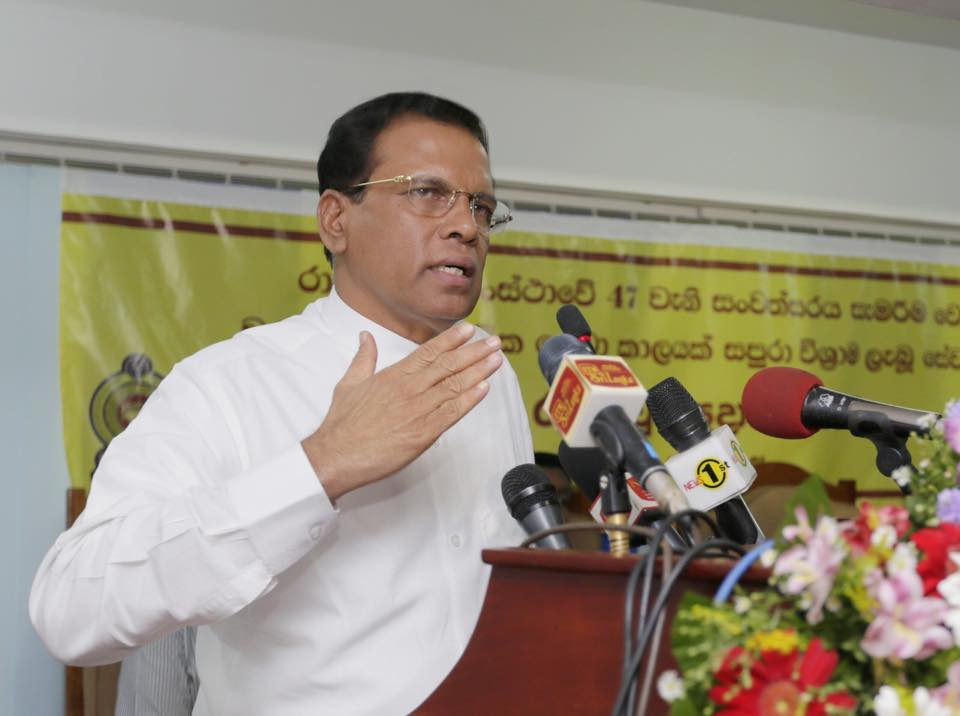 It
appears from the conversations that I hear in public – particularly
within party politics, but also in the corridors of education – that we
Sri Lankans are hooked on the notion of a ‘strong leader’. What the
leader stands for is almost secondary. The current President’s moderate
and democratic rule is considered too ‘soft’ or ‘weak’ and not good for
the country. We need a president who can ‘stand up to the Western
powers’ is a common sentiment echoed across even the so called
intelligentsia (misleading the general public to think that this is even
possible for a county of our size). Dr Dayan Jayatillaka is probably one of the best examples of this
It
appears from the conversations that I hear in public – particularly
within party politics, but also in the corridors of education – that we
Sri Lankans are hooked on the notion of a ‘strong leader’. What the
leader stands for is almost secondary. The current President’s moderate
and democratic rule is considered too ‘soft’ or ‘weak’ and not good for
the country. We need a president who can ‘stand up to the Western
powers’ is a common sentiment echoed across even the so called
intelligentsia (misleading the general public to think that this is even
possible for a county of our size). Dr Dayan Jayatillaka is probably one of the best examples of this
admiration of near-dictatorial leadership as the ‘need of the hour’
(not to mention decade). It seem as if our culture is hard-wired to hero
worship such leaders. Any other model of leadership is considered
inferior and weak.
This model of leadership has been
described using the ‘bus driver’ (and passengers) analogy. The leader is
perceived as the bus driver who knows where we are headed, so the
passengers (the citizens in our analogy) can be as disinterested as they
need to be. Even those concerned about where we’re headed may only make
their opinions known, if their opinions are sought, not otherwise. This
model is safe as long as the driver is honest in seeking the best
interests of all their passengers equally. It has a single point of
failure – the driver, and their decision making. It carries the risk
that we’d only be aware of being driven to a place far from ideal, far
too late. And even in that case, to convince the driver would take too
much effort, since they have already been given the mandate to take us
to where we thought they would be good for us. Listening to the opinions
of the passengers is strictly optional, often considered unnecessary. Read More
