Peace for the World World ! Your War Our Lives

The Dalai Lama
A Brief Colonial History Of Ceylon(SriLanka)
Sri Lanka: One Island Two Nations
A Brief Colonial History Of Ceylon(SriLanka)
Sri Lanka: One Island Two Nations
(Full Story)
Back to 500BC.

Saturday, May 9, 2015
Sri Lanka: Victory For Mindful Journalism

By Shelton A. Gunaratne –May 9, 2015
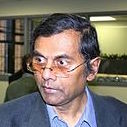
Dr. Shelton A. Gunaratne
Perhaps for the first time in the history of English language journalism in Sri Lanka, the Sunday Observer has
demonstrated the suitability and feasibility of using mindful
journalism as an option for the Anglo-American style of Orientalist
journalism that the oligopolistic wire services had spread worldwide
since the American Civil War.
I refer to the exemplary editorial published in the Vesak issue of the Sunday Observer under
the title “19A: Moment in History.” Obviously, the writer is someone
who is conversant with Eastern history and Buddhist literature, not a
snob who wants to disgorge his/her knowledge of Anglo-American history
in defence of parliamentary democracy.
S/he begins the editorial with Buddha’s allusion to democratic practice
in the Sakyan and Vajjian tribal republics of eastern India that
survived until the fourth century BCE. Buddha was a staunch advocate of
republican democracy. Other tribal republics that practiced
direct/representative/constitutional democracy included those of the
Licchavis, the Videhas, the Nayas, the Mallas, and the Koliyas. But, as
far as I know, this may be the first time that a mainstream English
language newspaper in Sri Lanka has traced principles of democratic
principles to sub continental Eastern history rather than to the West.
If so, this may signify the beginning of mindful journalism in the
country because editors are becoming mindful of their indefensible
reification of the West as the progenitor of democracy.
The Sunday Island Vesak editorial also commendably dealt with a
Buddhist theme although it failed, in my opinion, to use the crux of
Buddhism, the Four Noble Truths—dukkha, samudaya, nirodha, and magga—to
substantiate the need for tolerance of diversity within unity, to drive
home the simple truth that most of our dukkha is the result of our
unwillingness to comprehend that there is no self because all beings are
composites of the Five Aggregates (material form, feelings, perception,
karmic/mental fabrications, and consciousness), which are in a constant
state of flux. Buddhism is not a religion but a phenomenology that
everyone can investigate through mindful meditation. People of all
religions can benefit from practicing Buddhist principles without
compromising their own religious principles. An editorial with such a
thrust would have been a supreme example of mindful reporting or
journalism as a social good.
The Sunday Times,
on the other hand, failed to apply the mindful approach by focusing its
editorial on the diplomatic mission of the U. S. Secretary of State
John Kerry without making the slightest attempt to analyze Kerry’s word
and deed to the Four Noble Truths. Imagine an editorial writer’s
audacity to defy the significance of Vesak by giving priority to the
town visit of a Yankee Doodle. However, the Sunday Times had the good
sense to publish a handful of in-depth Vesak features written by
Buddhists believers like Primrose Jayasinghe, Mervyn Samarakoon and
Ajahn Brahmavamso. But these articles were about special aspects of
Buddhism; therefore they did not reflect the deliberate practice of
mindful journalism.Read More
