Peace for the World World ! Your War Our Lives

The Dalai Lama
A Brief Colonial History Of Ceylon(SriLanka)
Sri Lanka: One Island Two Nations
A Brief Colonial History Of Ceylon(SriLanka)
Sri Lanka: One Island Two Nations
(Full Story)
Back to 500BC.

Sunday, June 7, 2015
Contact Lenses May Alter Bacteria in the Eye

|
| Acanthamoeba
keratitis, an infection of the eyeball's outer layer, can be caused by
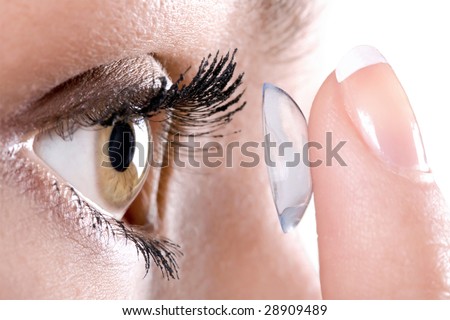
using contact lenses that were washed with tap water. Credit: Image via Shutterstock |

 by Agata Blaszczak-Boxe, Contributing Writer
May 31, 2015 01:44pm ET
Wearing contact lenses may change the community of bacteria living in your eyes, according to a small new study.
In the study, the surface of theeye in the people who wore contact lenses had
triple the proportion of certain bacteria species, on average, compared
with the people in the study who did not wear the lenses, researchers
found.
Moreover, the researchers found differences in the composition of the bacterial community on
the surface of people's eyes. In the people who wore contact lenses,
this composition more closely resembled the bacteria on the
individuals' eyelids, as compared to the nonwearers. The study included nine people who wore contacts and 11 who did not.
"Our research clearly shows that putting a foreign object, such as acontact lens,
on the eye is not a neutral act," study author Maria Gloria
Dominguez-Bello, a microbiologist at NYU Langone Medical Center, said in
a statement.
More research is needed to examine whether these changes in eye bacteria
come from fingers touching the eye, or whether the pressure of a contact lens somehow alters the immune system in the eye, she said. [5 Experts Answer: What’s the Best Way to Preserve My Eyesight?]
The findings may shed some light on "the long-standing problem of why
contact-lens wearers are more prone to eye infections than non-lens
wearers," Dominguez-Bello said.
Since the introduction of soft contact lenses in the 1970s, there has
been an increase in the prevalence of corneal ulcers, which are sores on
the transparent covering of the eye, study co-author Dr. Jack Dodick, a
professor and chair of ophthalmology at NYU Langone, said in a
statement.
One type of bacteria that may cause corneal ulcers, calledPseudomonas,
was more abundant in the eyes of people who wore contacts, the study
found. Because these bacteria may come to the eyes from the skin, people
should pay close attention to eyelid and hand hygiene to avoid getting
corneal ulcers, Dodick said.
More studies need to be conducted to see how exactly these differences in bacterial composition may affect eye health, the researchers said.
Millions of people wear contact lenses, and even though these
individuals may have an altered bacterial community in the eye, most do
not experience complications related to wearing the lenses, said Dr.
Mark Fromer, an ophthalmologist at Lenox Hill Hospital in New York.
However, when such complications do occur, they are quite serious, Fromer told Live Science.
There are simple steps that all contact-lens wearers can take to prevent
potential complications from wearing the lenses, Fromer said. "Wash
your hands, change your lens solution every day,
keep your lens case clean," he said. People using daily lenses, which
need to be changed every day, should not keep wearing the same lenses
for several weeks, he said.
Individuals should also visit their ophthalmologists regularly to check
on their eye health. And if lenses feel uncomfortable, the wearers
should take them out and consult their ophthalmologists, Fromer said .
"If something does not feel right, it means that it is not right," he said.
The results were presented today (May 31) at the annual meeting of the American Society for Microbiology in New Orleans.
Follow Agata Blaszczak-Boxe on Twitter. Follow Live Science@livescience, Facebook & Google+. Originally published on Live Science.
