Peace for the World World ! Your War Our Lives

The Dalai Lama
A Brief Colonial History Of Ceylon(SriLanka)
Sri Lanka: One Island Two Nations
A Brief Colonial History Of Ceylon(SriLanka)
Sri Lanka: One Island Two Nations
(Full Story)
Back to 500BC.

Monday, June 8, 2015
Pitipana Committee Unknowingly Exposes Arjuna Mahendran

By Hema Senanayake –June 7, 2015

Hema Senanayake
In this analysis, I use Pitipana Committee report.
Also I use the Minute Paper of Monetary Board and Minute Paper of the
relevant Tender Committee of Central Bank which have been attached to
the said committee report. I use nothing else.
On February 27th of this year, Central Bank of Sri Lanka issued a certain amount of Treasury bonds in
order to raise funds for the government. Many people, including
opposition politicians, a good segment of economists and some analysts
& dealers in the financial market alleged that the government has to
incur heavy losses in terms of interest payments due to the acceptance
of some bids submitted with disadvantageous price and yield rates. Such
criticisms created a huge uproar in the country.
Especially, certain bids submitted by the company (Perpetual Treasuries) which is owned by the son-in-law ofthe Governor of
the Central Bank of Sri Lanka (CBSL) were required to pay higher cost
of interest than the prevailing rates. Accepting those bids by CBSL
would cause the government to pay excessive interest up to 30 years
which is the maturity time of those bonds.
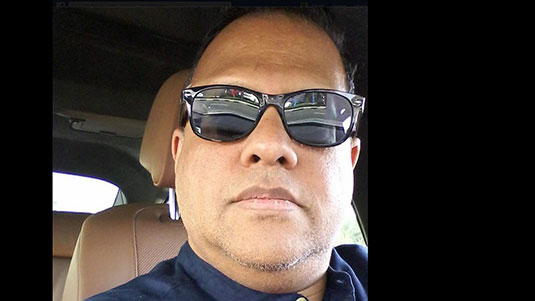
The Central Bank Governor – Arjuna Mahendran
Further, the government would have to incur additional losses in
relation to the Treasury bills, notes and bonds issued from that day
onwards, due to the reason that the interest rates went up after the
acceptance of bids with higher yields on 27th February 2015.
Are all these allegations true? If true, is the Governor of CBSL
responsible personally? In regard to these two questions my answer is
“YES.” Perhaps you may wonder if I declare that I am going to submit
undeniable evidences from the Pitipana Committee report itself in
support of my above conclusion even though you may rightfully think that
the Pitipana Committee was appointed as a cover up; the cover up was
very clear from the three mandated terms of references listed for the
Committee by the appointing authority.
