Peace for the World World ! Your War Our Lives

The Dalai Lama
A Brief Colonial History Of Ceylon(SriLanka)
Sri Lanka: One Island Two Nations
A Brief Colonial History Of Ceylon(SriLanka)
Sri Lanka: One Island Two Nations
(Full Story)
Back to 500BC.

Tuesday, June 2, 2015
South Africa beach service to honour slaves drowned in 1794 shipwreck
Ceremony
to be held on Clifton beach, Cape Town, near recently discovered wreck
site of Portuguese ship that sank, leading to the loss of 212 slaves’
lives
A small, solemn memorial service will be held on one of South Africa’s
most popular beaches on Tuesday, close to a recently discovered
shipwreck where more than 200 African slaves drowned at the bottom of
the sea.
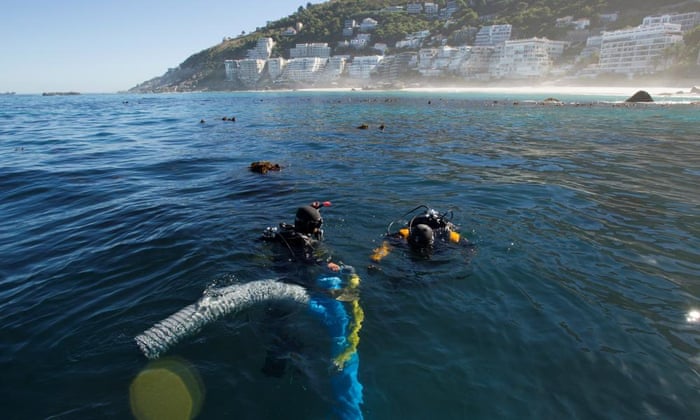 Underwater
archaeologists at the site of the São José slave shipwreck near the
Cape of Good Hope in South Africa. Photograph: Susanna Pershern/AP
Underwater
archaeologists at the site of the São José slave shipwreck near the
Cape of Good Hope in South Africa. Photograph: Susanna Pershern/AP
The Portuguese ship, the São José-Paquete de Africa,
was sailing from Mozambique to Brazil when it sank in turbulent waters
near Cape Town in December 1794. Researchers say it is the first time
that the remains of a slavers’ ship that went down with its human cargo
on board has been identified.
Albie Sachs,
a former constitutional court judge, will give a speech welcoming
diplomats, activists and community leaders at the ceremony on Clifton
beach, near the wreck site. “It’s profound and terrible to feel this is
one of the most beautiful beaches in the whole world and within such a
short distance lie the bodies of 200 slaves who died there,” the
80-year-old said on Monday.
“Presumably they were still in shackles or they could have swum to
shore. This has been an untold story that has repercussions and
reverberations for us today. Somehow their memories survive even though
they’re not in the history books.”
The São José was making one of the earliest voyages of the transatlantic
slave trade from east Africa to the Americas, which persisted well into
the 19th century. More than 400,000 east Africans, shackled in ships’
holds, are estimated to have made the four-month, 7,000-mile journey
from Mozambique to the sugar plantations of Brazil between 1800 and 1865.
The São José had only been sailing for 24 days when, tossed by strong
winds in view of Lion’s Head mountain, it was smashed on submerged rocks
100 metres from shore. An estimated 212 slaves perished. About 300
survived and were resold into slavery in the Cape. The Portuguese
captain, Manuel João, and his crew were also rescued.
The wreck lay undisturbed for nearly 200 years but was found in the
mid-1980s by local amateur treasure-hunters who misidentified it as the
remains of an earlier Dutch vessel. But in 2011 Jaco Boshoff, a maritime
archaeologist, discovered the captain’s account of the wrecking of the
São José in local archives. Those on board “made ropes and baskets and
continuing like this were able to save some men and slaves until five in
the evening, when the ship broke to pieces”, it recorded.
Evidence steadily built. Copper fastenings and copper sheathing
indicated a wreck of a later period, and there was also iron ballast –
often found on slave ships as a means of counterbalancing the variable
weights of their human cargo. The Slave Wrecks Project, an international
collaboration, found an archival document in Portugal stating that the
Saõ José had loaded 1,500 iron bars as ballast before she departed for
Mozambique.
Further research located a document in which a slave was noted as sold
by a local sheikh to the captain of the Saõ José prior to its departure,
definitively identifying Mozambique Island as the port of departure for
the slaving voyage.
Objects retrieved from the ship this year include fragile remnants of
shackles, iron ballast to weigh down the ship and its human cargo,
copper fastenings and a wooden pulley block. There has been no trace of
human remains.
Boshoff, co-originator of the Slave Wrecks Project and principal
archaeological investigator on the Saõ José excavation, said: “The more
information we get the better. The memorial service will be a bit more
emotional, but when we start work again we’ll have to dial back the
emotion.”
He added: “Every day there are discoveries made but, in the history of
the slave trade, this one is important. It’s the first time we’ve been
able to look at a ship that sank with slaves still on board.”
The wreck site is located between two reefs and is prone to strong
swells, making conditions difficult for archaeologists. So far only a
small percentage has been excavated. “There is a lot to do,” Boshoff
said. “We haven’t scratched the surface. It’s a wide-ranging project and
I’m fortunate it’s on my doorstep.”
A public symposium, called Bringing the São José Into Memory, will be
held in Cape Town on Wednesday. Some of the recovered objects are to be
displayed on long-term loan at the Smithsonian’s new National Museum of African American History and Culture in Washington DC.
Lonnie Bunch, director of the museum, who is due to attend Tuesday’s
event, said: “Perhaps the single greatest symbol of the transatlantic
slave trade is the ships that carried millions of captive Africans
across the Atlantic never to return.
“This discovery is significant because there has never been
archaeological documentation of a vessel that foundered and was lost
while carrying a cargo of enslaved persons. The São José is all the more
significant because it represents one of the earliest attempts to bring
east Africans into the transatlantic slave trade – a shift that played a
major role in prolonging that tragic trade for decades.
“Locating, documenting and preserving this cultural heritage through the
São José has the potential to reshape our understandings of a part of
history that has been considered unknowable.”
Plans for divers from Mozambique, South Africa and
the US to deposit soil from Mozambique Island, the site of the Saõ
José’s embarkation, on the wreck site has been abandoned due to Cape
Town’s volatile winter weather and high tides.
For Sachs, an anti-apartheid activist who lost an arm and the sight in
one eye in a bombing in Mozambique while in exile in the 1980s, the
international flavour of the day will be important. “There is a
wonderful cooperation between the Smithsonian and the Iziko Museums of South Africa.
People are diving together and compiling the information together. This
is a beautiful example of present-day globalisation recovering an
example of terrible globalisation from the 18th century.
“It’s a healing to have people getting together to memorialise the dead.
I was nearly killed by a car bomb planted by South African agents in
Mozambique. Mozambicans saved my life. Here South Africans are honouring
colleagues from Mozambique for this commemoration.”
