Peace for the World World ! Your War Our Lives

The Dalai Lama
A Brief Colonial History Of Ceylon(SriLanka)
Sri Lanka: One Island Two Nations
A Brief Colonial History Of Ceylon(SriLanka)
Sri Lanka: One Island Two Nations
(Full Story)
Back to 500BC.

Sunday, June 7, 2015
The Chickens Come Home


Dr. Rajan Hoole
A contemporary general had no doubt that the North was by far the
priority. At the same time he felt that there should have been a clearly
thought out strategy to block access to the East and prevent the LTTE
from escaping from the North and regrouping in the East. This would have
also entailed mustering adequate naval cover. He said that there was no
such strategy in place.
We also mention here contemporary arguments in favour of ‘East First’.
One was the political one that if the government forces firmly
controlled the East, the LTTE would be denied any possibility of its
separate state of Eelam and would be forced to negotiate. The other was
that Eastern Tamils could then be weaned away from the LTTE, to bring
about demoralisation among the LTTE’s Eastern cadre and deny the LTTE
recruitment from the East. It is true that recruitment from the East
fell during this period. The LTTE was forced to compensate by
intensifying brainwashing and virtual press- ganging techniques to get
school children from Jaffna into the fighting ranks (see the last
chapter of our Report No.13 of 1994 and also Special Report No.6).
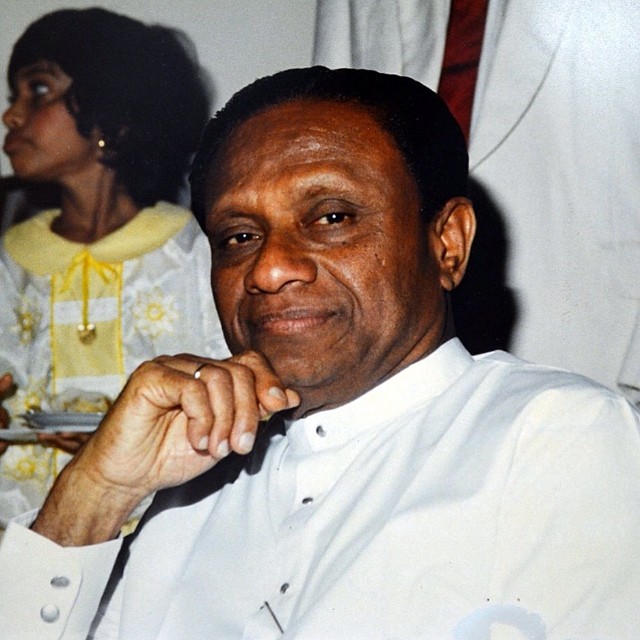 Premadasa
too may have been happy not to bother the North unless the North
bothered him. It was consistent with the deal he entered into with the
LTTE in 1989, whom he very likely continued to have back-door contact
with even after hostilities commenced (see Sect. 19.4). Thus, quite
often, major operations in the North were viewed indifferently or even
undermined. It is a fact that the political establishment allowed
defence officials to fight each other for the good part of 1992 and ’93
without intervening decisively. One intervention was Premadasa’s removal
of JOC (i.e. Wanasinghe’s) control over operations about April 1992,
which was restored by him after 5 months. But Wanasinghe’s initiatives
for operations in the North did not get far.
Premadasa
too may have been happy not to bother the North unless the North
bothered him. It was consistent with the deal he entered into with the
LTTE in 1989, whom he very likely continued to have back-door contact
with even after hostilities commenced (see Sect. 19.4). Thus, quite
often, major operations in the North were viewed indifferently or even
undermined. It is a fact that the political establishment allowed
defence officials to fight each other for the good part of 1992 and ’93
without intervening decisively. One intervention was Premadasa’s removal
of JOC (i.e. Wanasinghe’s) control over operations about April 1992,
which was restored by him after 5 months. But Wanasinghe’s initiatives
for operations in the North did not get far.