Peace for the World World ! Your War Our Lives

The Dalai Lama
A Brief Colonial History Of Ceylon(SriLanka)
Sri Lanka: One Island Two Nations
A Brief Colonial History Of Ceylon(SriLanka)
Sri Lanka: One Island Two Nations
(Full Story)
Back to 500BC.

Monday, October 26, 2015
Robert Blake pushed for US resolution against Lanka at UNHRC
 By Namini Wijedasa-Sunday, October 25, 2015
In a wide ranging interview, Human Rights Watch Asian chief Brad Adams
says that under Mahinda Rajapaksa, there was only “victor’s justice”,
whereas today there appears to be “justice for all communities”
Many in the United States administration had resisted the proposal for a
resolution on Sri Lanka at the UN Human Rights Council but Robert O.
Blake, former US Ambassador in Colombo, pushed it after he was promoted
to Assistant Secretary of State, an international rights advocate said
this week.
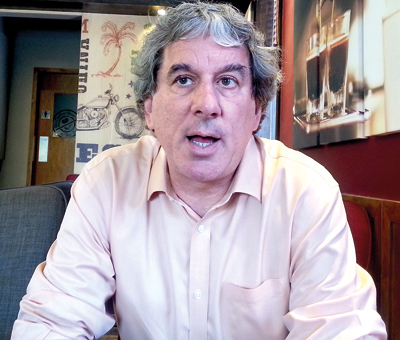
Brad Adams in Colombo: “You can’t put every soldier that committed every crime on trial. It would never end.”
The US might even have given up calls for justice had Sri Lanka’s former
Government shown genuine commitment to reconciliation, said Brad Adams,
Executive Director of Human Rights’ Watch’s (HRW) Asia Division, in an
interview with the Sunday Times. He was in Colombo for meetings.
There were different elements in the US Government. “Some people never
liked this process, did not want a resolution, were worried about what
India thought, were worried about what China thought, and were worried
about the Chinese role,” Mr Adams revealed.
“There were people in the US who were looking at it only from the prism
of China. Is this going to weaken the US Government’s relationship with
Sri Lanka and empower China and its role?”
There were others who thought any effort would be a waste of time. A
minority wanted a resolution in the UN Human Rights Council.
“The person who was responsible for the change in US policy was Bob
Blake, who was Ambassador here,” Mr Adams said. “He really wanted to
give the Rajapaksa Government time.
And only when he realized that they were lying to him, not just about
justice, but about reconciliation…I think if they had done the
reconciliation side well, the justice side would have been given up by
the US. They would have taken reconciliation.”
“They would have said, ‘Let’s move forward, the (Sri Lankan)
Government’s moving forward. It’s been working on community relations,
it’s investing in Tamil communities, it’s taking the army out of Tamil
areas, it’s not stealing their land, it’s creating political
institutions that will allow them to be properly represented’,” he
continued.
“I think Bob Blake and the US Government would have just let the past be the past.”
But Mr Blake realized he was being lied to. “And that put the justice
question back on the agenda for him,” Mr Adams said. “When he became
Assistant Secretary of State and he was in a stronger position to do
something about it on a policy level, he pushed this through very hard.
So it’s all very complicated. I think he felt it’s not good to lie to
people. They lied to him.”
Mr Adams said that the discussion about the end of Sri Lanka’s war would
have changed dramatically had the “white flag incident” not happened.
He said liquidating the LTTE leadership and thereby ensuring that they
were not available for prosecution was “a terrible historical mistake
made by the previous Government”.
The LTTE should have been put on trial, he maintained. “It would have
shown that they (Government) were the just party,” he said.
“That justice could have been done and be seen to be done. Frankly, I
would have loved to have seen the Tiger leadership on trial because it
would have brought a lot of facts about what they did, in detail. They
(Government) chose to kill them instead.”
Any judicial process that is now set up in Sri Lanka will necessarily
have to take up a finite number of cases. That was the experience of
other countries.
“You can’t put the whole country on trial,” Mr Adams said, explaining
that there would be a capacity issue. “You can’t put every soldier that
committed every crime on trial. It would never end.”
No fair observer would say the LTTE does not deserve at least half of
the blame for the war, he averred: “I wish we could see them. I wish we
could see their leadership in the dock. And, by the way, we called for
that. We were never taking sides.”
“We always called out the LTTE, to the point that I was threatened by
them,” Mr Adams said. “We had threats to our office. I would speak at
public forums in London where I was living and members of the Tamil
diaspora would come and scream at us and threaten us.
It was only in late 2008, when we started criticizing the conduct of the war, that the Government went from praising us.”
“The Rajapaksa administration loved Human Rights Watch and other groups because of our criticism of the Tigers,” he said.
“The Rajapaksa administration loved Human Rights Watch and other groups because of our criticism of the Tigers,” he said.
“I was embraced by your diplomats and by Government ministers. Mahinda
Samarasinghe would say, ‘Thank you Mr Adams, you’re doing great work’.
And then they didn’t like the fact that we then used the same principles
to look at what they were doing.”
There was significant interest in the end of the war—as opposed to three
decades of conflict—because it was “extremely political in Sri Lanka”.
“We didn’t make it political, but it was Sri Lanka which made it
political,” Mr Adams said.
“It polarized the country.” Parties had different views about the
efficacy of the offensive. There were disagreements about the conduct of
the war.
“When so many civilians were killed, there was a controversy about what
to do about it,” he continued. “The Rajapaksa Government refused to
accept it.
They kept saying for years there was ‘zero civilian casualties’ so it
was laughable and when you say things that ridiculous, it invites
controversy. If they had been a responsible Government, they would have
accepted there were a lot of casualties.”
Mr Adams said the LTTE leadership was awful: “Even at the worst times of
the war, I started by saying how awful I thought the Tiger leadership
was. They lost all credibility.
I no longer cared about their political demands because of the way they
were operating. You couldn’t take their political demands and separate
them from what they did and I used very strong language all the time
about them being totalitarian.
Not authoritarian, not repressive, but a totalitarian (group) that
intended to brainwash and control their entire population whatever way
Prabhakaran wanted to go. It will be a disaster if people forget.”
Mr Adams warned there was no system that will be able to address all
concerns of all victims. What proved important in a lot of countries was
for people in charge of either side to take responsibility, to admit;
to organize compensation ceremonies and memorials so that victims who
are not getting individual justice felt like there is recognition of
what happened. Studies in other countries have shown this helps.
Under Mahinda Rajapaksa, there was “victor’s justice”. “The worst thing
that happened since the end of the war was that only one side, the
winner’s side, of the story,” Mr Adams reflected. “The justice process
can sometimes lead to multiple stories being told.”
“This Government seems to understand the need for reconciliation,” he
said. “So it’s not just victor’s justice. It’s justice for all
communities.”
