Peace for the World World ! Your War Our Lives

The Dalai Lama
A Brief Colonial History Of Ceylon(SriLanka)
Sri Lanka: One Island Two Nations
A Brief Colonial History Of Ceylon(SriLanka)
Sri Lanka: One Island Two Nations
(Full Story)
Back to 500BC.

Wednesday, December 2, 2015
Safer way to do gene editing
 By Michelle Roberts-1 December 2015
Scientists say they have fine tuned a gene editing method to make it
safer and more accurate - vital if it is to be used in humans to cure
inherited diseases or inborn errors.
The advance, outlined in Science Magazine, comes as world leaders in the field gather to debate the ethics of altering human DNA using the method, known as Crispr-Cas9.
Gene editing holds medical promise.
But changing a person's DNA also has potential risks and ethical quandaries.
The first International Summit on Human Gene Editing will debate how far the science should progress.
Crispr-Cas9
Crispr-Cas9 is a DNA cutting and pasting system that scientists have
borrowed from nature. Bacteria use it to protect themselves against
foreign DNA from viruses.
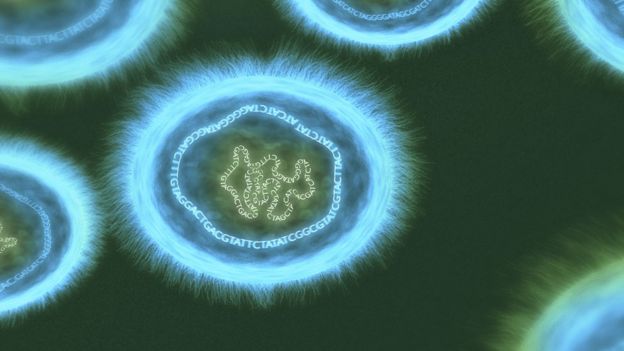
Scientists have been using it in the lab to target and cut out faulty DNA in human cells that cause illnesses.
While effective, the process is less than perfect and can cut out too much DNA, experts have found.
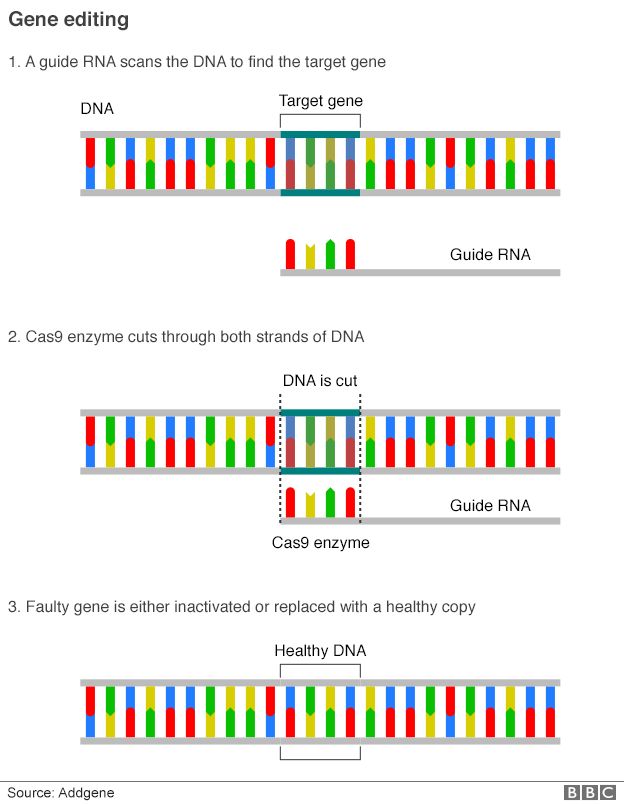
These unwanted or 'off-target' edits could alter other important genes, inadvertently triggering cancer, for example.
Researchers at the Broad Institute of MIT and Harvard believe they have
solved this problem by changing the molecular structure of the Cas9
enzyme.
Their modified version should now only snip out the DNA it is designed
to, leaving the rest of the precious genetic code intact, the US team
say.
They made changes to amino acids - the building blocks of Cas9 - and
found this improved its accuracy, reducing the risk of 'off-target'
cuts.
In repeated tests on human embryonic kidney cells, the researchers were unable to detect any cutting errors.
Researcher Feng Zhang said this should help address some of the safety concerns.
But he added: "We certainly don't see this as a magic bullet. The field
is advancing at a rapid pace, and there is still a lot to learn before
we can consider applying this technology for clinical use."
Prof Malcolm White, an expert in Crispr and DNA repair at the University of St Andrews, said the early work was promising.
"The altered version of Cas9 seems to be a safer tool, which would be
useful if scientists want to correct defects in human genes. But more
studies are needed and ethical debates about when we should use gene
editing will no doubt continue."
