Peace for the World World ! Your War Our Lives

The Dalai Lama
A Brief Colonial History Of Ceylon(SriLanka)
Sri Lanka: One Island Two Nations
A Brief Colonial History Of Ceylon(SriLanka)
Sri Lanka: One Island Two Nations
(Full Story)
Back to 500BC.

Friday, January 22, 2016
Country shouldn’t repeat mistakes of 1978 Constitution: Handunnetti
 “The
country shouldn’t repeat the same mistake that happened with the 1978
Constitution. If we say that was J. R. Jayawardena’s Constitution, why
are we allowing Ranil Wickremesinghe to do the same?” queries Janatha
Vimukthi Peramuna National List Parliamentarian and Chairman of the
Committee on Public Enterprises (COPE) Sunil Handunnetti. Premier Ranil
Wickremesinghe wants to have his own way when enacting a new
Constitution, Handunnetti claims, adding that the JVP will only support a
new Constitution if it is done according to Parliament standing orders.
“The
country shouldn’t repeat the same mistake that happened with the 1978
Constitution. If we say that was J. R. Jayawardena’s Constitution, why
are we allowing Ranil Wickremesinghe to do the same?” queries Janatha
Vimukthi Peramuna National List Parliamentarian and Chairman of the
Committee on Public Enterprises (COPE) Sunil Handunnetti. Premier Ranil
Wickremesinghe wants to have his own way when enacting a new
Constitution, Handunnetti claims, adding that the JVP will only support a
new Constitution if it is done according to Parliament standing orders.
As the first JVP parliamentarian to head COPE, he points out key changes in the committee under his leadership in order to make State institutions free of fraud, corruption and waste.
Following are excerpts:
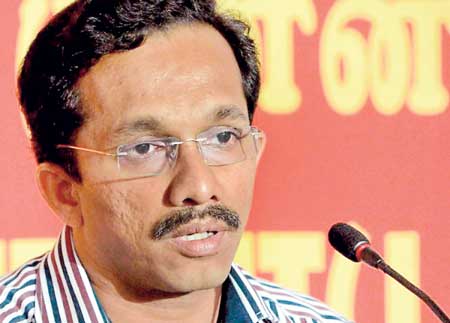

Q: How are you planning to create transparency?
A: Standing orders are the biggest drawback. But we have already opened this to the public through our website. Through the parliamentary website we will publicise the institutions that we call for. Any individual, trade union or organisation can write to us regarding these institutions. This information will be confidential.
Another change would be publicising of COPE reports every three months. This is purely for the purpose of public information. After we submit a report to the Parliament, we will make that information available to people through the media.
READ MORE
Friday, 22 January 2016
“The
country shouldn’t repeat the same mistake that happened with the 1978
Constitution. If we say that was J. R. Jayawardena’s Constitution, why
are we allowing Ranil Wickremesinghe to do the same?” queries Janatha
Vimukthi Peramuna National List Parliamentarian and Chairman of the
Committee on Public Enterprises (COPE) Sunil Handunnetti. Premier Ranil
Wickremesinghe wants to have his own way when enacting a new
Constitution, Handunnetti claims, adding that the JVP will only support a
new Constitution if it is done according to Parliament standing orders.As the first JVP parliamentarian to head COPE, he points out key changes in the committee under his leadership in order to make State institutions free of fraud, corruption and waste.
Following are excerpts:
Q: What changes have taken place at COPE since you assumed duties as the head of the committee?
A: COPE will officially start calling institutions from 26 January. We need to give a considerable time for these institutions before we call for their reports. From 26 January we will start meeting State institutions such as the Ceylon Electricity Board and People’s Bank.
There is one significant change that we hope to implement. At present, the representation of public in COPE matters is minimal. What takes place inside COPE is undisclosed to the public, other than the final report. But we want to change this setup. We feel there should be more transparency. The public should be aware of what COPE is doing.
This doesn’t mean we are going to divulge all information regarding inquiries that are taking place. For example if we are inquiring about an official who has played out money in a particular State organisation, information regarding the officer or other confidential details will not be released to the public until we finish the case. But people will be aware that such a case is been inquired at COPE. We function from people’s money and we are answerable to the public and State institutions are not private property. People in the country have the right to know what happens in these institutions. Therefore, I see involving people as a step forward.
A: COPE will officially start calling institutions from 26 January. We need to give a considerable time for these institutions before we call for their reports. From 26 January we will start meeting State institutions such as the Ceylon Electricity Board and People’s Bank.
There is one significant change that we hope to implement. At present, the representation of public in COPE matters is minimal. What takes place inside COPE is undisclosed to the public, other than the final report. But we want to change this setup. We feel there should be more transparency. The public should be aware of what COPE is doing.
This doesn’t mean we are going to divulge all information regarding inquiries that are taking place. For example if we are inquiring about an official who has played out money in a particular State organisation, information regarding the officer or other confidential details will not be released to the public until we finish the case. But people will be aware that such a case is been inquired at COPE. We function from people’s money and we are answerable to the public and State institutions are not private property. People in the country have the right to know what happens in these institutions. Therefore, I see involving people as a step forward.
Q: How are you planning to create transparency?
A: Standing orders are the biggest drawback. But we have already opened this to the public through our website. Through the parliamentary website we will publicise the institutions that we call for. Any individual, trade union or organisation can write to us regarding these institutions. This information will be confidential.
Another change would be publicising of COPE reports every three months. This is purely for the purpose of public information. After we submit a report to the Parliament, we will make that information available to people through the media.
READ MORE
