Peace for the World World ! Your War Our Lives

The Dalai Lama
A Brief Colonial History Of Ceylon(SriLanka)
Sri Lanka: One Island Two Nations
A Brief Colonial History Of Ceylon(SriLanka)
Sri Lanka: One Island Two Nations
(Full Story)
Back to 500BC.

Thursday, January 21, 2016
Opportunity For Sinhalese Under Humane Sirisena

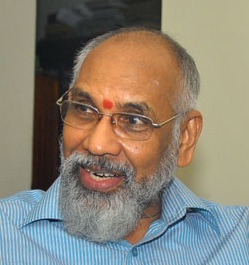
C.V. Wigneswaran
Following my request addressed to the Swiss Ambassador to invite to
Jaffna the Swiss Institute for Federalism of Fribourg, Switzerland for a
series of Seminars and Conferences on devolution of power, Mr.Davide
Vignati, First Secretary, Political Affairs of the Embassy of
Switzerland, Colombo contacted Dr.Eva Maria Belser who is here, the
Director of the Institute who confirmed her availability. It is she who
identified Professor Nico Steytler from Cape Town and Mr.Maurizio
Maggetti to accompany her. I had considered such a Seminar urgent on
account of the Constitutional drafting process which was being put in
motion early this month in Colombo.
Thus with the support of the Institute for Constitutional Studies we had
jointly organized this Seminar mainly for the benefit of the Northern
and Eastern Provincial Council Members. I had then suggested that the
University fraternity as well as the Civil Society too must be given an
opportunity to listen to the learned speakers. The Swiss Embassy readily
agreed.
While the Seminar today will predominantly be a platform from which our
Resource Persons, Professor Eva Maria Belser of the University of
Fribourg, Switzerland, Maurizio Maggetti, Research Fellow at the
Institute of Federalism (Incidentally he has worked in Sri Lanka with
the Berghof Foundation and Sarvodaya) and Professor Nico Steytler of the
University of the Western Cape, Cape Town, South Africa would be
sharing their knowledge and wisdom, both theoretical and practical on
the whole issue of different constitutional models for power sharing
during this two hours’ session, their inputs would be beneficial to all
of us Sri Lankans to identify constitutional mechanisms that would suit
our particular ethnic background and context. Solutions would have to be
later identified on the basis of the knowledge we receive to suit the
existing circumstances.
It gives me great pleasure while welcoming the learned speakers to also
welcome all you Civil Society members. Civil Society is the aggregate of
non- governmental organizations and institutions that manifest the
interest and will of Citizens. They belong to the third sector of
Society distinct from Government and Private Sector business community.
In other words you all are individuals and organizations in a Society
who are independent of the Government. You are mostly non – governmental
organizations and professionals. Today the world over in democratic
societies apart from the Government the Private Sector and the Civil
Society including NGOs, play an important part in helping any community
to develop and prosper.
You are as much a part of Society as any
others. If the people or their political representatives are not taking
adequate interest with regard to the future of the polity it is your
duty to direct the people. That way your position is one of trustees of
the conscience of the people. You owe it to the people to lead them. You
are amply qualified to do so with many of you being professionals. You
will be able to appreciate today the thoughts and words of the learned
Lecturers. You need to learn from them and help the masses themselves to
learn from you. You have to educate the masses at the grass root level.Read More
