Peace for the World World ! Your War Our Lives

The Dalai Lama
A Brief Colonial History Of Ceylon(SriLanka)
Sri Lanka: One Island Two Nations
A Brief Colonial History Of Ceylon(SriLanka)
Sri Lanka: One Island Two Nations
(Full Story)
Back to 500BC.

Friday, January 22, 2016
The EU Welcomes the Significant Progress Made in Many Areas Since Regime Change in Sri Lanka
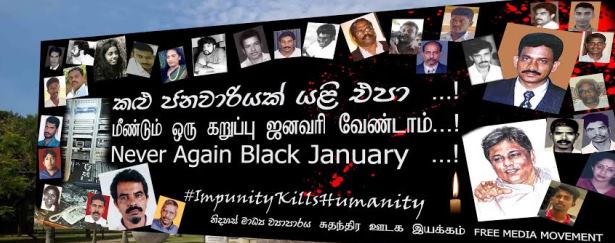
(Remaining challenges on issues such as freedom of expression and media, strengthening of civil society needs to be addressed)
 21/01/2016
– Joint Press Release following the first meeting of the working group
on Governance, Rule of Law and Human Rights under the European Union-Sri
Lanka Joint Commission, held on 21 January 2016.
The Working Group on Governance, Rule of Law and Human Rights under the
European Union-Sri Lanka Joint Commission concluded its first meeting in
Colombo on 21 January 2016. The meeting was held at the Ministry of
Foreign Affairs in Colombo with the participation of senior officials
from Sri Lanka and the European Union. The delegation of the European
Union was led by Ms. Paola Pampaloni, Head of Division, Asia and the
Pacific Department of the European External Action Service. The Sri
Lanka delegation was led by Mr. A.L.A. Azeez, Director-General for
European Union, Ministry of Foreign Affairs of Sri Lanka.
The meeting of the Working Group follows the 19th Session of the
European Union-Sri Lanka Joint Commission held in April 2015 in Colombo.
The Joint Commission provides the forum for regular and structured
bilateral engagement under the EU-Sri Lanka Cooperation Agreement on
Partnership and Development of 1995.
The agenda of the Working Group and its deliberations demonstrate
clearly the consolidation of cooperation between the EU and Sri Lanka
since the election of the new Government in Sri Lanka in 2015. They also
reflect the strong mutual commitment to a dialogue on human rights and
democracy on the basis of shared values and international human rights
standards.
The meeting provided a welcome opportunity to engage in an open and
constructive dialogue, reflecting on concerns, best practices, trends
and developments in the areas of human rights, the rule of law and
governance. The EU welcomed the significant progress made in many areas,
including the passing of the 19th Amendment to the Constitution and
subsequent operationalisation of independent commissions, the standing
invitation extended to all UN Special Procedure Mandate Holders, the
signing of the Convention on Enforced Disappearances, and significant
improvements concerning media freedom.
An exchange of information took place on the Government’s plans for
further constitutional and legislative measures, including consultation
with the Sri Lankan people on a new Constitution and the repeal of the
Prevention of Terrorism Act and its replacement with a comprehensive
National Security Act. Both sides recognised the full implementation of
the UN Human Rights Council (HRC) resolution of October 2015 as a
priority. There was an exchange of views on ongoing consultations on the
establishment of domestic reconciliation and accountability mechanisms.
The EU expressed its readiness to continue supporting Sri Lanka in this
process and to identify together with the Government the needs and
opportunities for assistance.
Discussions
also extended to consideration of progress and remaining challenges on
issues such as freedom of expression and media, strengthening of civil
society, rights of women and children, rights of minorities, labour
rights, migration, implementation of the treaty obligations and the rule
of law. The EU also highlighted the importance of addressing human
rights issues, including sexual and gender based violence, torture, and
the protection of persons belonging to minority groups, as well as the
need to combat corruption.
The parties agreed on a series of actions for follow-up at the next
Joint Commission meeting later in the year. The EU and Sri Lanka agreed
that the next Working Group meeting would be held in Brussels within
twelve months.
