Peace for the World World ! Your War Our Lives

The Dalai Lama
A Brief Colonial History Of Ceylon(SriLanka)
Sri Lanka: One Island Two Nations
A Brief Colonial History Of Ceylon(SriLanka)
Sri Lanka: One Island Two Nations
(Full Story)
Back to 500BC.

Thursday, February 18, 2016
Bombs and blockade make Gaza’s floods worse
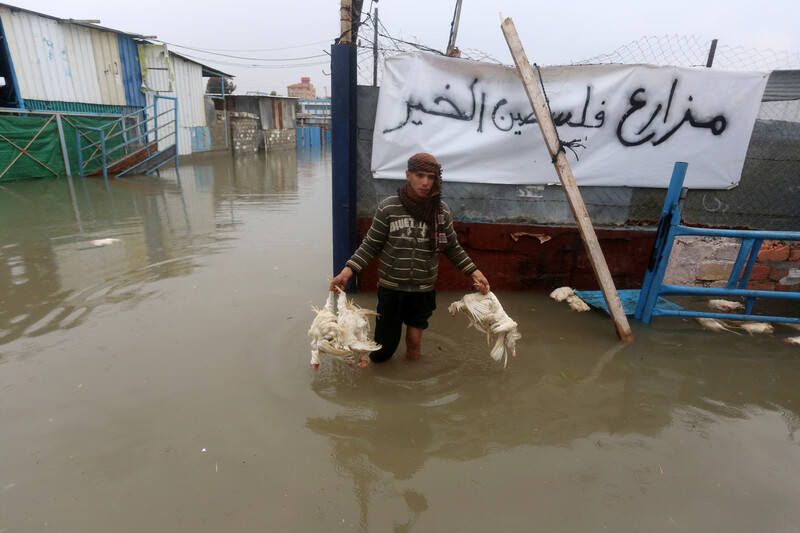
A Palestinian man removes dead chickens at a farm in Rafah, southern Gaza, after winter rains flooded the area, 27 January.-APA images
 Isra Saleh el-Namey-17 February 2016
Two thousand hens died on Qandil Lawalha’s poultry farm after it was hit by a storm. That was more than half of all the hens he owned.
Located in Rafah, a city near Gaza’s border with Egypt, the farm had previously been shelled by Israel during the summer of 2014.
“I did not get any kind of support or compensation after the war and had
to manage my work by myself,” Lawalha said. “Now I have to start over
once again.”
Lawalha depends on the income from his farm to take care of his seven
children and his elderly parents. The extreme weather has meant that he
had to endure lengthy power failures.
“I was not able to keep the farm warm, and then the water seeped into it,” he said. Many of the hens froze to death.
During January, Gaza suffered from heavy rains, winds of up to 80 km or 50 miles per hour and freezing temperatures.
The losses which the storm caused will be felt for some time.
Another farmer in Rafah, Adham Abu Sniema, had hoped to harvest his
crops of peas in early February. “Temperatures dropped so much that my
peas withered,” he said. “I worked hard to plant them. Now they are
gone.”
Abu Sniema had to borrow money to plant his vegetables. “I thought that I
will give the money back to my lender when I sell my harvest of peas,”
he said. “Now I must look for some other way to make this money.”
Taher Abu Hamad, a director of Gaza’s agriculture ministry, said that
the week-long storm resulted in losses for farmers of more than $1
million.
“More than 12,000 hens died,” he said. “That constitutes 5 percent of
all hens raised in the Strip. And a thousand acres of farmland were
damaged during the storm.”
Approximately 60 greenhouses were also damaged in Rafah and nearby Khan Younis, according to Abu Hamad.
Soil erosion resulting from the storm is likely to have consequences for
the future. “This serious problem makes the soil unfit for the upcoming
plantation seasons,” Abu Hamad said.
Farmers were by no means the only ones affected by the extreme weather. Town-dwellers struggled to cope with flooding, too.
Read More
