Peace for the World World ! Your War Our Lives

The Dalai Lama
A Brief Colonial History Of Ceylon(SriLanka)
Sri Lanka: One Island Two Nations
A Brief Colonial History Of Ceylon(SriLanka)
Sri Lanka: One Island Two Nations
(Full Story)
Back to 500BC.

Friday, February 19, 2016
Sri Lanka: Fine-tuning Good Governance – Jayatilleka de Silve
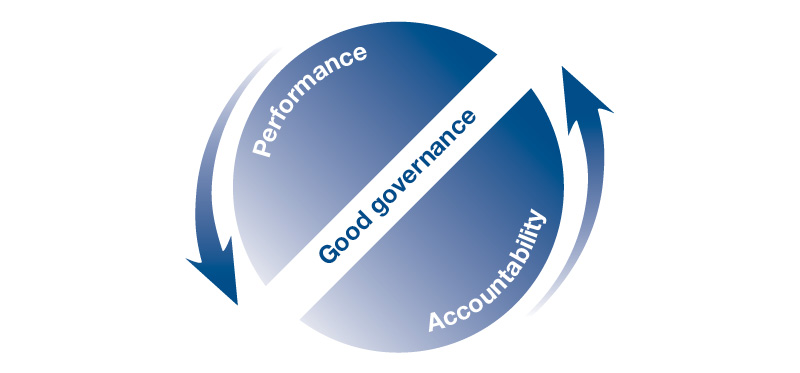
Image: anao.gov.au

With the result of the Presidential election Sri Lanka began a march
toward good governance on January 8, 2015. Several important steps,
actually the initial ones were taken since then, the most significant of
them being the reduction of the powers of the Executive President and
the appointment of the Constitutional Council and independent
commissions. However much remains to be done. As expected whatever that
is achieved has been at a price since it was necessary to overcome the
desperate opposition from reactionary forces that were defeated at the
elections. A long and hard struggle awaits the completion of the good
governance programme, causing much heartburn, despair and needing more
courage and determination among the masses.
Our attempt here is to pinpoint some things that need urgent attention
in order to march forward along the course set out on January 8 last
year. They are matters of concern to those who supported the good
governance objectives.
Law-enforcing authorities
Take for example the need for elimination of corruption, fraud and
misuse of public property. There does not seem to be a uniform policy as
different individuals with similar charges against them are treated in
different ways. The class bias as well as solidarity among the
privileged then and now seems glaring. Though politicians are supposed
not to interfere with the work of law-enforcing authorities such as the
police, media speculates on some individuals accused of wrong doings
getting velvet glove treatment from high authorities. Since there is no
denial from the relevant authorities named the public could safely
conclude that such speculation is based on truth.
The slow progress of investigations and the virtual standstill of the
judiciary processes as a result of the lethargy, inefficiency or
incapacity of the office of the Attorney General is also a cause for
worry and a disruptive element in proceeding toward better governance.
 The
freedom of the wild ass in the Cabinet of Ministers allows ministers to
publicly criticise and attack their colleagues and even challenge the
Executive. This situation can in no way be considered a merit of good
governance. Rather it is symptomatic of moribund structures of power on
the eve of their dissolution. The ultimate cause of this sad state is
the unresolved crisis within the SLFP and the attempts to cover it up by
hypocritical attempts to forge unity between individuals and factions
with policies that are unbridgeable. It is the same reason that has
caused the influx of corrupt politicians into the Cabinet of Ministers
and other high bodies.
The
freedom of the wild ass in the Cabinet of Ministers allows ministers to
publicly criticise and attack their colleagues and even challenge the
Executive. This situation can in no way be considered a merit of good
governance. Rather it is symptomatic of moribund structures of power on
the eve of their dissolution. The ultimate cause of this sad state is
the unresolved crisis within the SLFP and the attempts to cover it up by
hypocritical attempts to forge unity between individuals and factions
with policies that are unbridgeable. It is the same reason that has
caused the influx of corrupt politicians into the Cabinet of Ministers
and other high bodies.
Waste of scarce public resources
